Why does a hard potato go soft when you boil it?
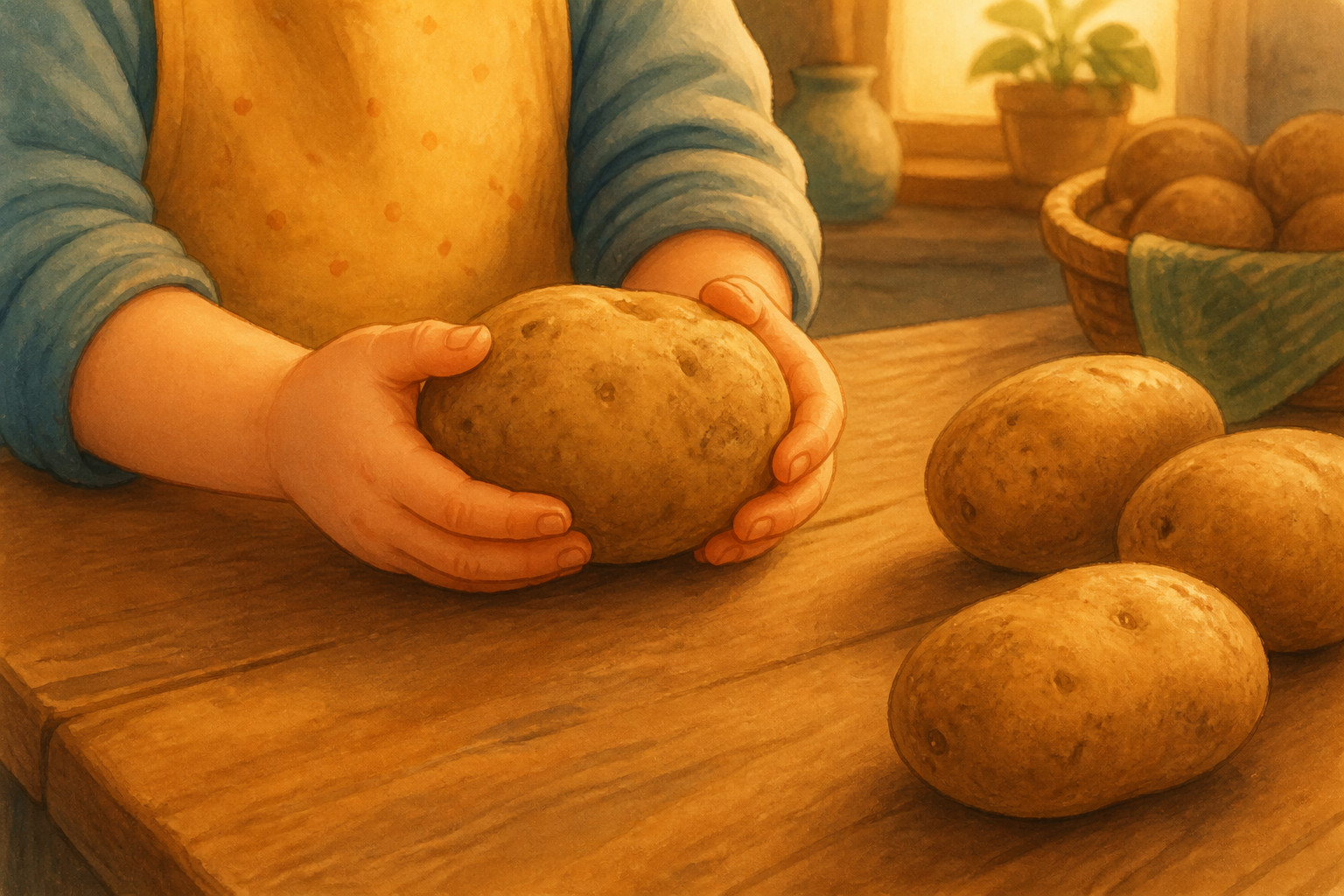
Hold a raw potato in your hand and give it a gentle squeeze. It feels hard and heavy, like a smooth brown stone. Your fingers cannot press it in at all.
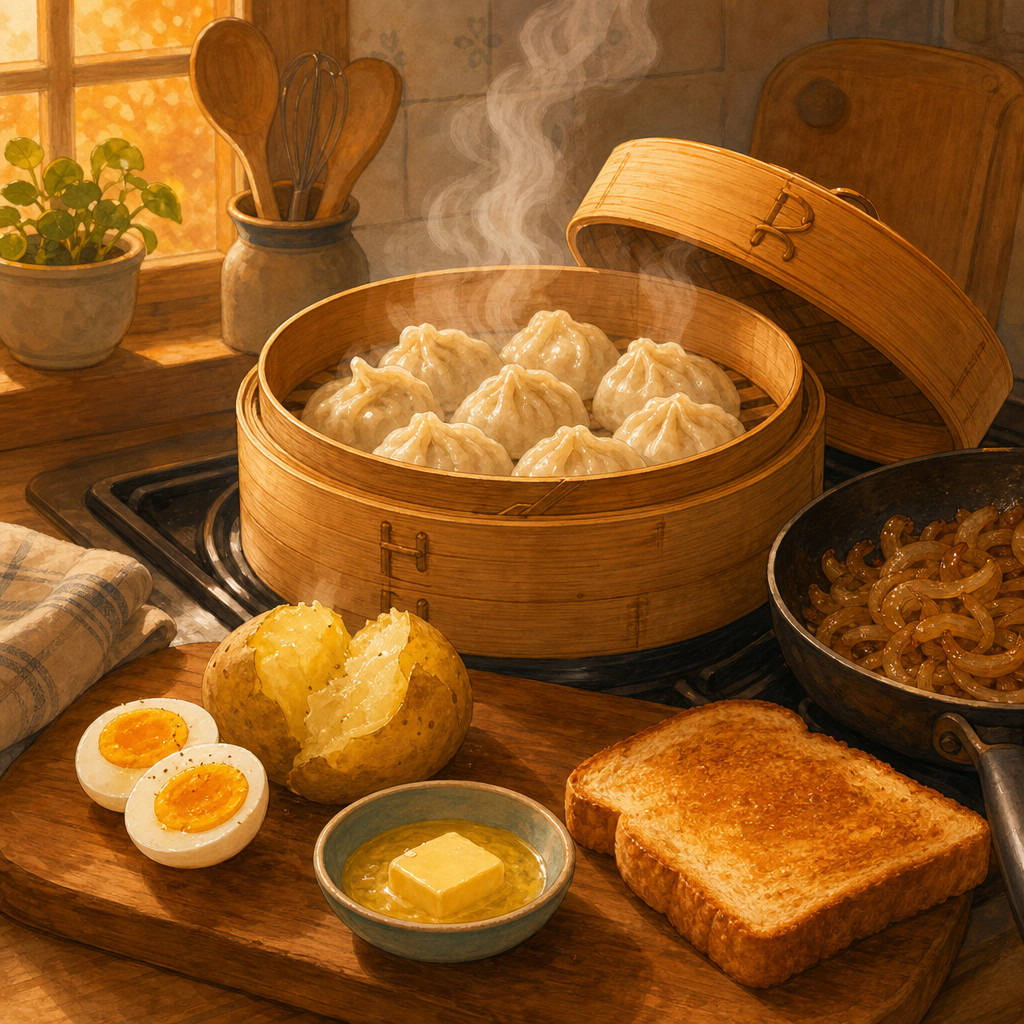
Then a grown-up lowers some potatoes into a pot of bubbling water with a big spoon. A while later, a fork slides right into them, and they squash on your plate. So why does a hard potato go soft when you boil it?
Every potato is made of cells, which are tiny bags far too small to see, packed side by side. A natural glue sticks each cell tightly to its neighbours. That glue and those packed bags make a raw potato hard.
Inside the cells sit lots of tiny grains of starch, which is the food a potato keeps for itself. Raw starch grains are small and hard, like grains of sand. They add to the potato's crunch.
In the pot, the boiling water passes its heat into the potato's skin. Bit by bit, the heat travels inward, all the way to the middle. The heat needs time to reach the centre, so the potatoes bubble away for a while.
As the heat reaches them, the glue between the cells starts to soften and loosen. The cells stop gripping each other, like sticky notes letting go. Now, what do you think the hard starch grains inside the cells do in all that heat?
The starch grains drink up the water already inside the potato. They swell bigger and bigger until they turn soft, like porridge. All that swelling starch makes each of the cells plump and squishy. Now the inside of every tiny bag is soft too.
With loose glue and squishy cells, the potato cannot keep its hard shape anymore. When your fork pushes in, the cells slide apart with ease. That is the soft, fluffy potato on your plate.
Boiling water heats the potato all the way through, so the glue between its cells loosens and the starch inside them swells and turns soft. With nothing holding it hard anymore, the potato goes soft.
On your plate sits the potato that once felt like a smooth brown stone. Now it squashes under the lightest press of your fork.