Why is some ice cream smooth and some full of icy bits?
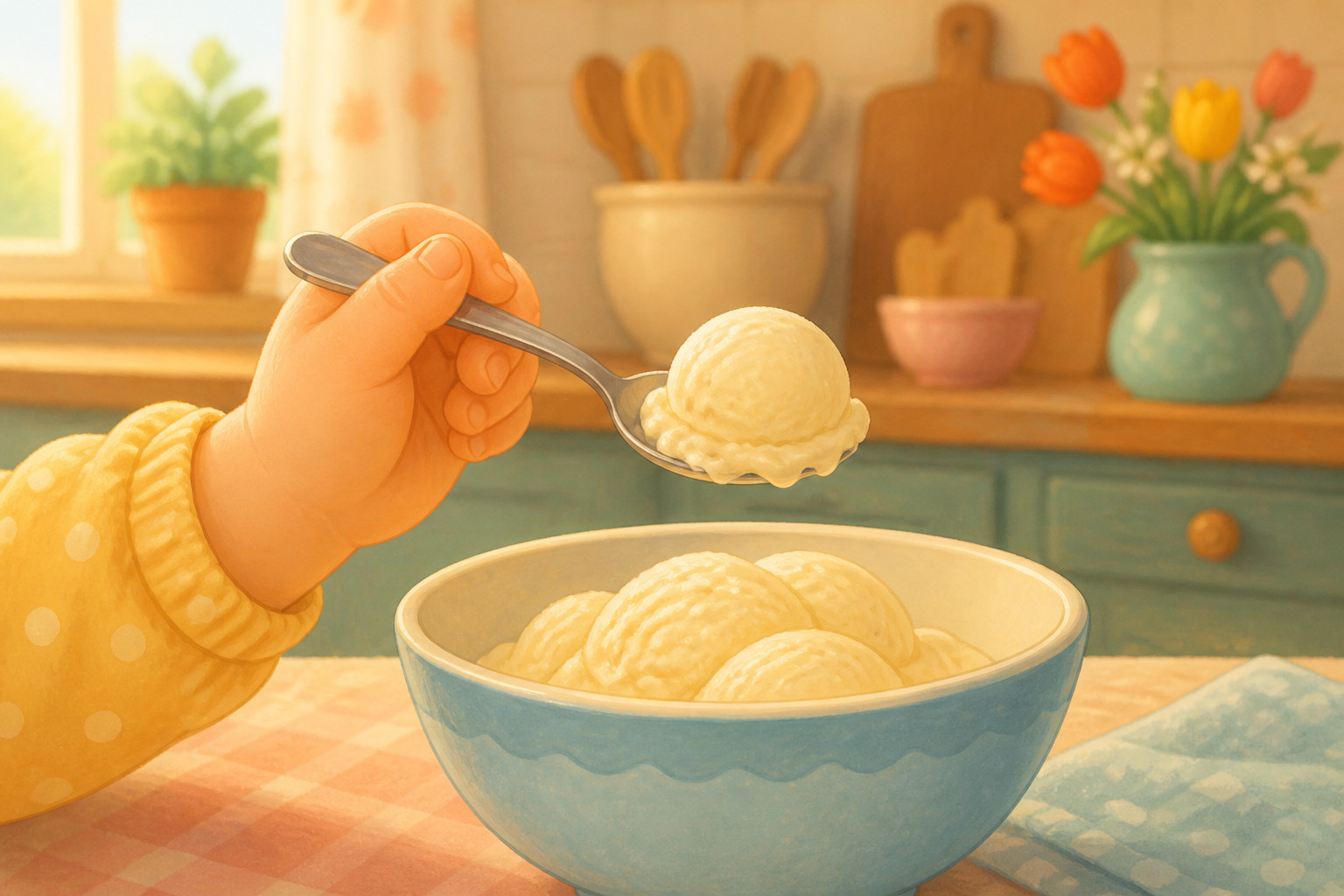
Think about a spoonful of ice cream melting on your tongue, soft and creamy. Now picture another spoonful that crunches with cold, icy bits, like frost from the freezer.
Both spoonfuls are ice cream, yet they feel so different. So why is some ice cream smooth and some full of icy bits?
Ice cream starts as a mix of milk, cream and sugar, and lots of that mix is water. When the water gets very cold, it freezes into ice crystals, which means hard, sparkly pieces of ice.
Your tongue can feel how big those ice crystals are. When the crystals are tiny, they are too small to notice, so the ice cream feels smooth. When they are big, you feel them as icy bits.
Ice cream makers freeze the creamy mix while churning it, which means stirring it round and round without stopping. Churning breaks the ice crystals apart before they can grow, so they stay tiny. That is why a new tub of ice cream starts out smooth.
Then the tub leaves the cold freezer. When you and your grown-up carry it home on a sunny day, or leave it out on the table, its edges turn soft and melt a bit. What do you think happens to that melted part back in the freezer?
The melted water freezes again, but this time nobody is churning it. Instead of making new tiny pieces, the water freezes onto the ice crystals already there, so they grow bigger.
Each time the ice cream melts a bit and freezes again, the ice crystals grow a little bigger still. After a few times, they are big enough for your tongue to feel, and those are the crunchy, icy bits in your spoon.
Ice crystals, churning. Ice cream makers keep ice cream smooth by churning it so its ice crystals stay tiny, and when it melts and freezes again, those crystals grow into big icy bits.
So next time a spoonful melts smooth on your tongue, you can smile at all those tiny ice crystals, and sleep tight.