How does an egg get firm?
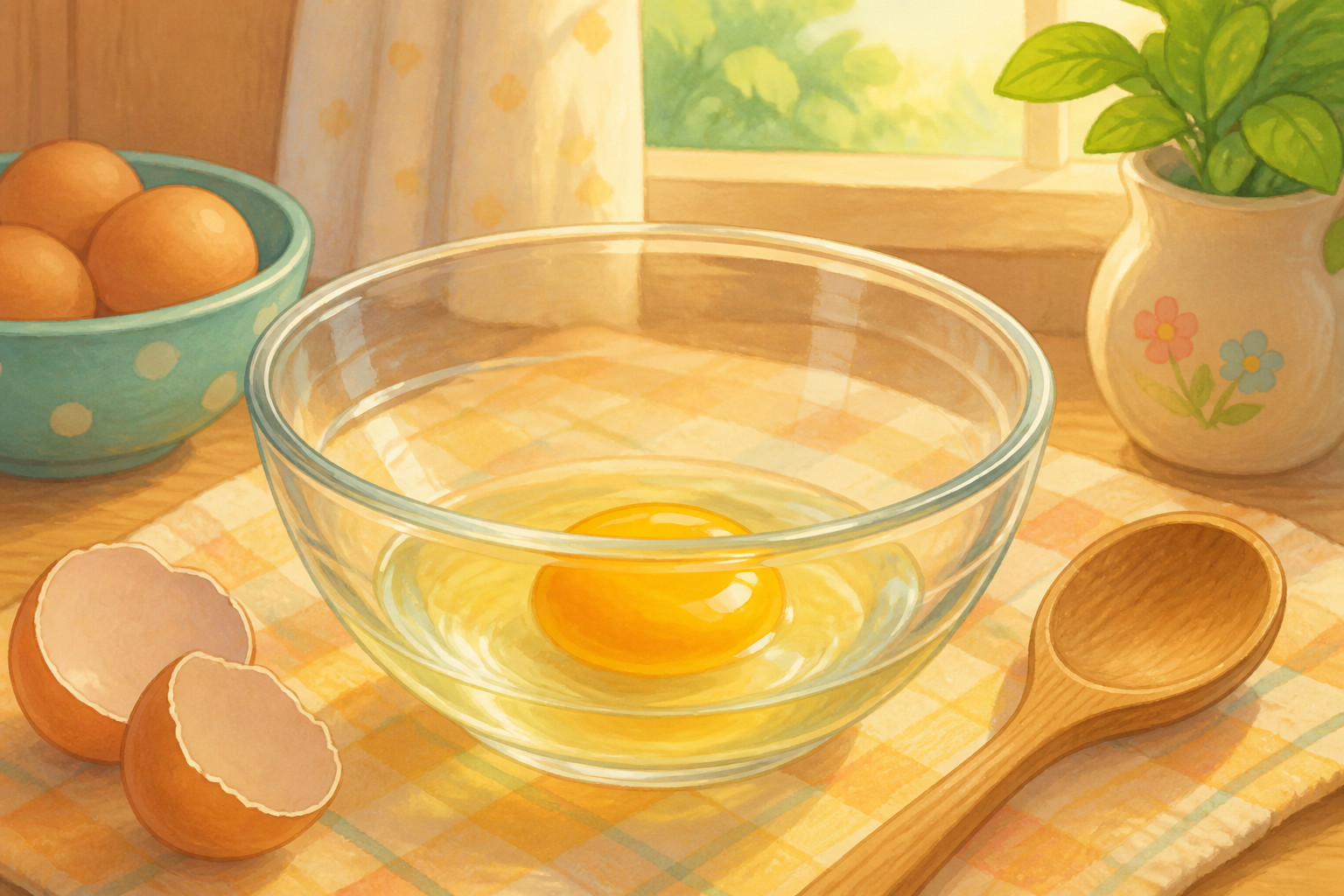
Picture a raw egg cracked into a bowl. The inside wobbles and slides, clear and gooey, and it slips right off a spoon. Yet after a few minutes in a hot pan, that same egg sits firm on your plate.
So how does a runny egg get firm? Let's look inside the egg and find out what changes.
A raw egg is mostly water. Water flows and spreads out, and that is why the egg slides around in the bowl.
Floating in that water are proteins, which are strings far too small to see. Each protein is curled up tight, like a little ball of yarn. Curled up like that, the proteins slip right past each other, so the egg stays runny.
Now a grown-up warms a pan on the stove and cracks the egg into it, keeping small hands away from the hot pan. The pan passes its heat into the egg from below. Soon the heat reaches every protein inside.
Heat makes the proteins jiggle and shake. They shake so hard that their tight curls come loose, and each ball of yarn unrolls into a long, floppy string. What do you think those loose strings do when they bump into each other?
They stick together! When one loose protein bumps into another, the two hold on. Then they hook onto more and more, until the proteins join into one big tangled net.
That net holds the water in its little gaps, the way a sponge holds water. Trapped in the net, the water can't flow anymore. So the egg stops sliding and keeps its shape, and now it is firm.
Let's remember our key word: proteins. Heat from the pan makes the curled-up proteins in the egg unroll and stick together into a net that holds the water still, and that makes the egg firm.
Next time you see an egg on your plate, you will know the secret hiding inside it, so snuggle in and have the coziest dreams.