Why are some foods crunchy and some soft?
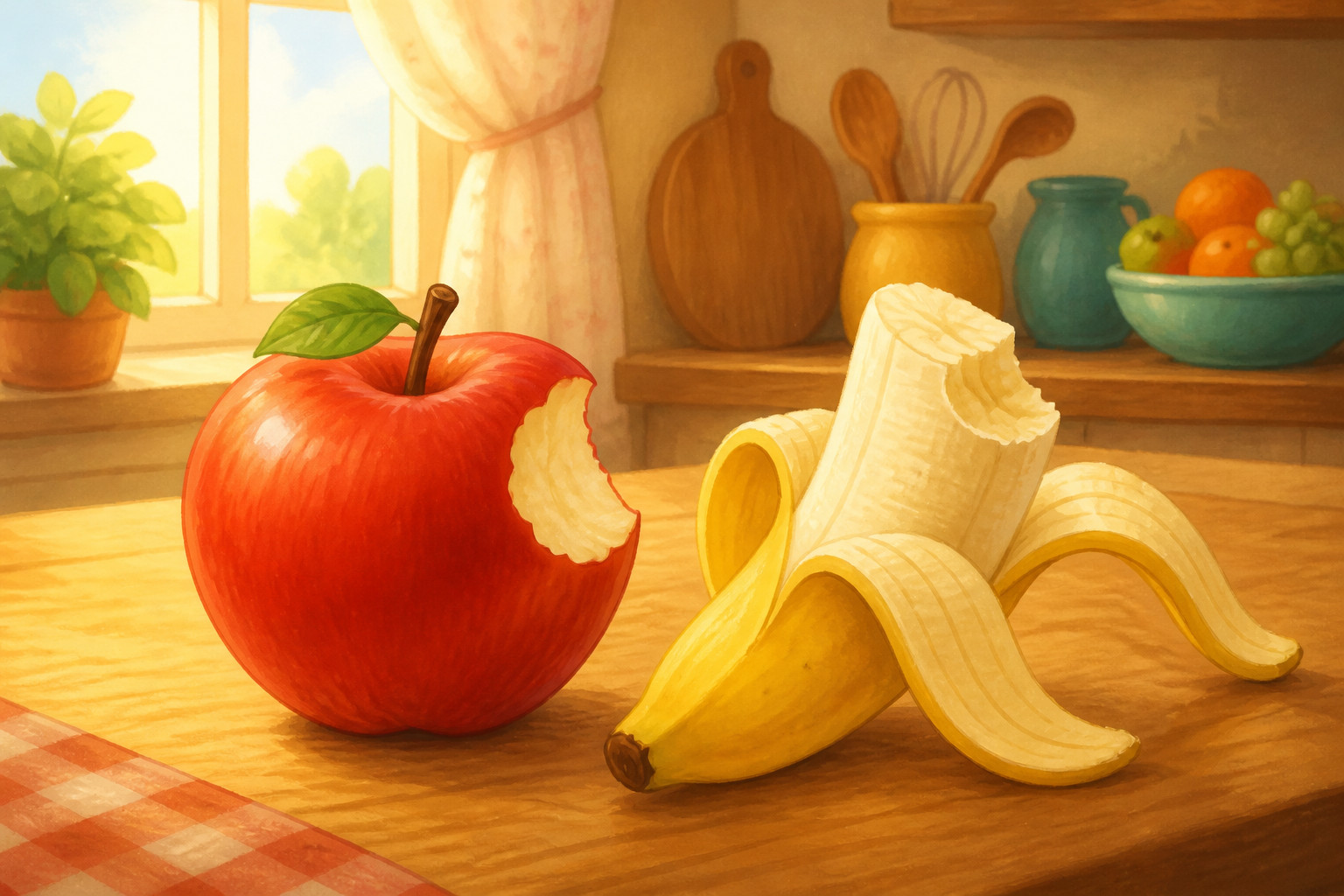
Bite into a fresh apple, and crunch! Now bite a ripe banana. It goes squish, soft and quiet.
So why are some foods crunchy, and some foods soft? Let's find out together.
Many foods, like apples, carrots and bread, have tiny walls inside, too small for your eyes to see. They sit close together, like the bubbles in a sponge. These walls hold the food together and give it its shape.
In a crunchy food, the tiny walls are brittle, which means stiff enough to snap instead of bend. Your teeth push down, and the walls break. Snap, snap, snap!
Each snap makes a very small sound. Lots of snaps together make the crunch you hear in your mouth.
In a soft food, the tiny walls are soft and bendy. Your teeth push, and the walls just squish together. Nothing snaps, so your bite stays quiet.
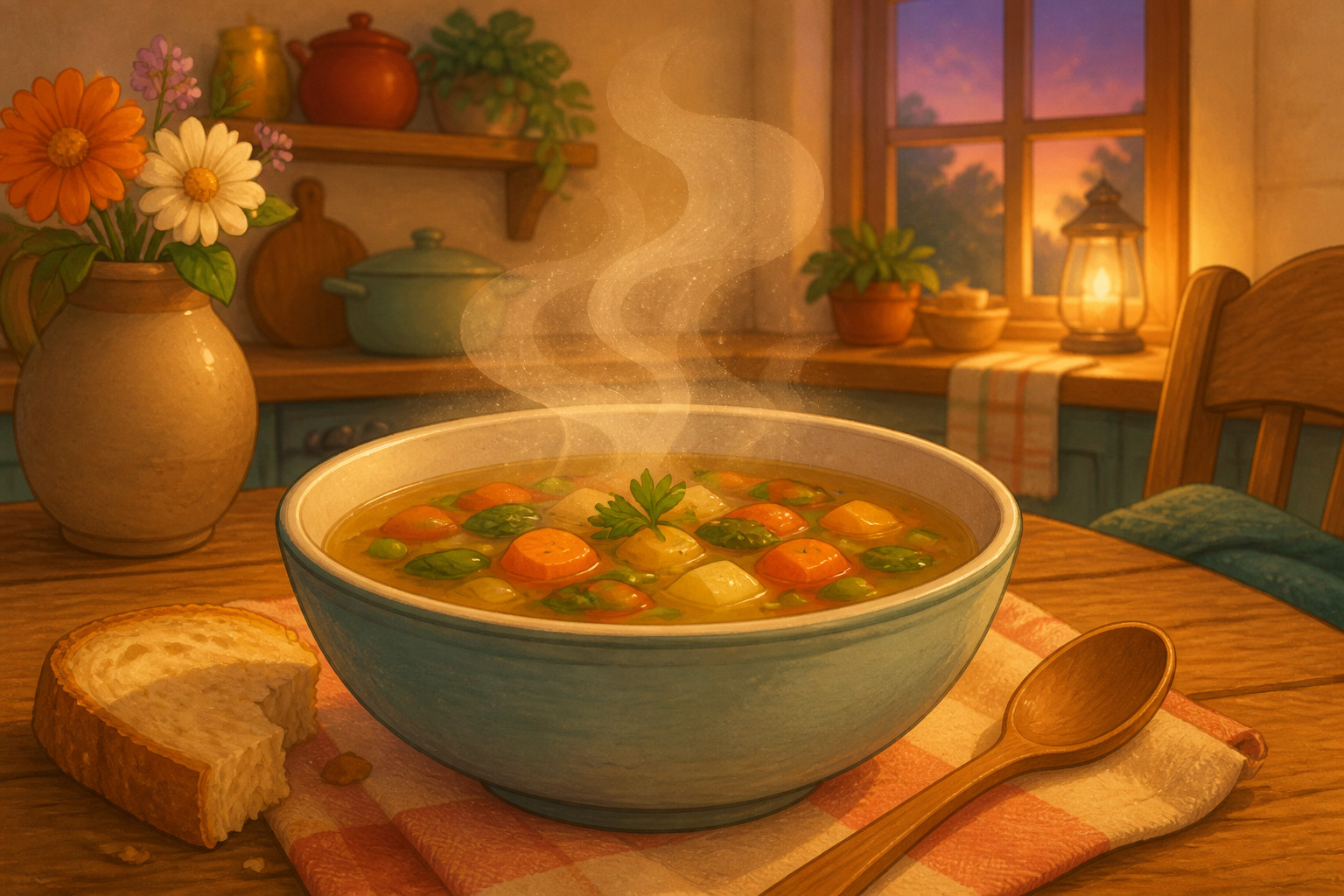
Now picture a raw carrot with brittle walls inside. A grown-up drops it into a pot of hot water to cook it for dinner. What do you think happens to those stiff walls?
The hot water makes the walls go soft and bendy. After cooking, the carrot squishes under your teeth. There is no crunch at all.
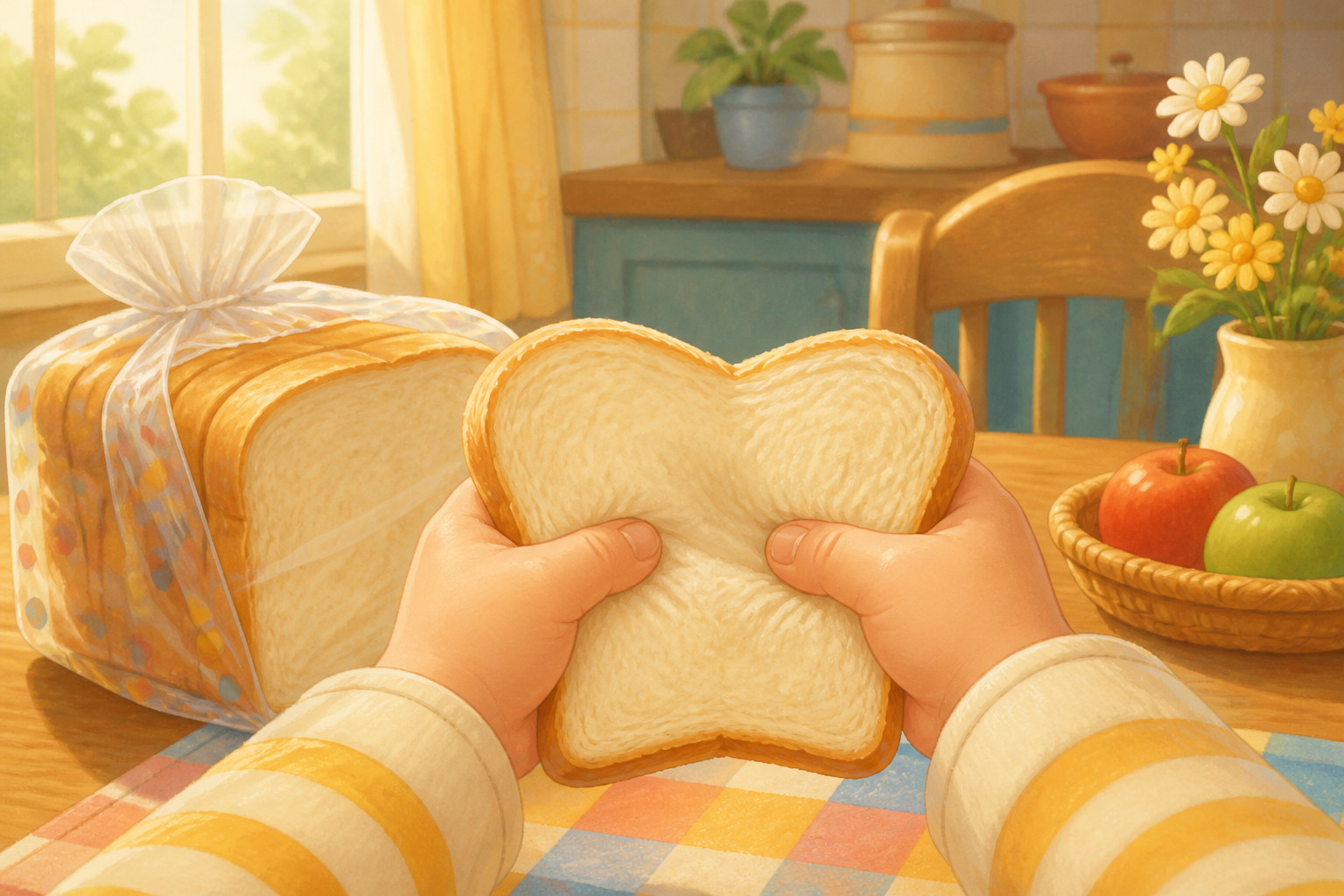
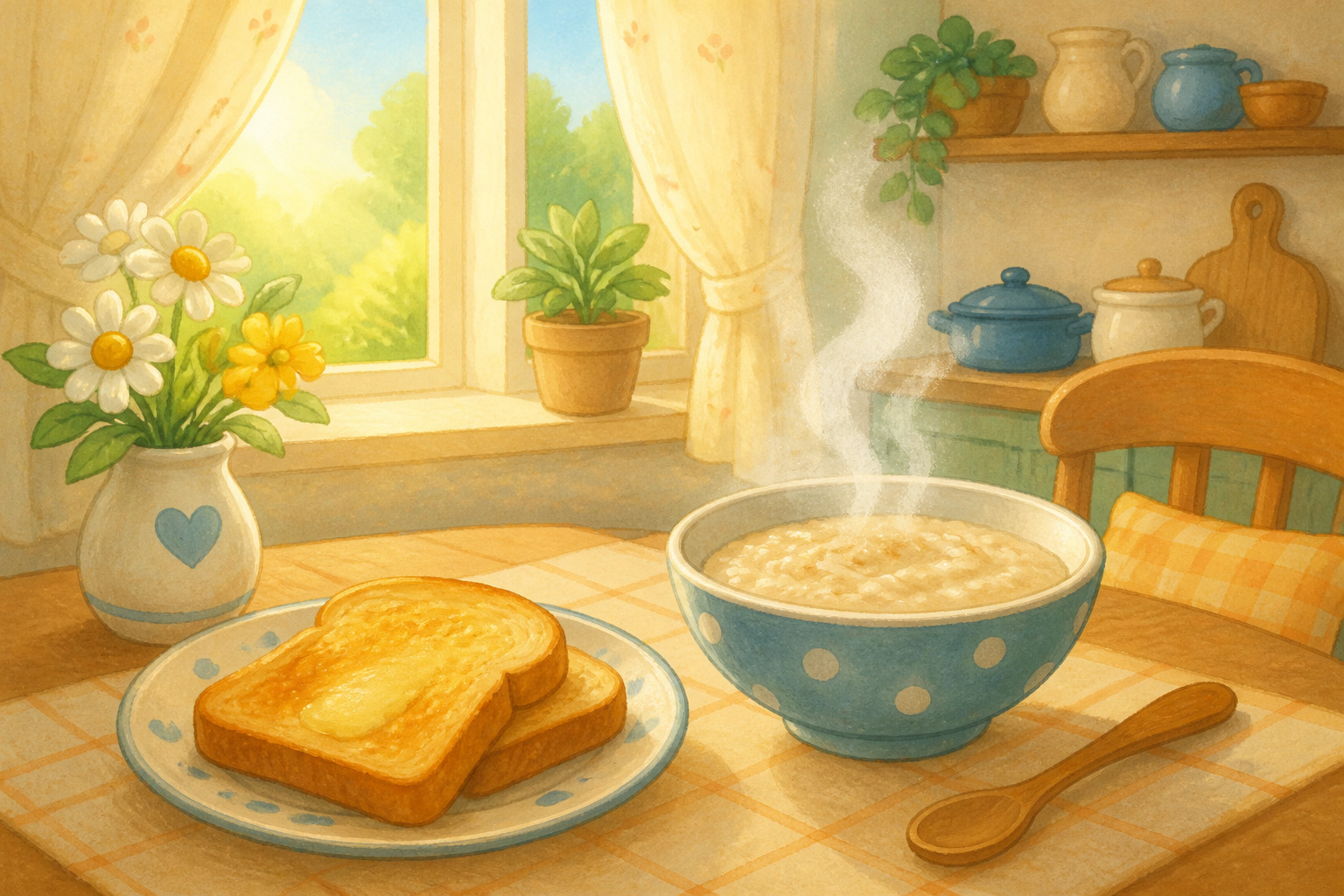
Soft bread has damp, bendy walls inside. A grown-up puts a slice in the toaster to warm it up.
The dry heat pulls the water out of the walls. They turn hard and brittle. Your toast goes crunch in your mouth!
Our word to remember is brittle. Brittle walls inside food snap and crunch, and bendy walls squish soft.
Enjoy every crunch and every squish at your next snack, little one.