Why does bread turn golden when we toast it?
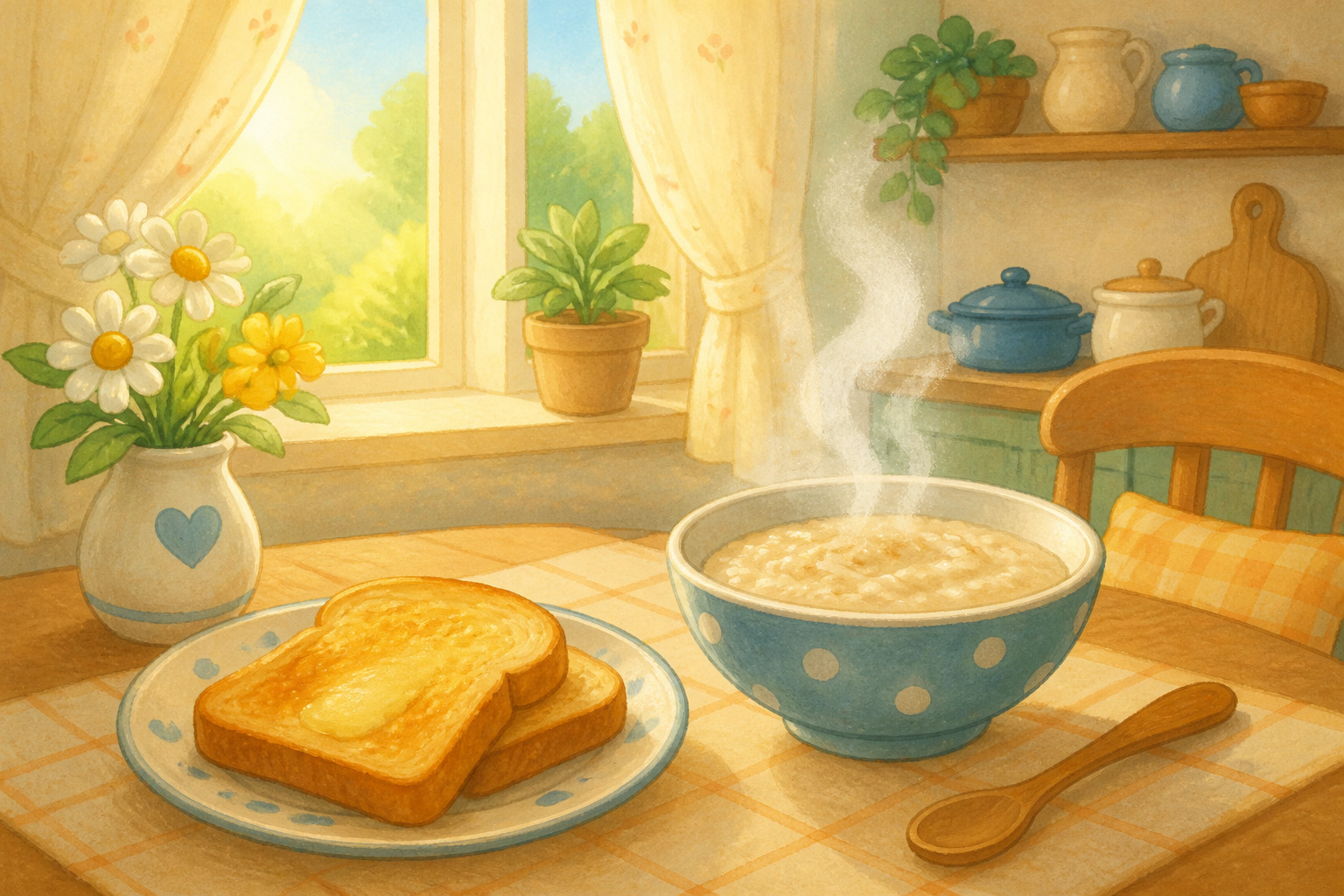
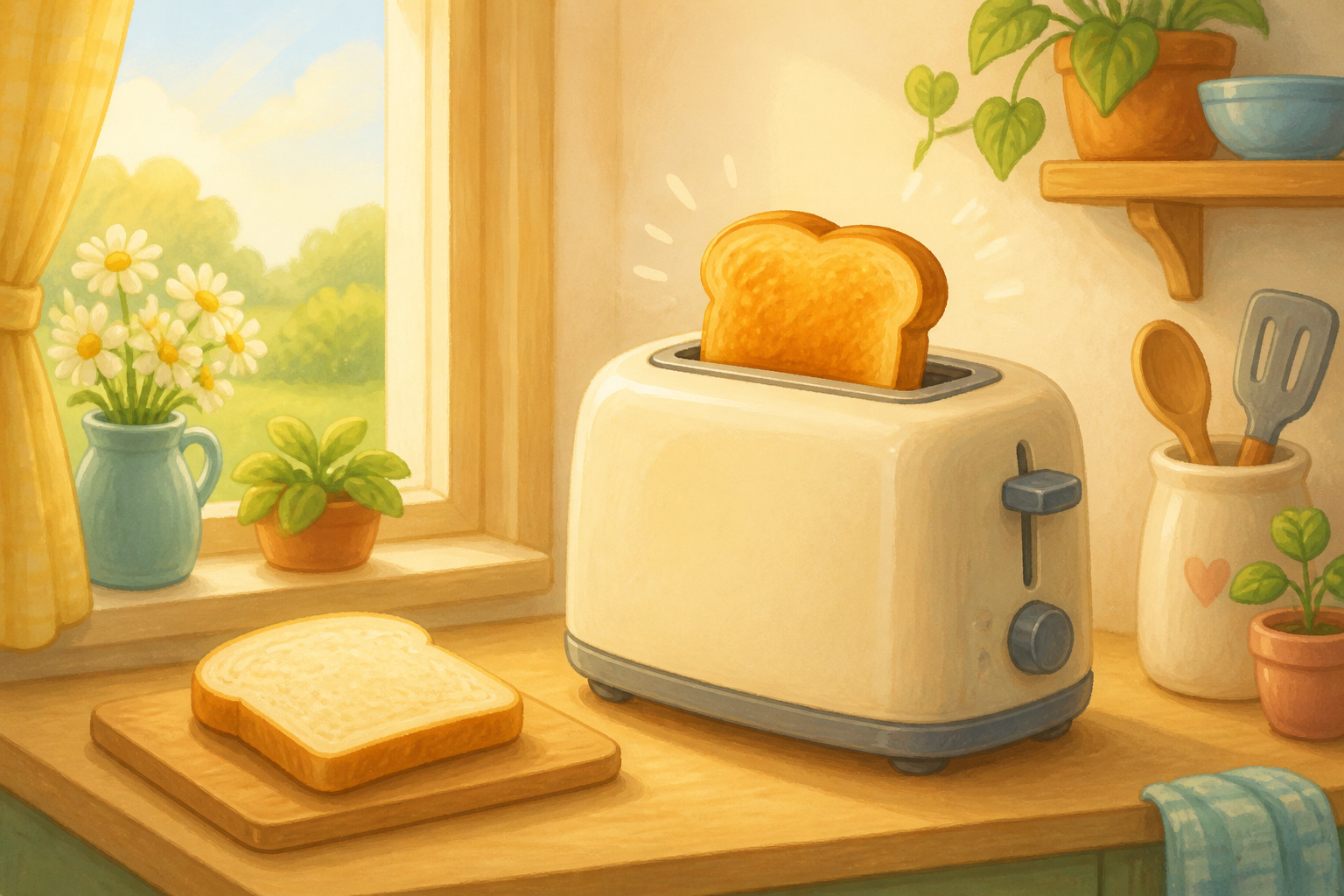
Think of a slow morning and the warm smell of toast drifting out of the kitchen. A slice of bread goes into the toaster soft and pale. A few minutes later, it pops up crisp and golden brown.
Where did that golden colour come from? The bread went in pale, and nothing else went in with it. So why does bread turn golden when we toast it? Let's follow the slice and find out.
First, a grown-up pushes the lever down, and the slice sinks between thin wires. The wires glow orange and shine heat onto both sides of the bread. That heat is what will change the bread's colour.
Bread has water hidden inside it, and that water keeps it soft and squishy. The heat turns the water on the outside of the slice into steam, and the steam floats away. Bit by bit, the outside of the bread dries out.
While the bread is still wet, the water keeps it from getting very hot. Once the outside is dry, it heats up fast, until it is much hotter than boiling water. Now the outside is ready to change.
Bread is made from flour, and flour holds tiny bits of sugar and protein. Those bits are spread all through the slice, right out to its outside. What do you think they might do, now that the outside is so hot and dry?
On the hot, dry outside, the sugar and protein join together and make brand-new bits that are golden brown. This is called the Maillard reaction, which means sugar and protein joining up in strong heat and turning brown.
The longer the slice stays in the toaster, the longer the Maillard reaction keeps going. More and more golden bits pile up on the outside. That is how pale bread turns golden, and then a darker brown.
Deep inside, the middle of the slice still holds its water. Wet bread never gets hot enough for the Maillard reaction, so the middle stays soft and pale. That is why toast is golden on the outside and soft in the middle.
The Maillard reaction. When a grown-up toasts bread, the heat dries out the outside of the slice, and then the sugar and protein there join up in the Maillard reaction and turn golden.
Next time a golden slice of toast pops up for you, you can smile, because now you know exactly where all that gold came from.