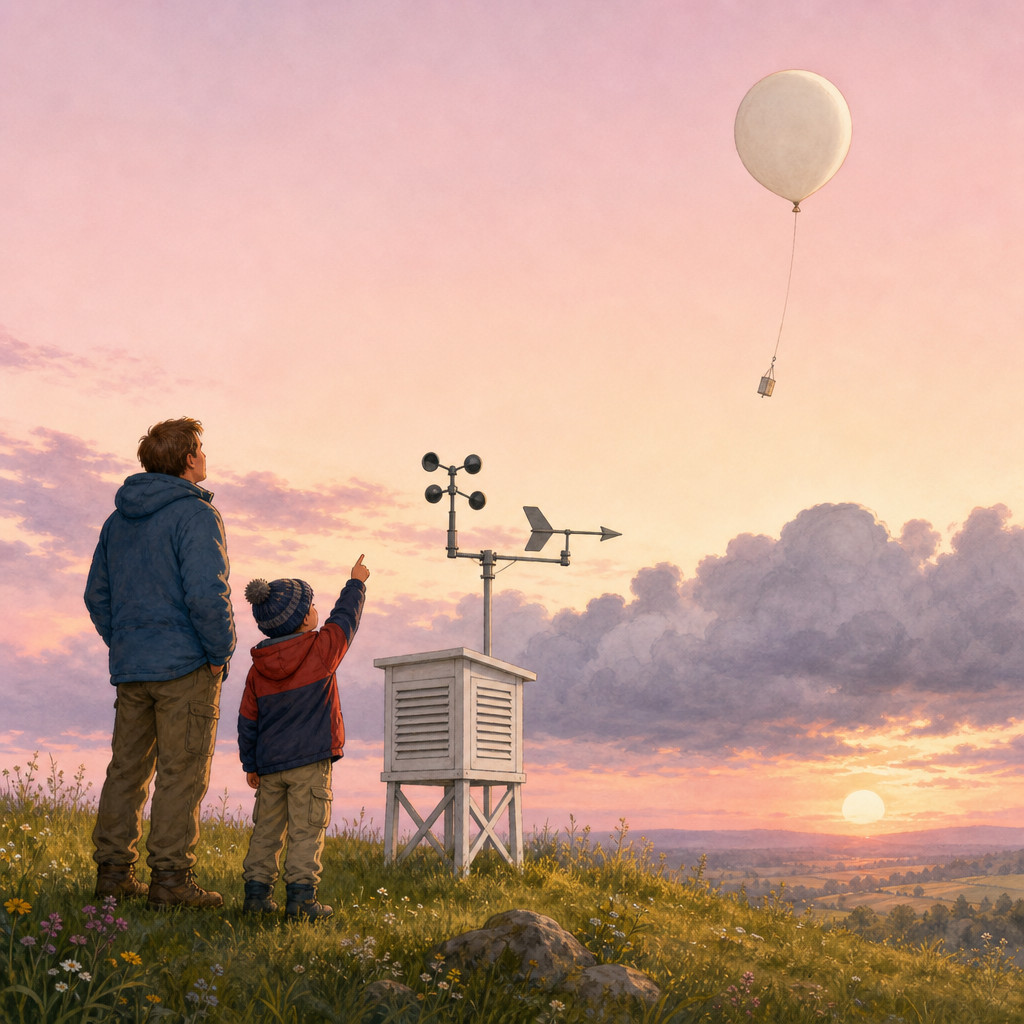
Why does the air push less before it rains?
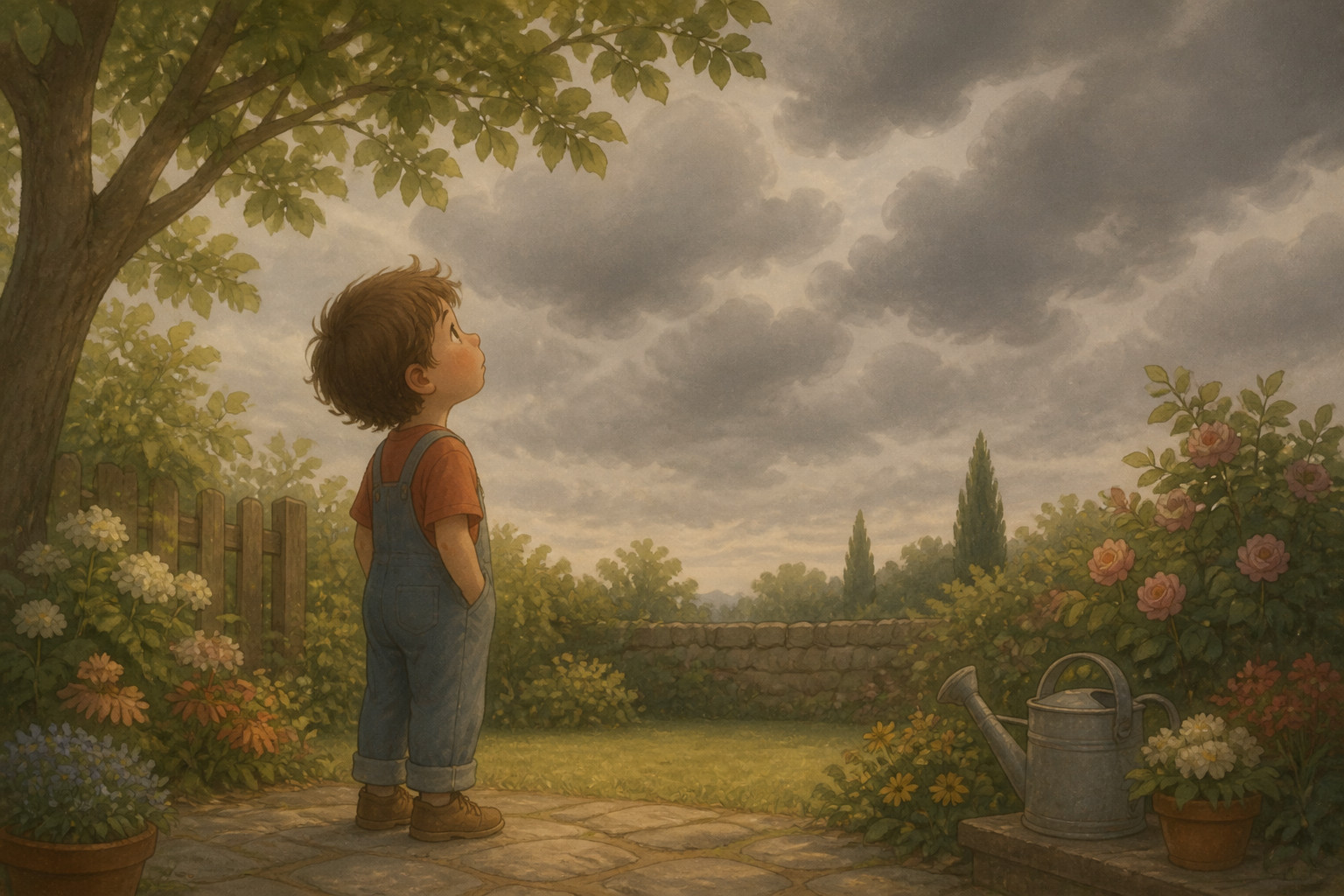
Have you ever stepped outside just before a rainstorm? The air feels warm and sticky on your skin, and the sky turns grey and still.
Grown-ups who watch the weather say that before rain comes, the air pushes less. Why does the air push less before it rains? Let's find out together.
Air is full of bits far too small to see, and those bits have weight. Above your head sits a tall, tall stack of air that reaches all the way up into the sky.
All that air leans down on you, on the grass and on every rooftop. This push has a name, air pressure, which means the weight of all the air above pressing down. The more air piled up above you, the stronger the air pressure.
On a warm day, the sun heats the ground, and the ground warms the damp air sitting just above it. Warm, damp air is lighter, so it floats upward, like bubbles rising in a bath. When lots of warm air keeps floating up and away, what do you think happens to the tall stack of air above you?
The stack of air gets lighter! High in the sky, the rising air spreads out sideways and flows away, so less air is left above you pressing down, and the air pressure drops. That weaker push is what grown-ups mean when they say the air pushes less.
Now follow the rising air high into the sky, where it is cold. Up there the damp air cools, and the water in it, which you cannot see, gathers into tiny drops. Millions of those drops crowd together and make a cloud.
More warm air keeps rising and feeding the cloud, so it grows tall and dark. Inside, the tiny drops bump together and grow heavier, until they are too heavy to float and down comes the rain. The air pressure drops first, while the air rises, and the rain arrives after.
Air pressure. Before it rains, warm damp air floats up and spreads away high in the sky, so less air is left pressing down on you, and that same rising air builds the rain cloud.
Next time the air feels warm and sticky before a storm, you will know the air above you is rising up to make the rain, little weather watcher.
 Fenn