How do satellites spot storms from space?
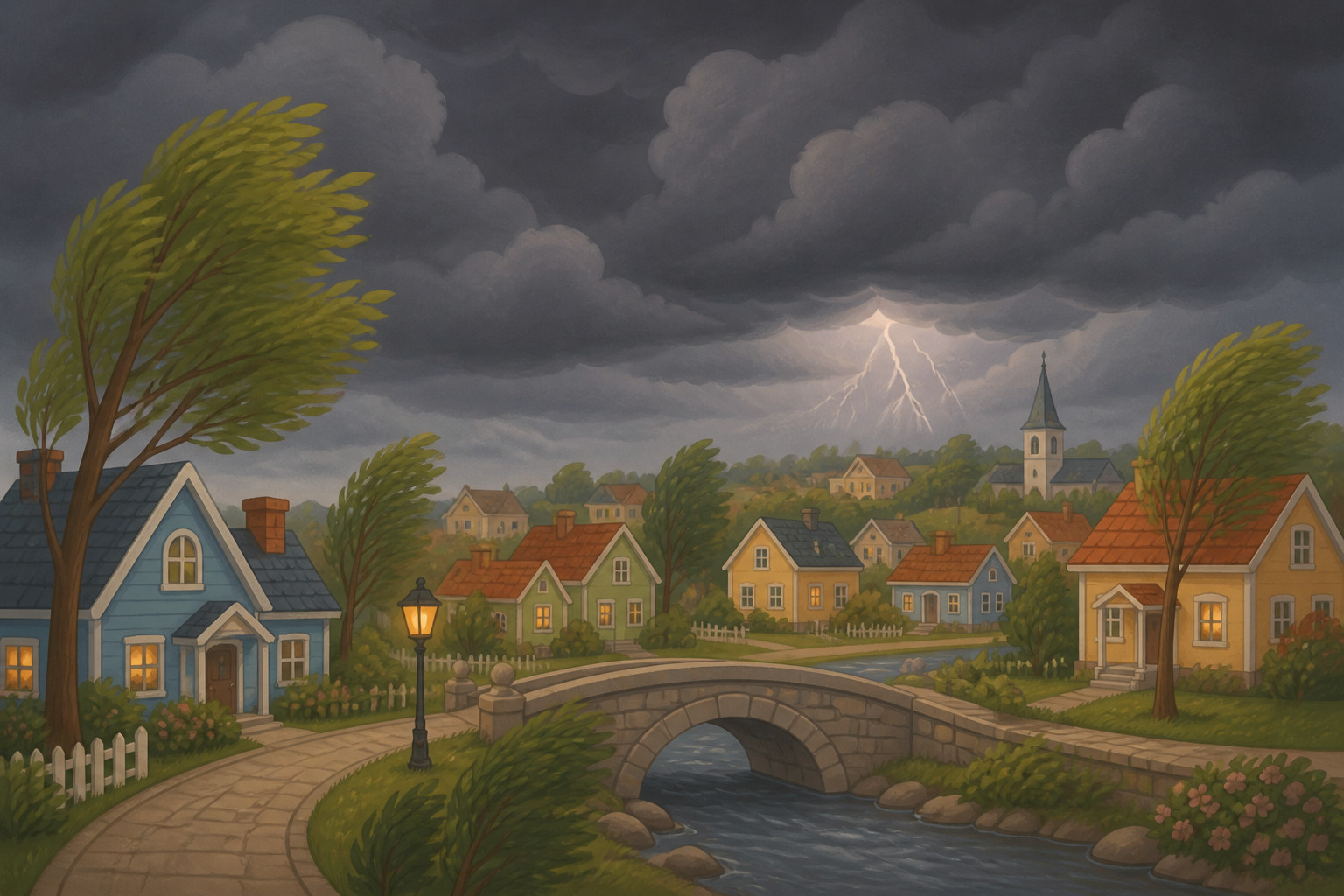
Think of a day when the sky grew dark and heavy. You could feel the wind tug at your clothes and hear thunder rumble far away. From the ground, you could see only a small patch of those clouds.
High above the clouds, far out in space, satellites travel around our Earth. They can't feel the wind or hear the thunder. So how do satellites spot storms from space?
A weather satellite travels around Earth far higher than any airplane. From up there, it looks down on a whole ocean at once. So it can see a giant storm from one edge to the other, not just a little patch.
The satellite carries a camera that points down at Earth. In the daytime, it takes pictures of the clouds, which look white against the dark blue sea. Storm clouds show up as big, bright patches, because thick clouds bounce back lots of sunlight.
At night, though, no sunlight shines on the clouds. So the satellite also has an infrared camera, which means a camera that sees how warm or cold things are. Infrared works in the dark, so the satellite keeps watching all night long.
High up in the sky, the air is freezing cold. A storm cloud grows very tall, so its top pokes up into that cold air. In infrared pictures, the tallest storm clouds show up as the coldest spots of all.
The satellite doesn't take just one picture. It takes new ones again and again, every few minutes, and sends them down to Earth by radio. That way, the pictures keep up with every cloud that starts to change.
Down on the ground, a forecaster, which means a person whose job is telling what weather is coming, gets those pictures. The forecaster plays them one after another, like a flip book. What do you think a storm looks like when the pictures play in a row?
The clouds start to move! The storm clouds puff up and spread out wider, and their coldest spots grow bigger in the infrared pictures. When the forecaster sees clouds doing that, the forecaster knows a storm is building there.
Infrared, forecaster. A satellite high above Earth takes picture after picture of the clouds, its infrared camera finds the tallest, coldest storm clouds, and a forecaster watches them grow into a storm.
Next time the sky turns dark and grumbly, you can picture a satellite far above, quietly keeping watch over all of us.
 Fenn