What does a weather station measure?
Think about stepping outside on a windy day. You feel cool air on your cheeks and hear the leaves rustle above you. Your skin and your ears are telling you about the weather.
In parks, schoolyards and airports, a weather station stands outside day and night, with its tools on a tall pole. It notices the weather too, much more exactly than your skin can. So what does a weather station measure?
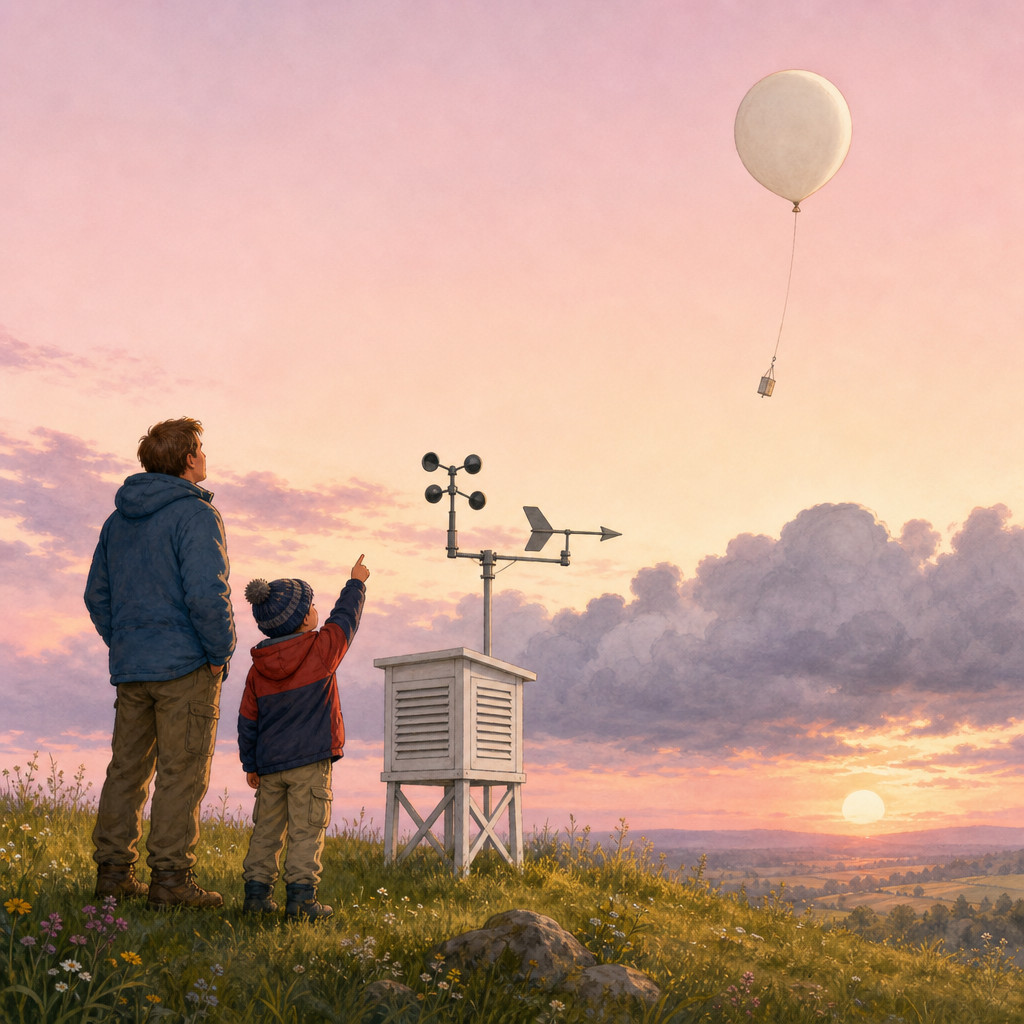
First, the station measures how warm or cold the air is with a thermometer. The thermometer sits inside a white box with slatted sides, like a tiny house with shutters. The shade keeps the sun from heating it, and the gaps let air flow through, so it measures the air itself.
Next, the station measures how fast the wind blows with an anemometer, which means a set of small cups that spin in the wind. The harder the wind pushes, the faster the cups whirl around, and the station counts the spins. But spinning cups cannot show where the wind is coming from. What could the station use to find that out?
The station uses a wind vane, which means a pointer that turns to face into the wind. Its arrow swings until it points toward the place the wind comes from, so a wind vane pointing at the sea tells you the wind is blowing in from the sea. Together, the anemometer and the wind vane show how fast the wind is and where it comes from.
The station also catches rain in a rain gauge, which means a tall tube that collects the falling drops. Lines on its side show how deep the water inside gets. After a rainy night, deep water in the rain gauge tells you that a lot of rain fell.
These tools never take a rest. Day and night, the thermometer, the anemometer, the wind vane and the rain gauge keep measuring. The station sends all their numbers to computers far away.
Weather forecasters, the people who tell us what weather is coming, read the numbers from many stations at once. When anemometers spin fast and rain gauges fill up in one town, forecasters can warn the towns nearby that a storm is heading their way. That way, you know when to grab your coat and umbrella.
Anemometer, wind vane and rain gauge. A weather station uses its tools to measure how warm the air is, how fast the wind blows and where it comes from, and how much rain falls, so forecasters can tell everyone about the weather.
Next time the wind brushes your cheeks, you can picture the cups spinning and the arrow turning to meet it, sleepy weather watcher.
 Fenn