Why can we guess tomorrow's weather but not next month's?
Think of stepping outside in the morning and feeling a cool wind on your cheeks. Last night, a grown-up said rain was coming, and now gray clouds fill the sky. That guess about tomorrow came true!
But nobody can tell you if the sun will shine on a day next month. Not your teacher, and not the weather report on TV. So why can we guess tomorrow's weather, but not next month's?
Moving air makes the weather, and the air moves all the time. Wind pushes clouds, rain and warm air from place to place, across mountains and seas. So the weather that reaches you tomorrow is already out there today, far away.
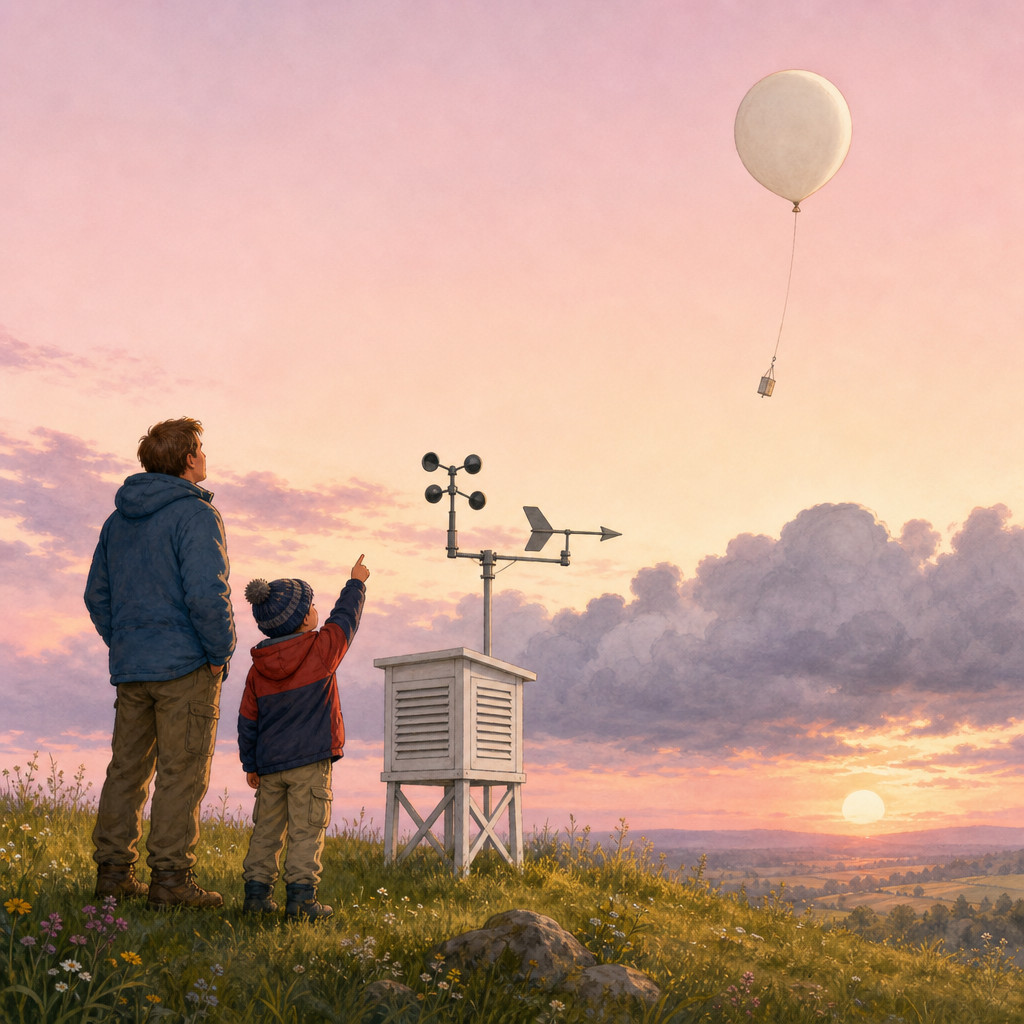
People who study the weather check that air right now, all over the world. They send up balloons and look at pictures from space to see how warm, windy and wet the air is. They do this so they know what is heading your way.
Then they work out where the clouds and wind will travel next. Their answer is called a forecast, which means a guess about the weather made from what the air is doing now. A forecast for tomorrow works well, because tomorrow's clouds are already on their way.
Still, nobody can measure every tiny change in the air on the whole Earth. A little breeze over a field or a warm spot by a lake slips past their balloons and pictures. What do you think happens to those tiny missed changes as the days go by?
They grow bigger! A tiny change today nudges the air a bit more tomorrow, and more again the next day. It works like a snowball rolling down a hill, growing bigger and bigger as it goes.
After about ten days, those little changes have grown so big that they change where the clouds go. Then a forecast can't say what the sky will do. That is why next month's weather stays a surprise.
One word helped us today: forecast. Tomorrow's weather is already moving toward us, so a forecast can catch it, but tiny missed changes in the air grow bigger each day until next month is too far away to see.
Next time you hear tomorrow's forecast, look up and wave hello to the clouds already drifting your way.
 Fenn