Why does a wooden block stay afloat?
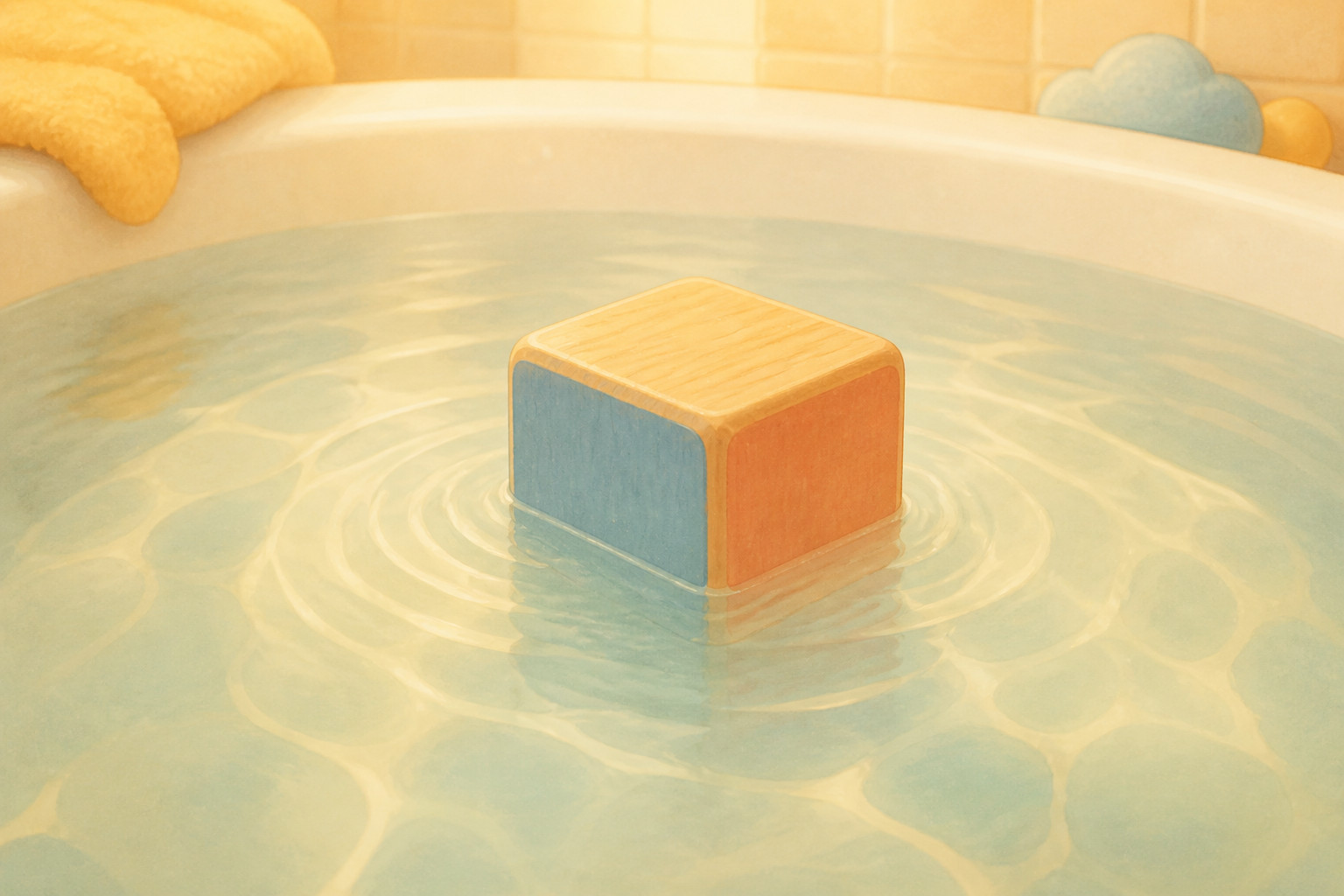
A wooden block can bob on bathwater like a tiny boat. Part of the block sits under the water, but its top stays dry. Why does a wooden block stay afloat?
First, there is gravity, the pull that draws things toward the ground. Gravity pulls on your toys, your blanket, and the wooden block. It keeps pulling downward even when the block rests on water.
When you place the block on water, its bottom dips below the surface. The block takes up space, so it moves some water out of the way. That water moves aside and a little higher.
The water pushes back upward against the block. This upward push has a name: buoyancy. Buoyancy works against gravity, helping to hold the block up instead of letting it fall straight to the bottom.
But why does this block not sink all the way? This wood is light for its size. Water can hold it up while part of the block still sticks out.
Here is a little guessing moment: if the wooden block dips farther into the water, will the water push up more or less? More of the block now takes up room beneath the surface.
The answer is more. As the block dips farther down, it moves more water aside, and buoyancy grows stronger. The block needs that growing upward push to balance gravity's downward pull.
Because this block is light for its size, buoyancy holds it up before it goes all the way under. Water pushes up as much as gravity pulls down. The block stays afloat.
Not every piece of wood floats. Some wood is heavy for its size, so it sinks. This little bath block is light enough to float.
Gravity, water moving aside, buoyancy, light wood. The wooden block stays afloat because its wood is light enough for water to hold it up.
Now you know the quiet secret beneath your little wooden boat.