Why does sugar vanish in water but flour doesn't?
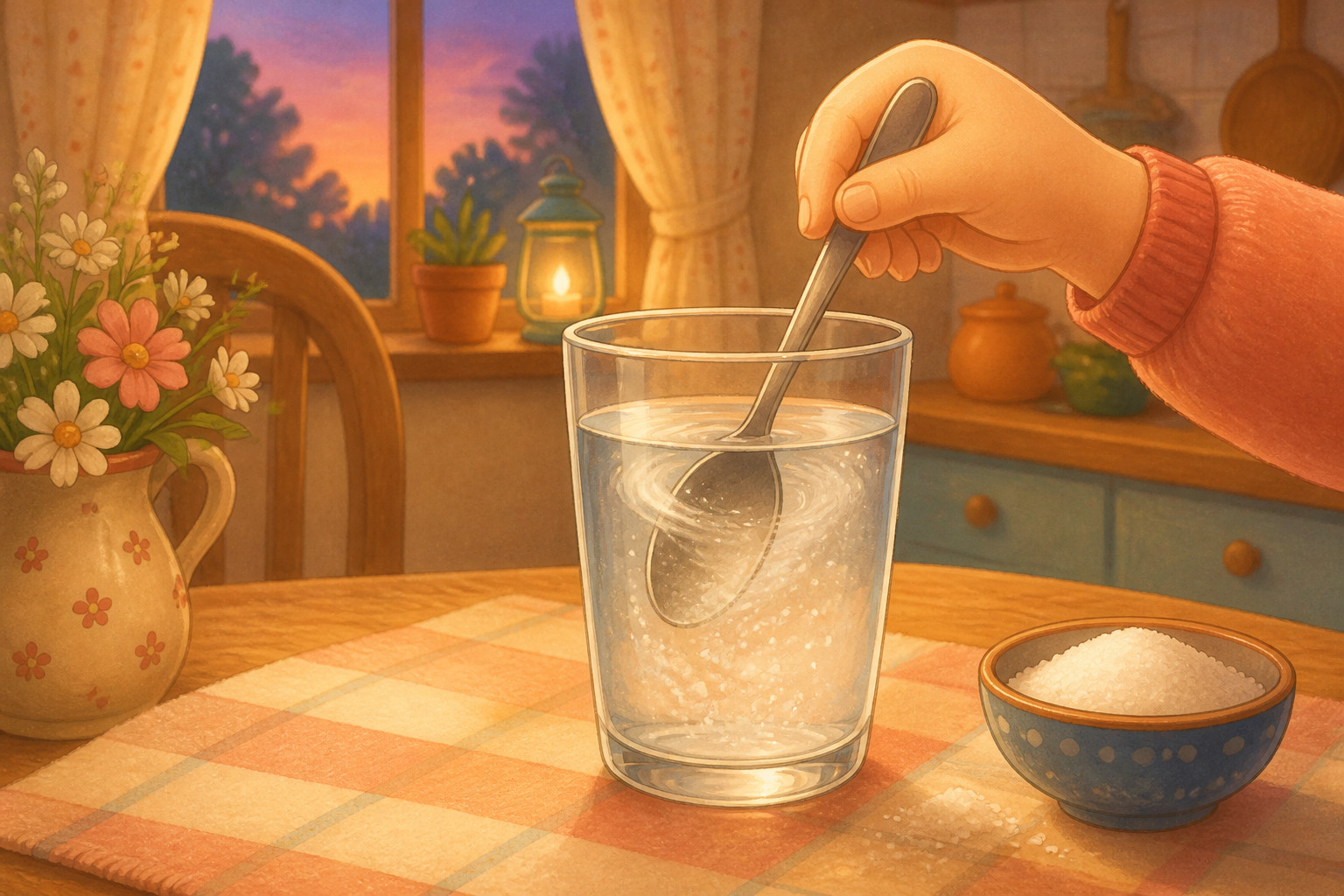
Picture a glass of water and a spoonful of sugar. You tip the sugar in and stir, clink, clink, against the glass. Watch closely, and the white grains shrink and fade until the water looks clear again.
Now try the same thing with a spoonful of flour. This time the water turns cloudy and white, like milky fog, and the flour will not go away. So why does sugar vanish in water, but flour doesn't?
Let's start with the water itself. Water is made of tiny bits, too small for your eyes to see, and they never sit still. They jiggle and bump into anything you drop in, and that bumping is where our answer begins.
Each grain of sugar is built from tiny sugar bits, too small to see, stacked together like a little pile of blocks. Water bits stick to sugar bits easily, so they crowd all around the grain. Holding on like that lets them start to pull.
With every jiggle, the water bits tug one sugar bit off the pile and carry it away. Then they tug the next one, and the next. What do you think is left of the grain when the water bits keep pulling like this?
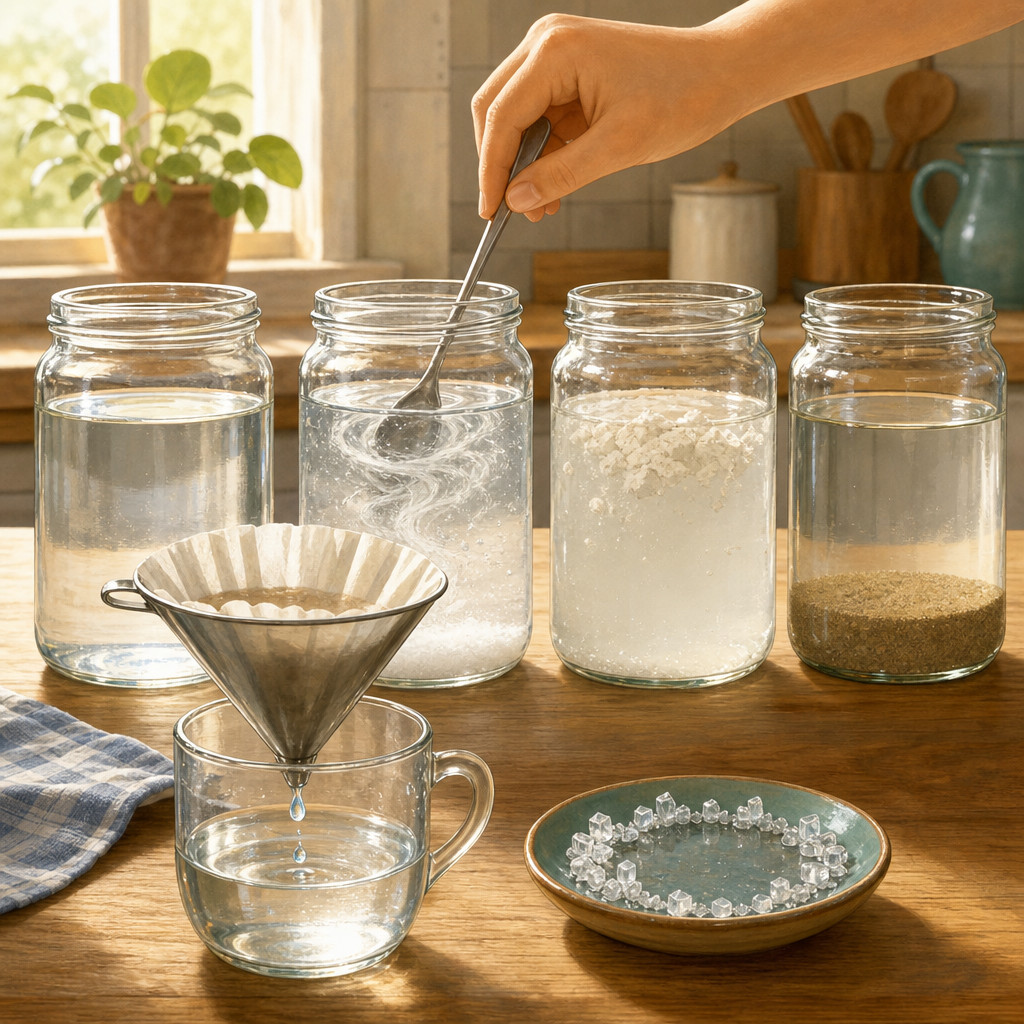
Soon nothing is left of the grain at all, because every sugar bit floats on its own between the water bits. When sugar does this, we say it dissolves, which means it breaks into bits too small to see and spreads all through the water. The sugar has not gone away, though, so every drop of the water tastes sweet.
Now let's look at flour. Flour is mostly starch, which means the food a wheat seed keeps inside to feed its new little plant. That starch comes packed in little grains of its own, much smaller than a sugar grain.
Inside each starch grain, long, long strings wind round and round and hug each other tightly. The water bits tug at them too, but the strings are too long and cling together too tightly to come loose. So starch does not dissolve in a glass of cool water.
The starch grains stay whole, and each one is huge next to a single sugar bit. Those grains float around and bounce the light back to your eyes, which is why the water looks cloudy instead of clear.
Sugar vanishes because the jiggling water bits pull it apart, one tiny bit at a time, until it dissolves all through the water. Flour does not vanish because the long strings in its starch cling too tightly for the water bits to pull loose, so whole starch grains float around and make the water cloudy.
Side by side, the two glasses tell the whole story. The sugar glass shines clear and tastes sweet, while the flour glass stays white like milky fog.