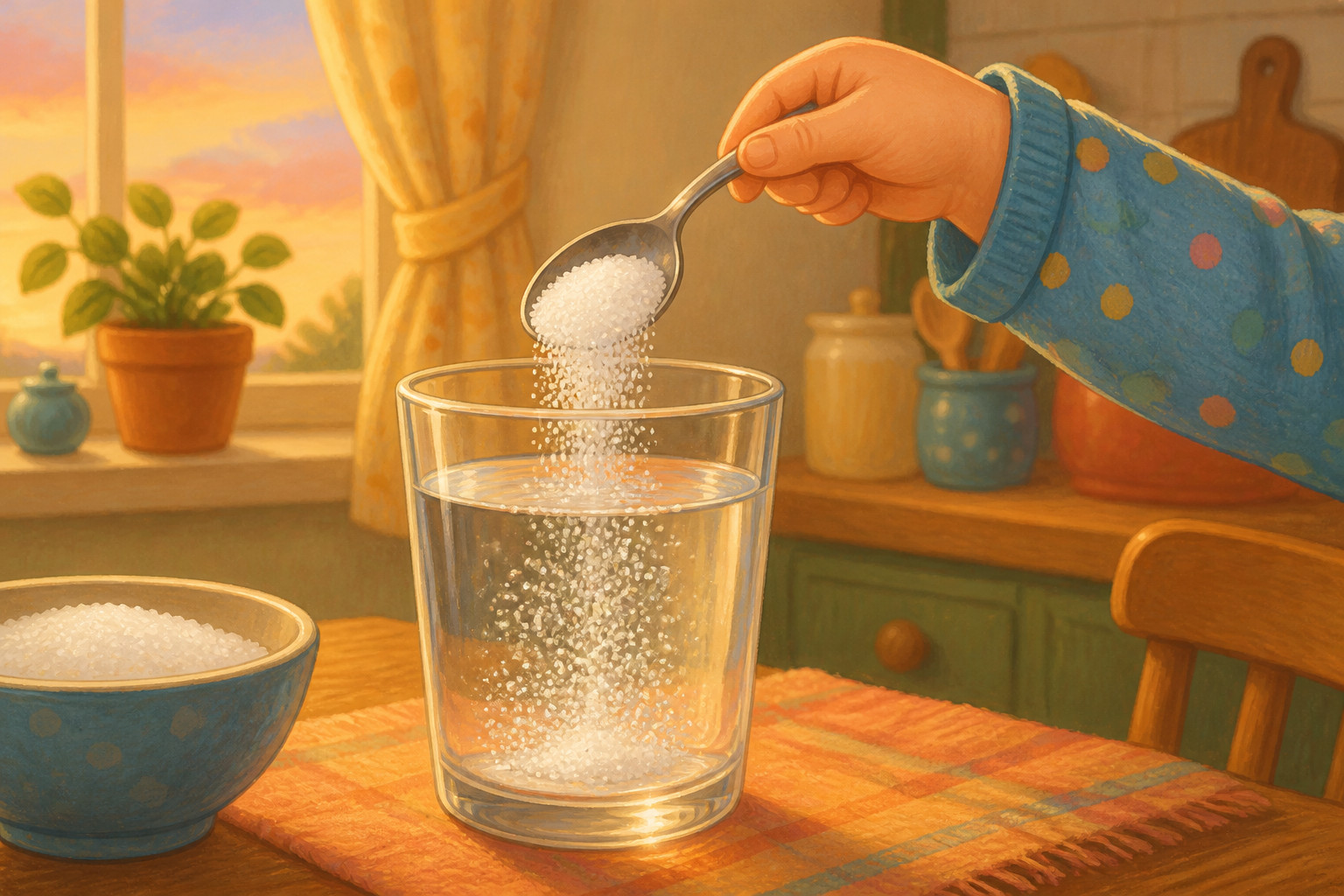
Does sugar disappear faster in warm water?
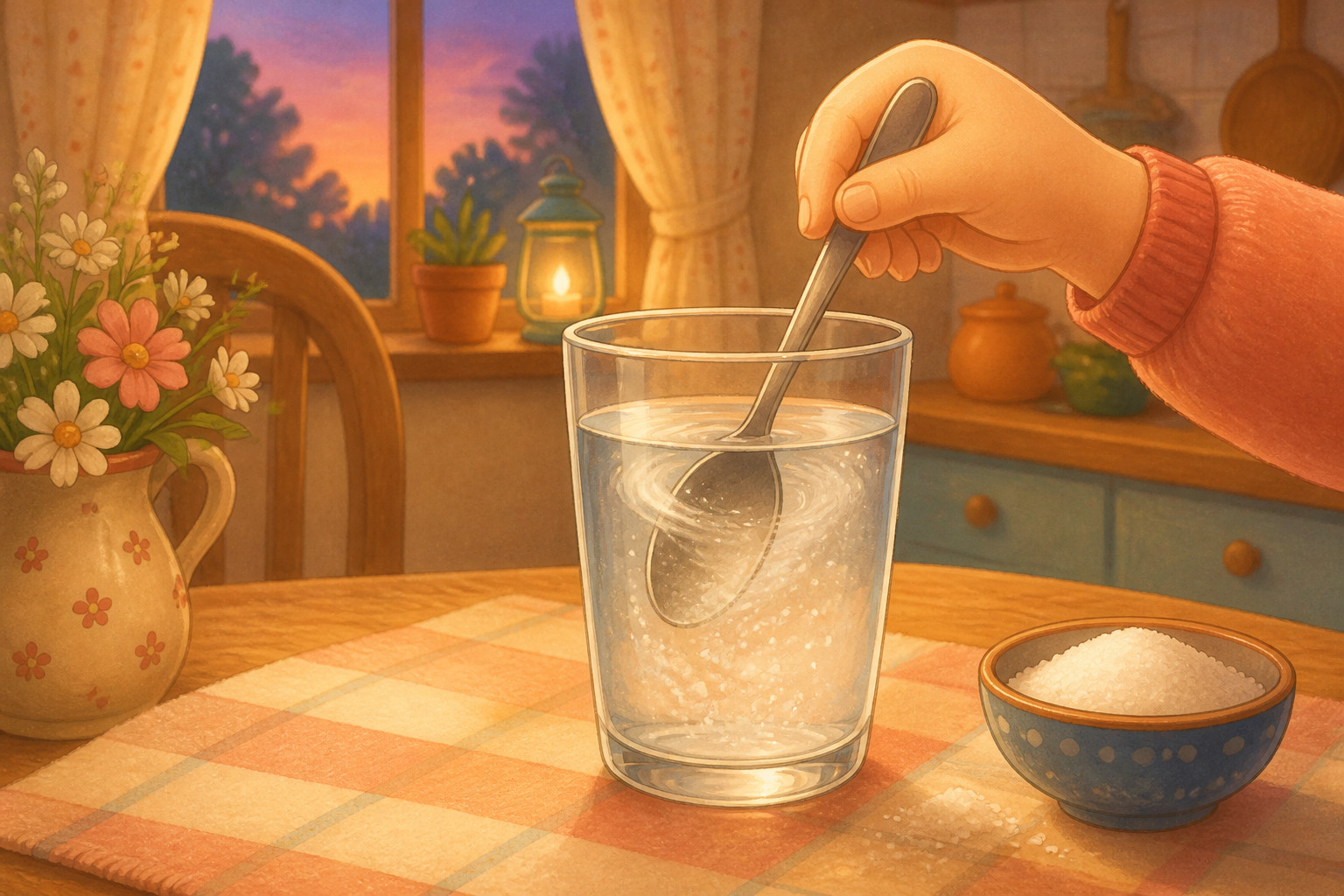
Have you ever dropped a spoonful of sugar into a cup of water and watched it? At first you can see the little white grains, and they feel crunchy between your fingers. Then, bit by bit, the grains seem to vanish.
Now picture two cups, one with warm water and one with cold water. You drop one spoonful of sugar into each cup, the very same amount in both. Does sugar disappear faster in warm water?
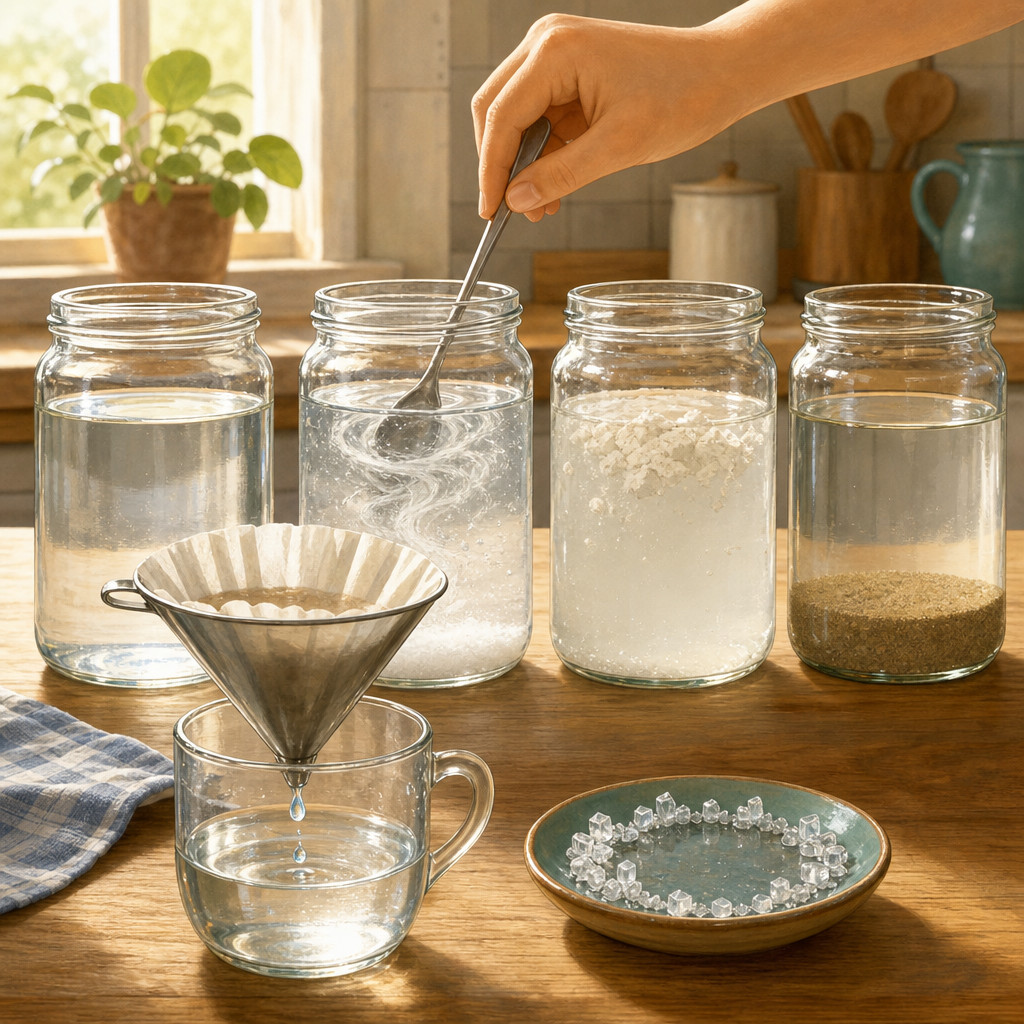
When sugar seems to vanish, it dissolves, which means it breaks into pieces too small to see and spreads all through the water. The sugar is still there, hiding in the water. That is why a sip tastes sweet even when the cup looks clear.
The water itself breaks the sugar into those pieces. Water is made of molecules, which are tiny bits of water far too small to see. These molecules never sit still. They wiggle and jiggle and bump into everything around them.
When a sugar grain lands in water, the water molecules crowd around it and bump against its edges. Each bump tugs a tiny bit of sugar loose and carries it off into the water. Bump after bump, the grain gets smaller, and that is how sugar dissolves.
Now let's warm the water up. Warmth makes the water molecules wiggle and zoom around faster than before, like children running across a playground. What do you think all those speedy molecules will do to the sugar grain?
They bump into the grain much more often, and they bump it harder too. So the bits of sugar get knocked loose quicker, and the grain shrinks fast. Yes, sugar does dissolve faster in warm water!
In the cold cup, the molecules move slowly, like sleepy children shuffling off to bed. They bump the sugar gently and less often. That is why the grains stay at the bottom of a cold cup for a longer time.
Let's remember our two words: dissolve and molecules. Sugar disappears faster in warm water because warmth makes the water molecules move faster, so they knock the sugar apart and it dissolves quicker.
The next time sugar vanishes into a warm drink, you can picture all those busy molecules at work. Sweet dreams, little explorer.