Why does a wet sponge sink but a dry one float?
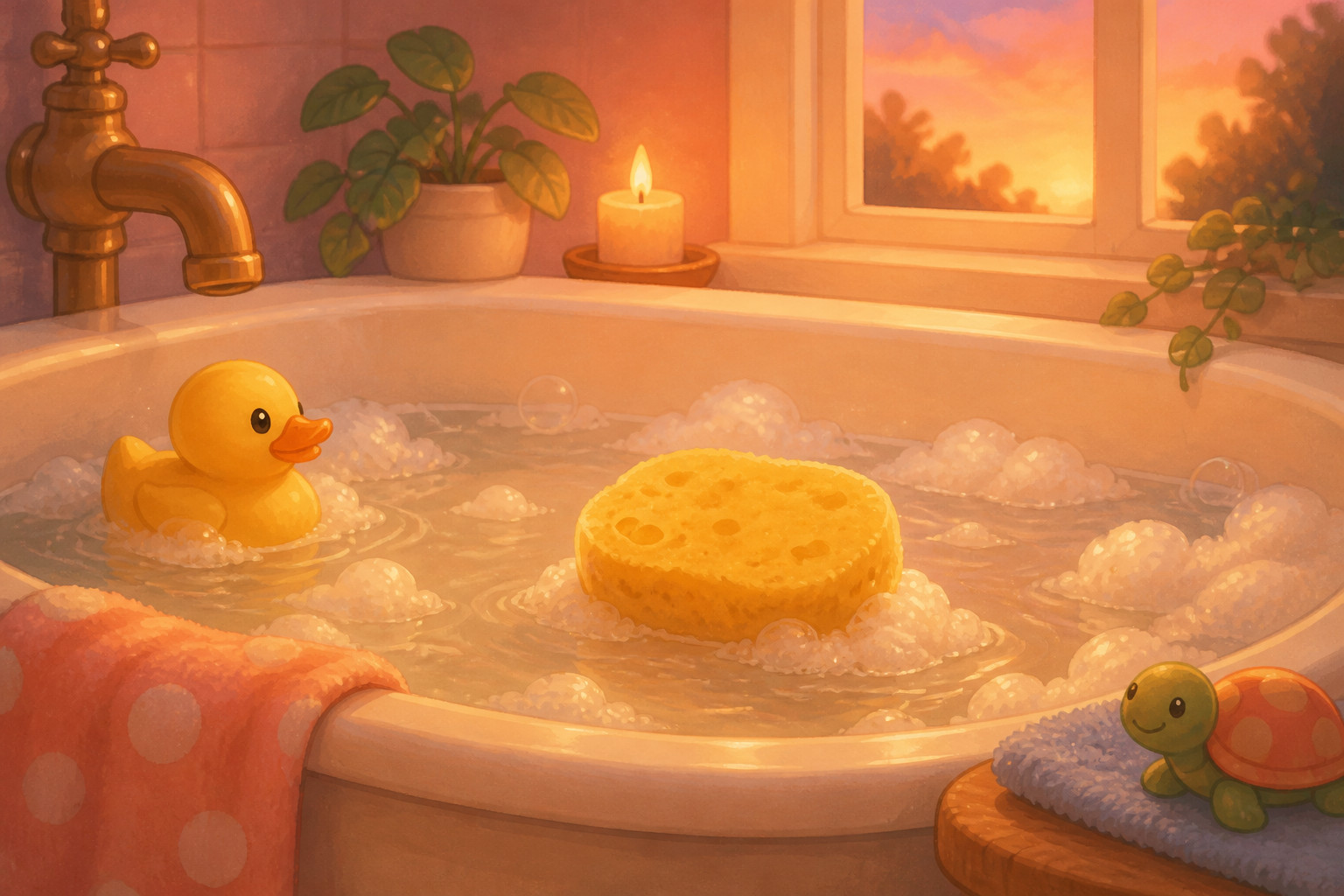
Splash! At bath time, a dry sponge bobs on top of the water. Hold one in your hand, and it feels light and soft. But after a long soak, the same sponge slips down to the bottom.
So why does a wet sponge sink, but a dry one float? Let's look closely and find out together.
Look at a sponge up close. It is full of tiny holes called air pockets, which are little spaces filled with air. You can see some of them on the outside.
Air is so light, much lighter than water. All the air in the air pockets keeps the dry sponge light. So the water holds the sponge up, and it floats.
Now push the sponge under the water and give it a squeeze. Its air pockets are full of air. Where do you think the air goes?
Blub, blub! The squeeze pushes the air out in little bubbles that rise to the top. When you let go, water rushes into the air pockets, until every one is full of water.
Now the sponge holds water instead of air. Water is much heavier than air, so the whole sponge gets heavier.
The sponge stuff itself is a little heavier than water. With no light air left inside, the water cannot hold it up anymore. So the soaked sponge slowly sinks to the bottom.
Air pockets. A sponge floats when its air pockets hold air, and sinks when they hold water.
Next bath time, you can watch the bubbles rise and know just where the air is going.