Why does a tiny pebble sink but a big log float?
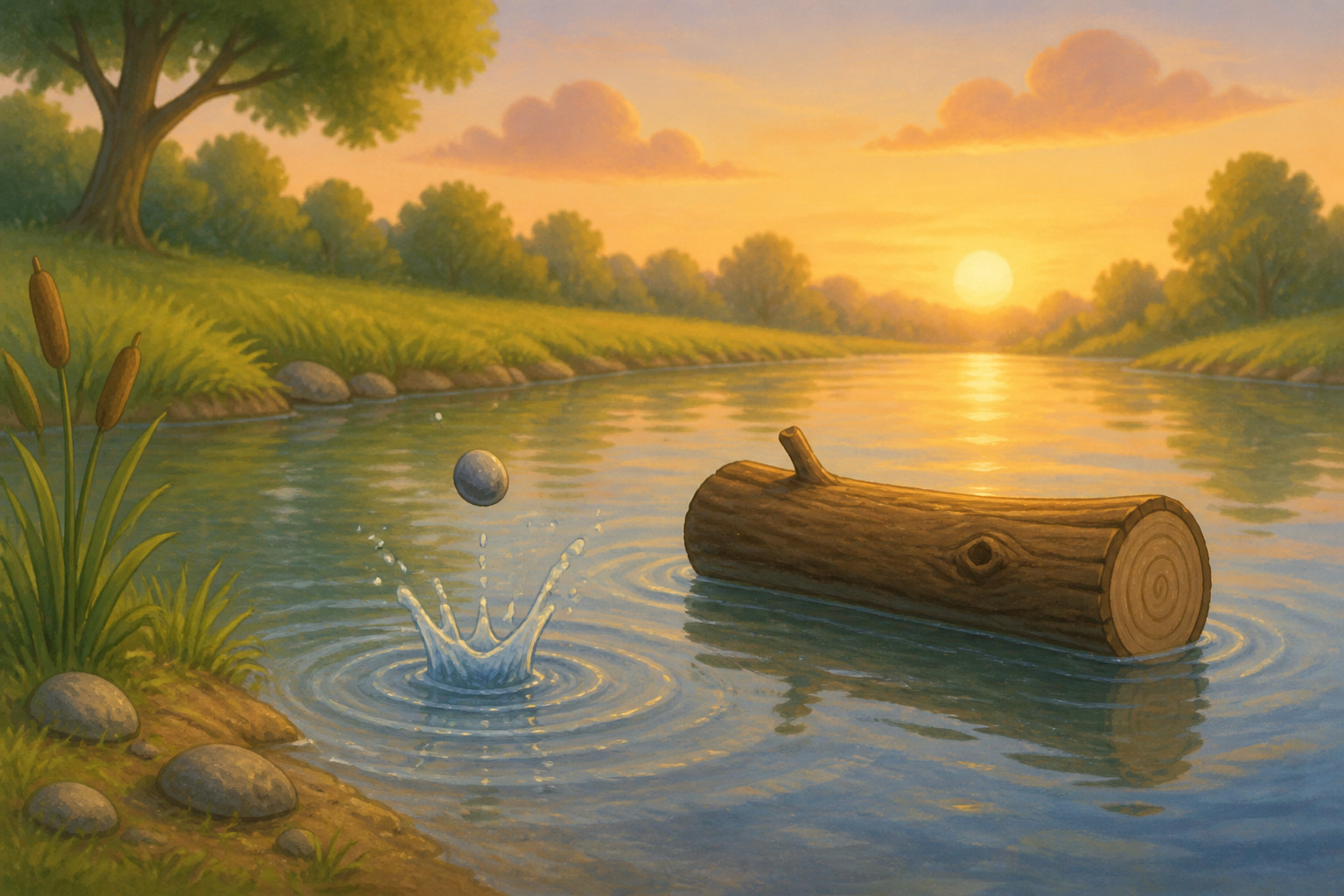
Have you ever tossed a little pebble into a pond? Plop! It drops straight down and disappears. Now picture a big, heavy log at the edge of a river, bobbing on top of the water.
The pebble is so small. The log is so big. So why does a tiny pebble sink, but a big log float?
Water pushes up on everything that goes into it. That push from below is what holds floating things up on top. Some things the water can hold up, and some things it cannot.
So which things can the water hold up? That depends on whether a thing is heavy for its size, which means heavy compared with how big it is. A thing that is too heavy for its size slips down through the water.
A pebble is made of stone, packed tight all the way through. Stone is heavy for its size, much heavier than the same amount of water. The water's push is too weak, and the pebble sinks to the bottom.
Now let's look at the log. Wood is not packed tight like stone. A log is big, but for its size, wood is light. What do you think is hiding inside wood that makes it light?
Inside wood are lots and lots of air spaces, which means tiny gaps filled with air. They are much too small to see. Air weighs almost nothing, so the air spaces make the wood light.
With all those air spaces, wood is lighter than the same amount of water. This time the water's push is strong enough. It holds the big log up on top, bobbing gently.
Being big or small does not decide it. A tiny twig floats, because wood is light. A big rock sinks, because stone is heavy for its size.
Heavy for its size. Air spaces. Stone is heavy for its size and sinks, but air spaces make wood light enough to float.
Next time you see a stick floating in a puddle, think of all its tiny air spaces, and sleep tight.