Why don't I fall over when I walk?
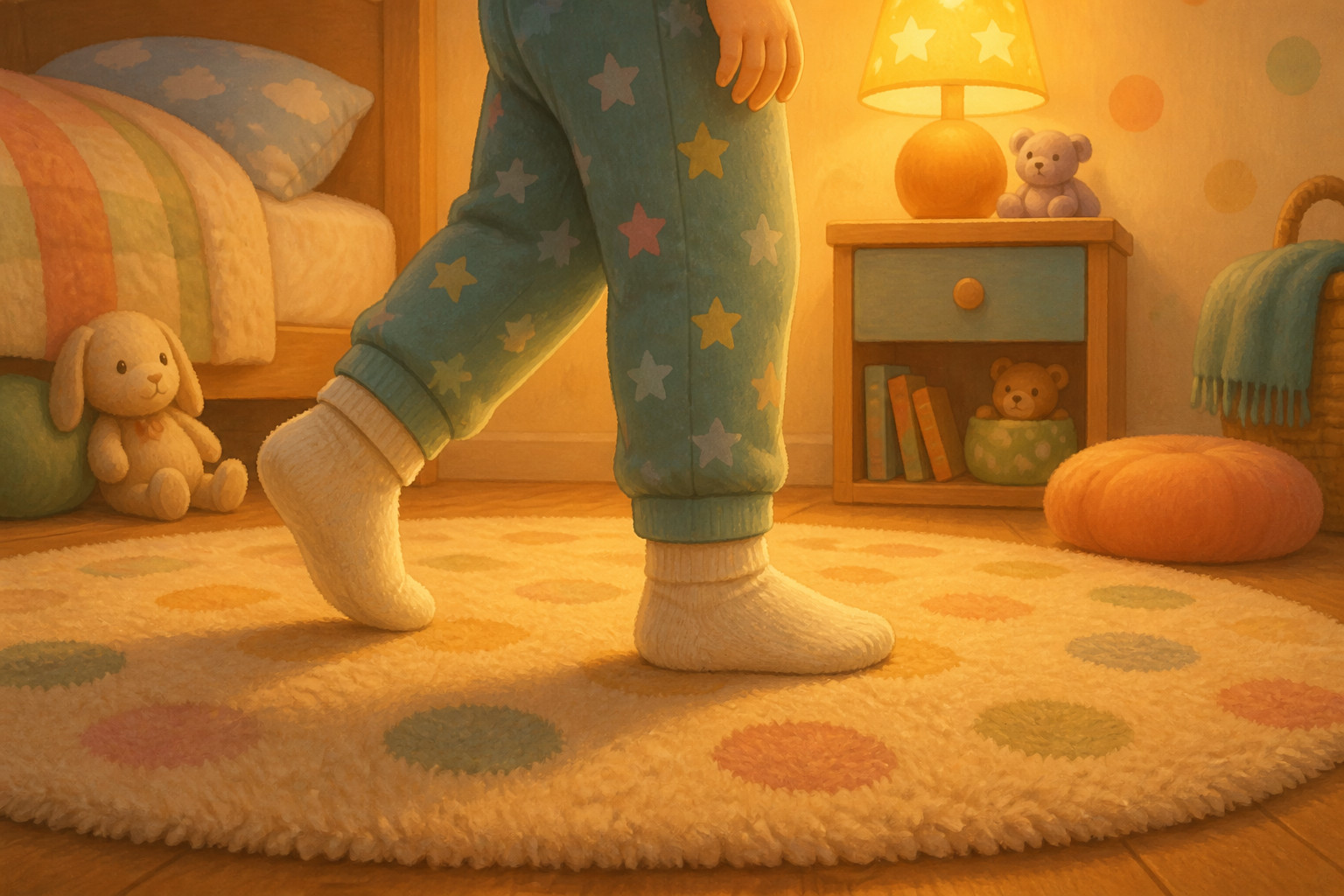
Think about walking across your bedroom in soft socks. With every step, one foot lifts off the floor, and for a moment your whole body rests on the other foot. Feel how that foot presses down as you go.
Standing on one foot for a long time feels wobbly. Yet you walk all day and stay on your feet. So why don't you fall over when you walk?
Each step starts with a lean. Your body tips forward a little, and that forward tip is what carries you across the room. Without it, you would stand still.
Deep inside your head, far in past the opening of each ear, you have an inner ear, which is a small curly tunnel filled with liquid. Its job is to feel which way your head is moving. You cannot see it, yet it works all day long.
When your body tips forward, the liquid in your inner ear sloshes, like water in a cup you carry. The moving liquid bends little hairs inside the tunnel. Those hairs send a message to your brain that you are tipping.
Your eyes and the bottoms of your feet send messages to your brain as well. Your eyes watch the floor and walls slide past as your head moves forward, and your feet feel your weight roll forward onto your toes.
Your brain puts the messages from your inner ear, eyes and feet together faster than a blink. It knows right away that you are tipping forward. What do you think your brain tells your body to do next?
Your brain tells your leg muscles to swing your back foot forward and set it down in front of you. That foot lands right under your tipping body and catches you before you fall. Then you lean again, and the next foot catches you.
While you walk, your brain also tells the muscles in your ankles and hips to give small pushes. Those pushes straighten you up whenever you lean too far to one side. You never have to think about any of it.
Inner ear. Each time you lean into a step, your inner ear tells your brain that you are tipping, and your brain swings a foot forward to catch you.
Sweet dreams, and tomorrow, enjoy every steady step your clever body takes.