How do my arm muscles take turns?
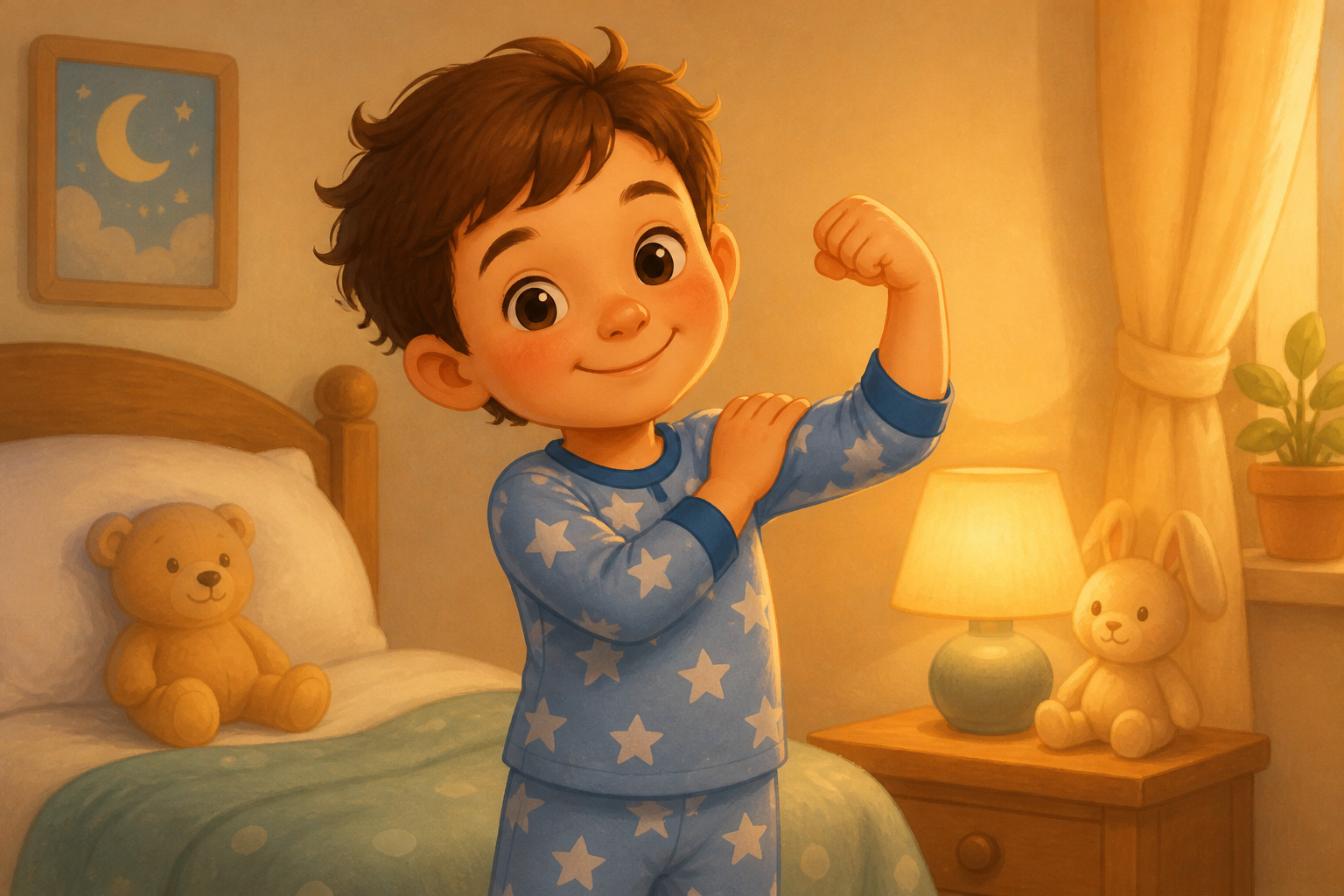
Hold out your arm and bend it slowly at the elbow, as if you were showing off a strong muscle. Put your other hand on top of your upper arm. Can you feel a firm bump growing there?
Now straighten your arm out again, and feel that bump go soft. So how do your arm muscles take turns?
Every muscle in your arm can do only one thing: it pulls. A muscle makes itself shorter and fatter, and tough cords tie it to your bones, so the bone gets tugged along. A muscle can never push a bone away.
When you want to bend your arm, your brain sends a quick message to your biceps on the front of your upper arm. Your biceps gets shorter and pulls your lower arm up toward your shoulder. That is the bump you felt.
While your biceps pulls, a second muscle in your upper arm lets go and grows long and soft, so it does not tug the other way. Your biceps can only pull your arm up. What do you think pulls your arm straight again?
It is that second muscle, your triceps, which means the muscle that runs along the back of your upper arm. Your triceps gets shorter and pulls your lower arm down until it is straight. Now your biceps is the one that lets go and stretches.
Your brain chooses which muscle pulls and which one rests, and it can switch them in a blink. Biceps, then triceps, then biceps again. That fast switching is how you wave hello or stir a bowl of soup.
Taking turns matters, because two muscles pulling hard at the same moment would fight each other. Your arm would lock up stiff and still. When one lets go, the other can move your arm smoothly.
Triceps. Your brain tells one arm muscle to pull while its partner lets go, so your biceps bends your arm and your triceps pulls it straight.
Sleep well tonight, and let both of your hard-working arm muscles rest together.