Why does practice make skipping easier?
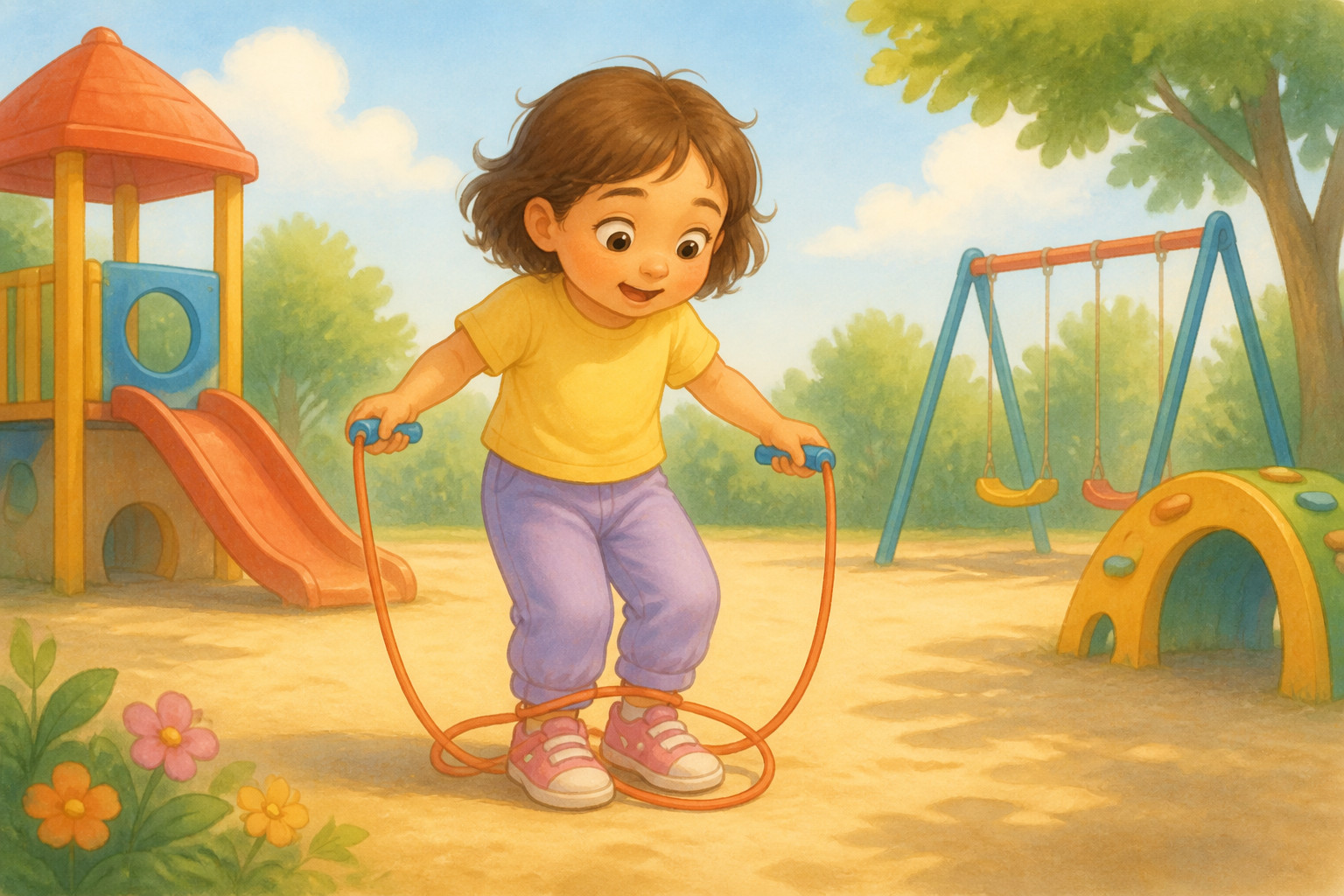
Swish, slap, swish, slap. Can you hear the rope brush the ground and feel your feet lift off the floor? On your very first try, the rope catches your toes again and again.
Then you keep trying, day after day. One afternoon, the rope swings round and round, and your feet hop over it every time. So why does practice make skipping easier?
Skipping needs your hands to turn the rope and your feet to jump at just the right moment. Your brain tells them when to move. It sends its messages along your nerves, which are thin threads that carry messages from your brain to your muscles.
On the first day, your brain has not learned the timing yet. It has to think about your hands, then your feet, then the rope. The messages come out slow and mixed up, so you jump too early or too late.
Each time you practise, your brain sends the same messages, and the paths inside your brain that make them grow stronger. Picture walking the same way across a grassy field, until a smooth trail appears. What do you think a message does on a smooth, well worn trail?
It zips along quickly and easily! Your brain now sends each message at just the right moment, and your nerves carry it straight to your muscles. Now your hands and your feet move together, matching the beat of the rope.
After lots of practice, your brain keeps the whole skipping pattern safe. We call this muscle memory, which means your brain remembering a movement so well that your body does it without thinking. Muscle memory lives in your brain, not inside your leg muscles.
Because of muscle memory, you no longer think about each jump. The rope swings, and your feet lift lightly over it all by themselves. That is why skipping feels so much easier.
Nerves, muscle memory. Practice makes the paths inside your brain stronger, so your nerves carry each message right on time, and muscle memory lets your body skip without thinking.
Sleep tight, and let your brain dream of rope swings and happy, bouncing feet.