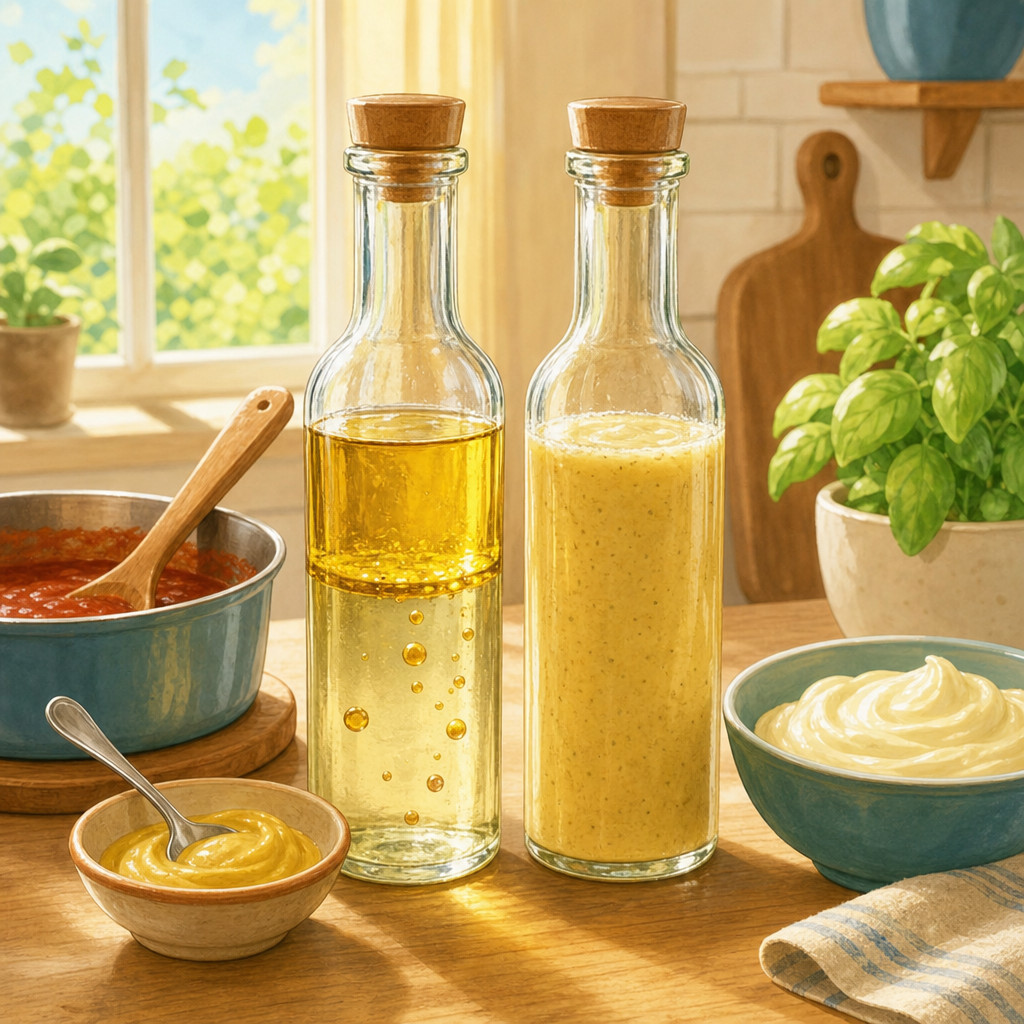
Why does oil separate from water?
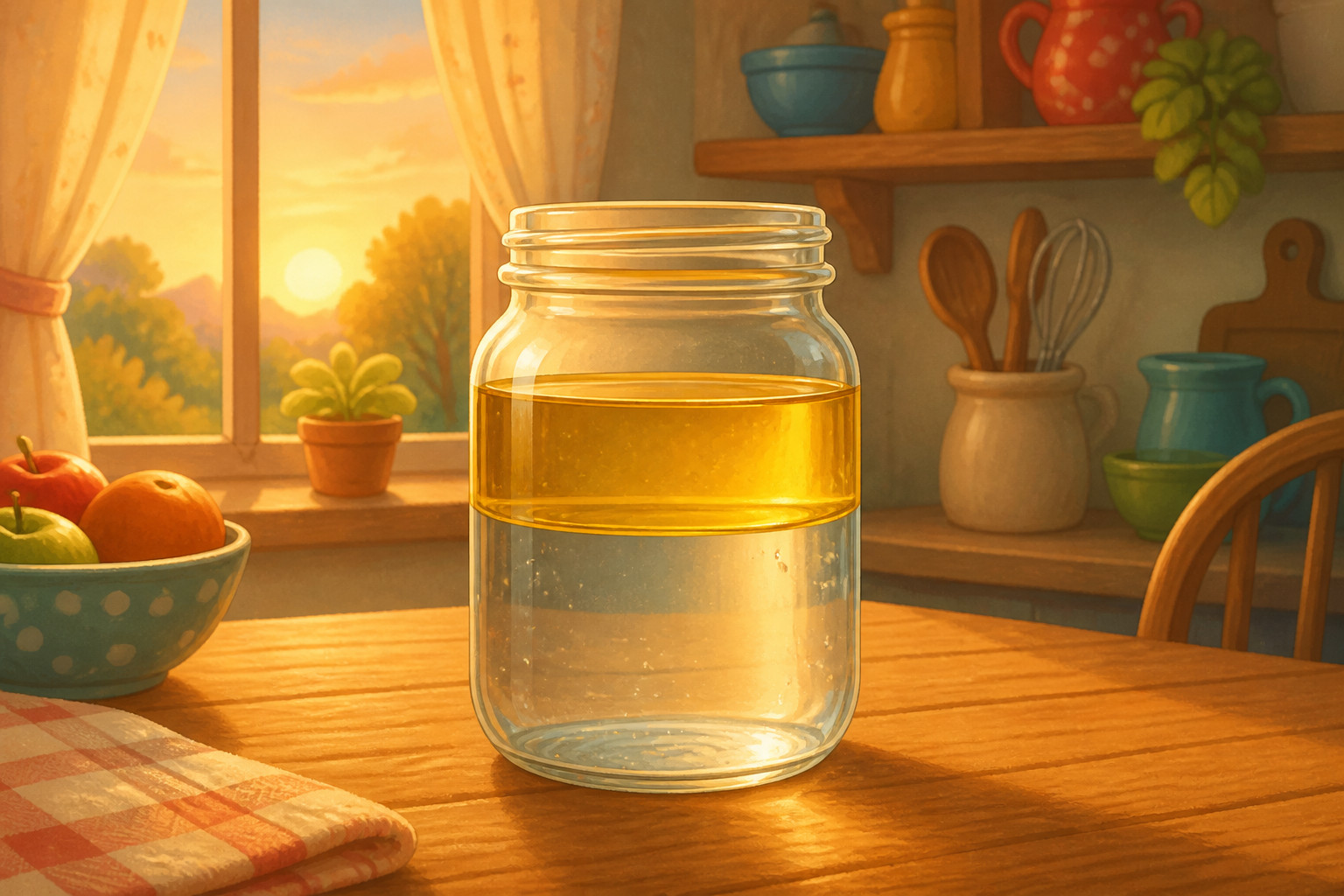
Picture a clear jar on the kitchen table. Water sits at the bottom, and a layer of golden cooking oil rests on top. Put the lid on and give it a shake, and listen to it slosh and splash. For a moment, the whole jar looks cloudy and mixed.
Then set the jar down and watch. Little golden drops start to drift away from the water. Soon the oil sits on top again in its own smooth layer. So why does oil separate from water, even after a big shake?
To find out, let's look much closer than our eyes can go. Water and oil are both made of molecules, which are tiny pieces far too small to see.
Water molecules love to stick to each other. Each one tugs on its neighbours, like children holding hands in a circle. This strong pull keeps the water close together.
Oil molecules are a different kind of molecule. Water molecules can barely hold on to them at all. To a water molecule, an oil molecule feels like a friend with slippery hands that are too hard to grab.
So after the shake, the water molecules reach past the oil to find each other again. As they squeeze back together, they push the oil molecules out of their circle. Can you guess what all those pushed-out bits of oil do next?
The oil molecules bump into each other and gather into little golden drops. Small drops meet and join into bigger drops, again and again. Before long, the oil and the water sit in two separate groups.
The oil ends up on top because a spoonful of oil weighs less than a spoonful of water. The heavier water sinks to the bottom of the jar. The lighter oil rises above it and rests there in a smooth layer.
One special word helped us today: molecules. Oil separates from water because the water molecules hold tight to each other and push the oil molecules out, and the lighter oil floats up on top.
Next time you spot golden oil floating on water, you will know the tiny secret hiding inside, so sweet dreams and happy wondering.