Why does a circle look bigger next to tiny circles?
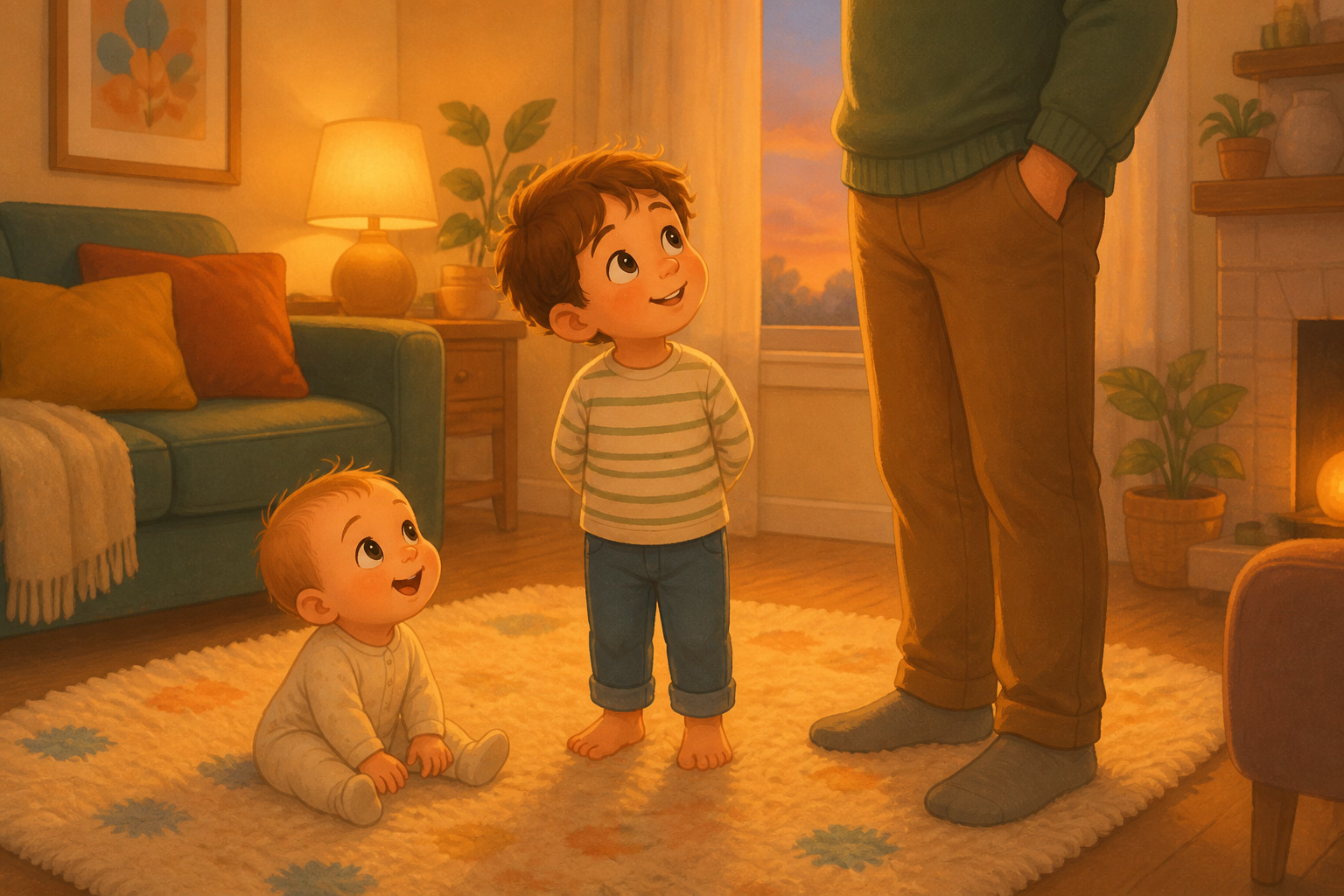
Think about standing next to a tiny baby. You feel tall and big, don't you? Then you stand beside a grown-up, and suddenly you feel small, even though you have not changed at all.
Now picture a page with two circles of exactly the same size. One sits all alone, and the other sits in a ring of tiny circles. The one in the ring of tiny circles looks bigger. So why does a circle look bigger next to tiny circles?
Your eyes see the circles and send that picture to your brain. Your brain then works out how big each thing is. It does this all day long, so you know which cup holds more juice or which ball fits in your hand.
Your brain does not measure sizes the way a ruler does. Instead, it compares each thing with the things right beside it. That quick check lets your brain decide sizes in a blink.
Look at the circle in the ring of tiny circles. Every neighbor is much smaller, so your brain decides the middle circle is big and makes it look bigger. Now what do you think happens to the same circle when big circles sit all around it?
Your brain compares again, and this time every neighbor is bigger. So it decides the middle circle is small and makes it look smaller than it is.
When your brain shows you something different from the way it really is, we call that an illusion, which means a picture that tricks your brain into seeing it wrong. The circle in the ring of tiny circles shows you an illusion just like that.
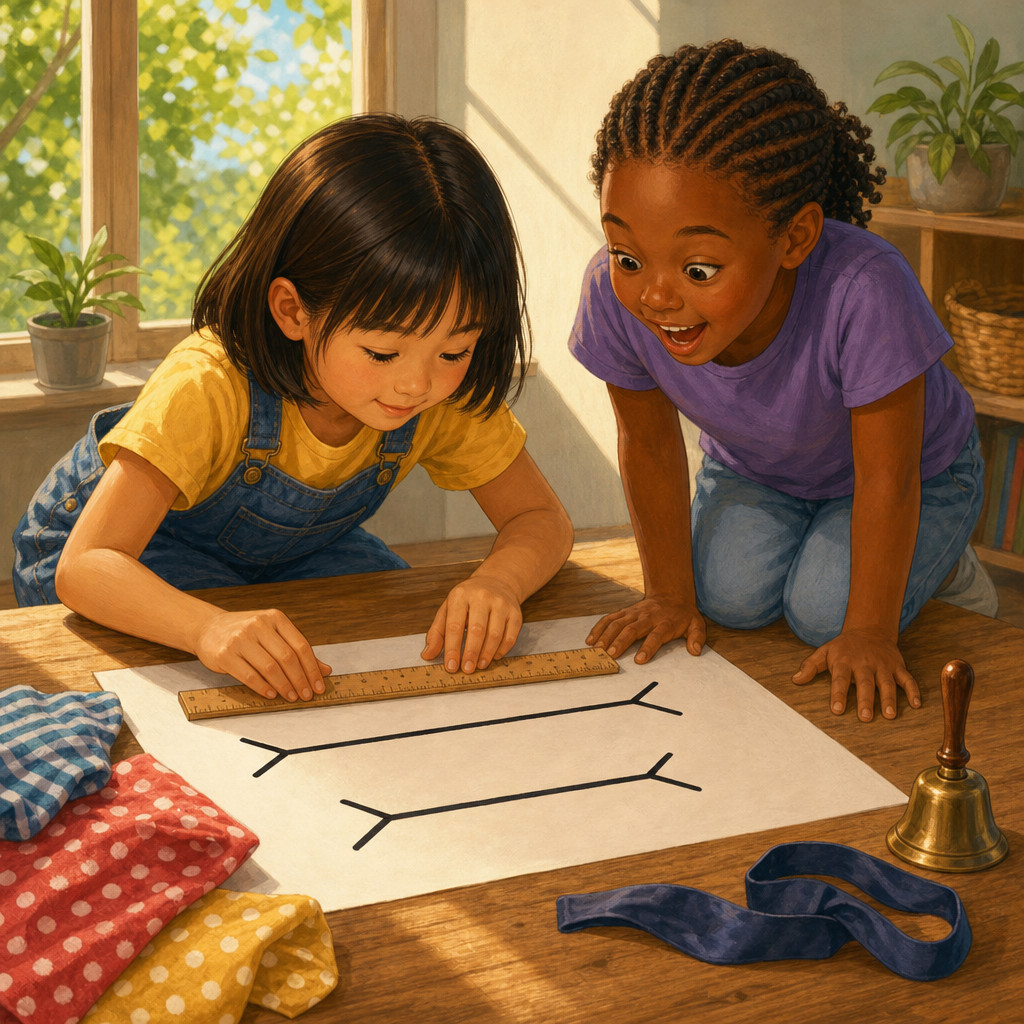
Let's check it with a ruler. You can lay the ruler across each middle circle, and both circles measure exactly the same. Yet when you look again, the illusion is still there, because your brain keeps comparing.
One word to remember: illusion. Your brain judges a circle's size by comparing it with the circles beside it, so next to tiny circles it looks bigger than it really is.
Sleep well, little one, and may your dreams be full of round, glowing moons of every size.