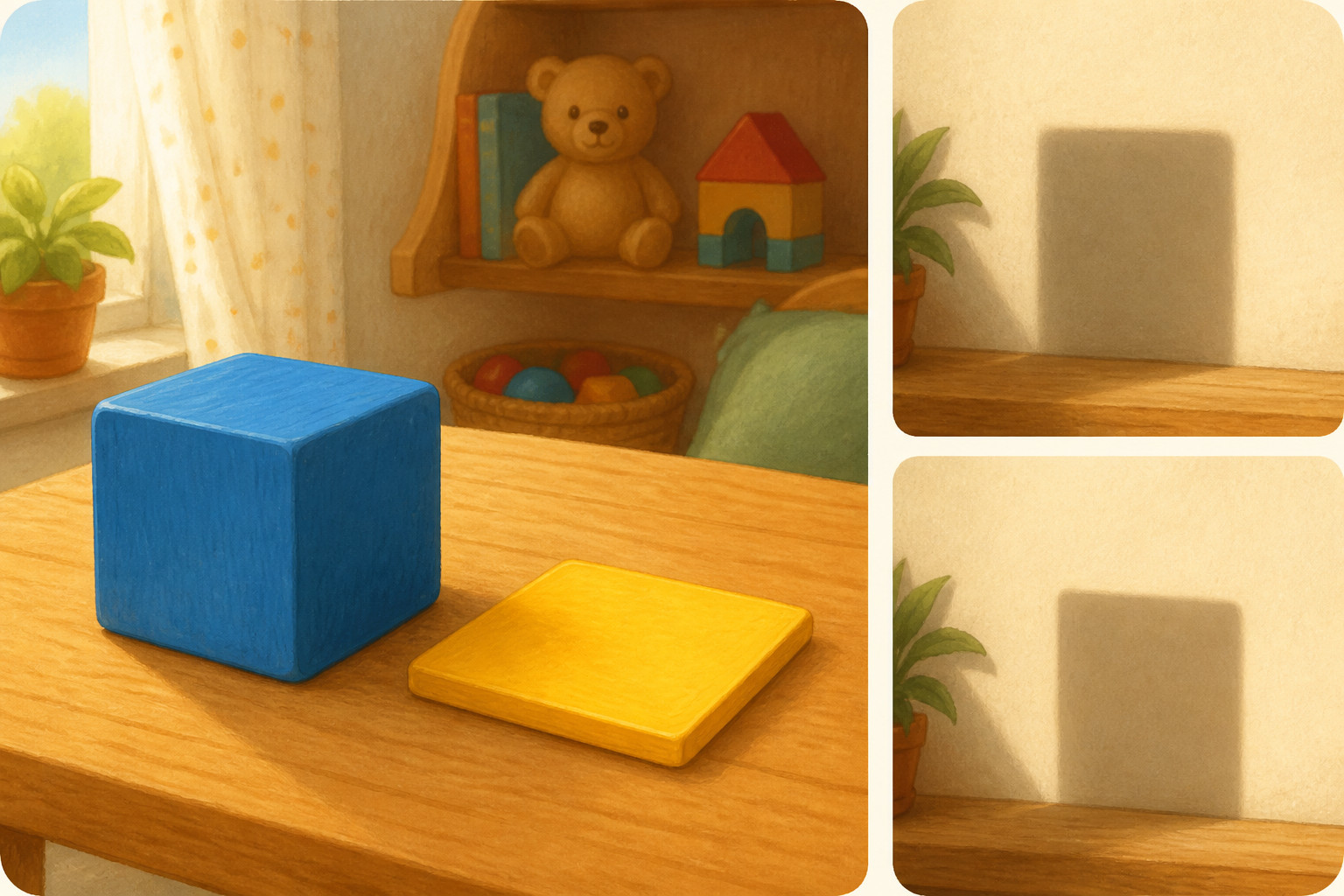
Why can two different toys make the same shadow?
Sometimes a toy leaves a dark shape on the wall that looks almost like another toy's dark shape. A chunky block and a flat play tile might both leave a square! Why can two different toys make the same shadow?
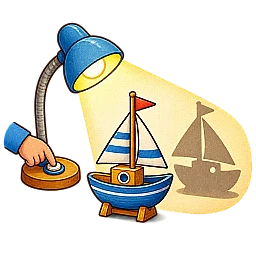
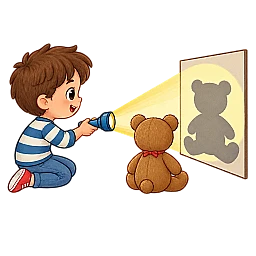
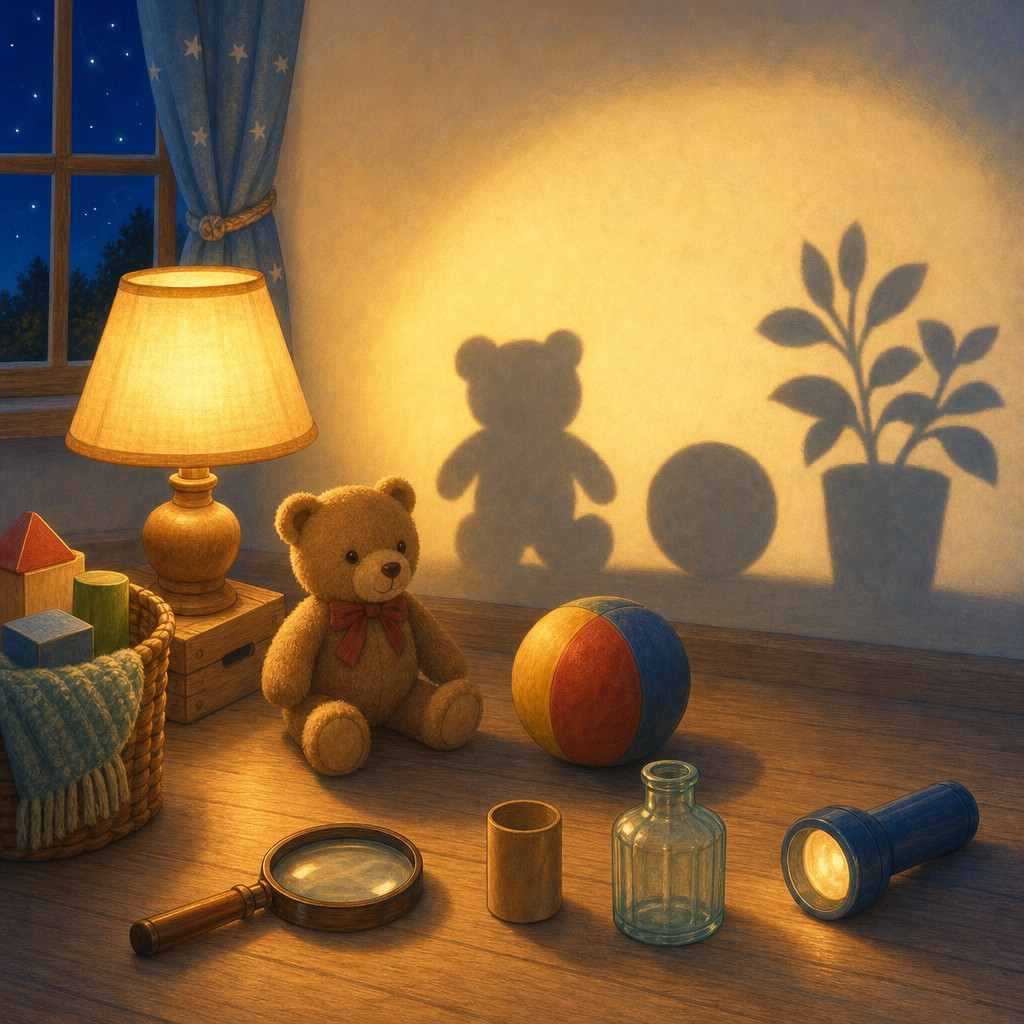
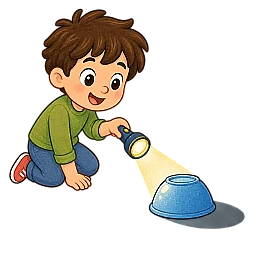
First comes light, the brightness that helps you see things. When you point a flashlight toward a wall, its light travels to the wall. With nothing in the way, you see a bright patch.
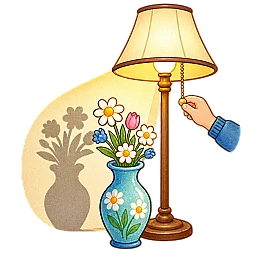
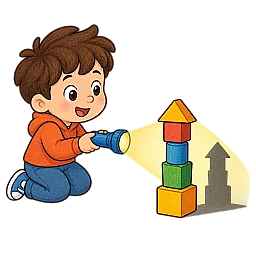
Now you hold a wooden toy block between the flashlight and the wall. The wood does not let light pass through it. The block stops some of the light from reaching the wall.
That leaves a shadow, a darker place where something blocks the light. Light still reaches the wall around the block. So the bright part of the wall helps you see the shadow's shape.
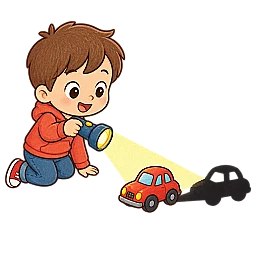
The edge around a shape has a name: its outline. A shadow's outline follows the outside edge of the toy as it faces the light. A square face held straight toward the flashlight can leave a square shadow.
Here comes a chunky toy block with a square face, and a thin play tile with a square face just as wide. Can you guess whether their shadows could match? Even though one toy is thick and the other is thin, they can!
You hold each toy in turn with its square face toward the flashlight, in the same spot. Both toys block the light across the same square shape. The rest of the block sits behind its square face, so both shadows have the same outline.
Perhaps the block looks blue, and the tile has a yellow star painted on it. Those details help you tell the toys apart when you look at them. But neither toy lets light through, so its shadow does not show the blue paint or the yellow star.
How you hold a toy matters, too. If you turn the thin tile sideways, it blocks a narrow strip of light instead of a square. Its shadow now has a different outline, even though you still hold the very same toy.
Distance matters for a match as well. With the flashlight and wall staying still, you move a toy closer to the flashlight, and its shadow grows bigger. To make two shadows match, their size must match as well as their outline.
Light, shadow, outline: light travels toward the wall, a toy blocks some of it to make a shadow, and the shadow has an outline. Two different toys can make the same shadow because they can block light to leave the same outline and size.
Tonight, you can keep a little shadow secret: different toys can leave the very same shape.
 Nox