Where Did the Shadow Go?
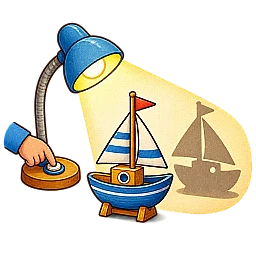
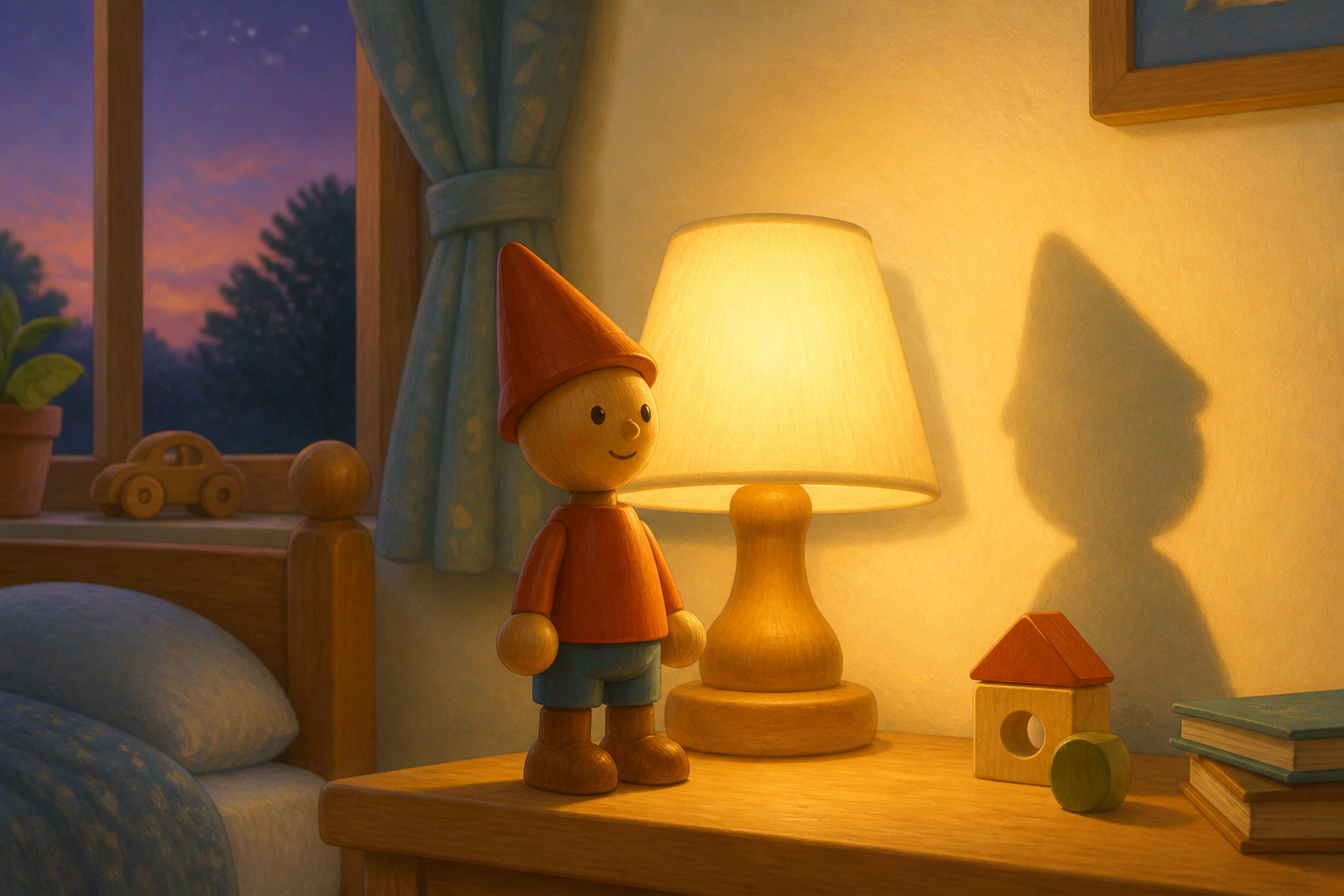
A toy stands beside a lamp, and its shadow rests on the wall. Then click, the lamp goes out, and the shadow seems to vanish. It can make you wonder where a shadow hides in the dark.
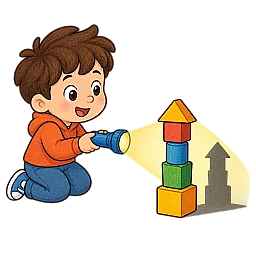
Let's look closely at the lamp, the toy, and the wall. The lamp is a light source, which means something that gives light. Its light travels past the toy and reaches the wall, making the wall look bright.
The toy stands in the path of some light. It blocks that light, which means it stops the light from reaching one part of the wall. That part looks darker than the bright wall around it, and this darker area is called a shadow.
Now the lamp's switch is ready to click. Can you guess what happens to the shadow when the light source is switched off? Hold your guess while the room grows dark.
With the light source off, light no longer brightens the wall. The whole wall looks dark, so the shadow is no longer a separate darker shape. There is no bright area around it to help your eyes see where the toy blocks the light.
The shadow did not run away or hide in a secret place. A visible shadow needs light around its darker area, and that light is missing. In the dark, the wall and the place where the toy would block light look dark together.
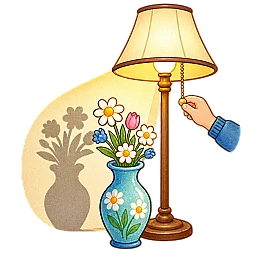
Click, the light source sends light past the toy toward the wall. The toy blocks some light, so the shadow appears on the bright wall. When the light source turns off, the whole wall is dark. The shadow does not hide; there is no darker shape to see without light around it.
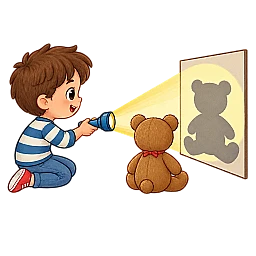
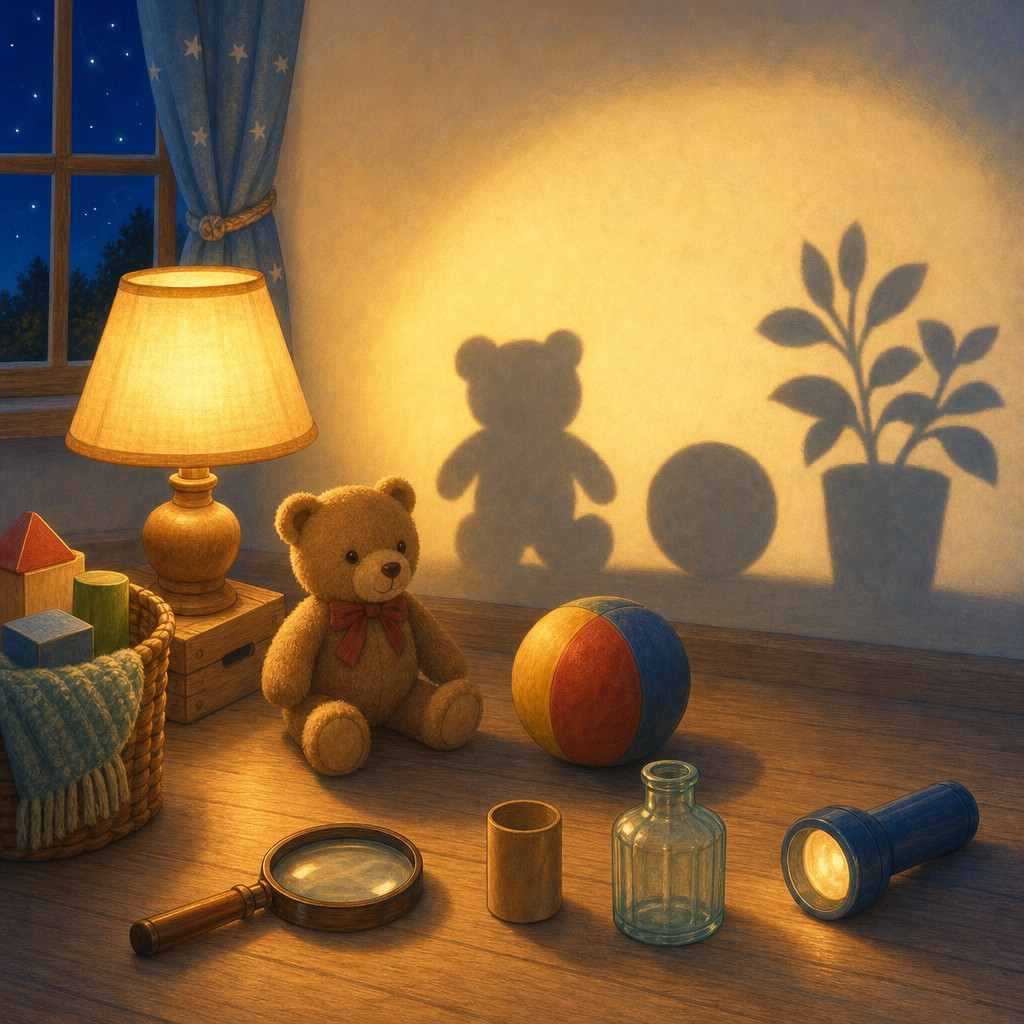
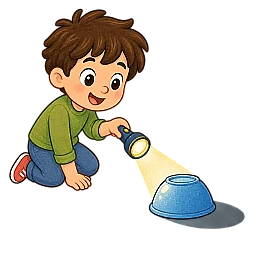
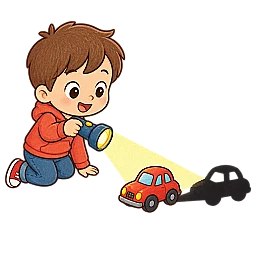
Whenever a shadow seems to disappear, a lamp or flashlight aimed past an object toward a wall or floor can bring its darker shape back into view. May every little patch of light lead you to a gentle discovery.
 Nox