Tiny Bear, Giant Shadow
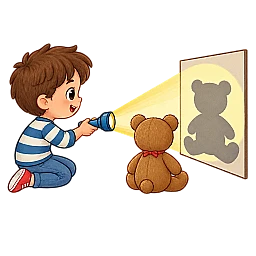
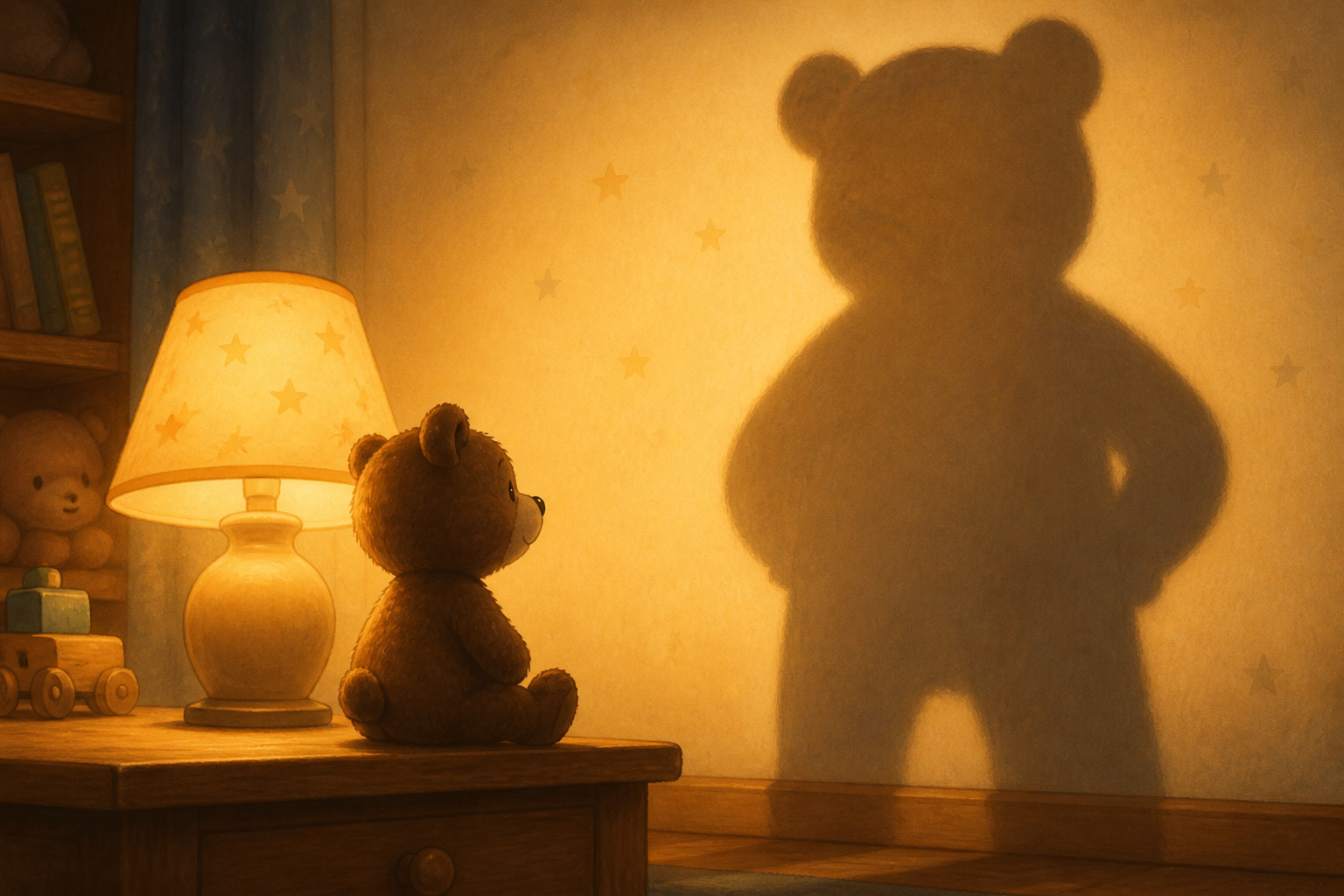
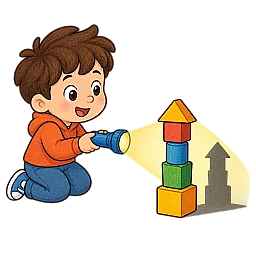
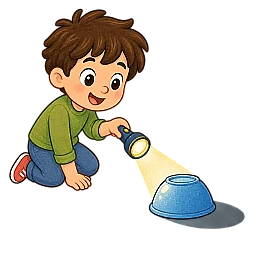
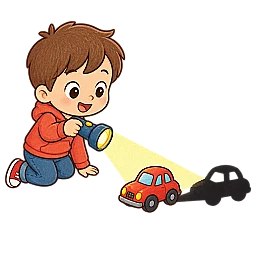
A tiny brown toy bear stands beside a glowing lamp. On the wall, its shadow looks as tall as a giant. Here is the warm puzzle of how such a tiny bear can cast such a giant shadow.
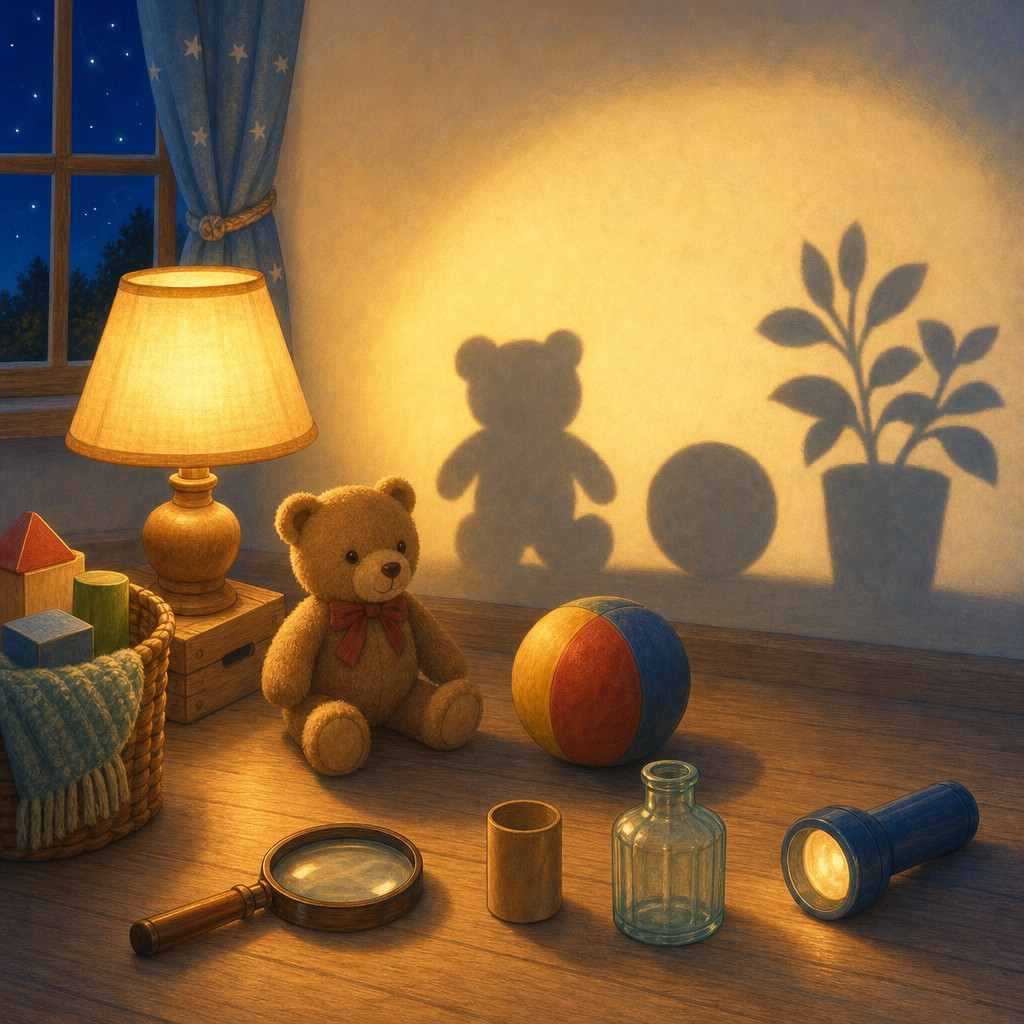
The setup goes in this order: a lamp on the left, the bear in the middle, and a wall on the right. The lamp is a light source, which means something that gives light. The lamp and wall stay fixed, while only the bear moves.
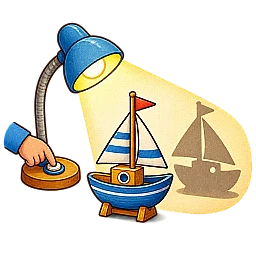
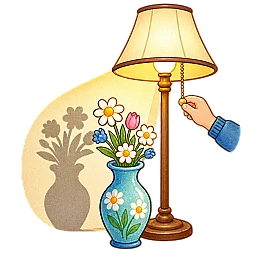
Light from the light source travels toward the wall and spreads outward as it goes. The bear gets in the way and blocks some of that light. A shadow is the darker shape that appears on the wall where the light cannot reach. With the bear in the middle, the shadow is medium in size.
First, place the bear close to the wall. The blocked shape has little room to spread before it reaches the wall. That makes the shadow small, almost like the bear's own size.
Now imagine the bear sliding away from the wall and toward the lamp. Can you predict what will happen to its shadow? The lamp and wall do not move.
Near the light source, the bear blocks a wider share of the light spreading outward. That blocked spread continues all the way to the wall. There, the shadow grows much larger than the bear.
Slide the bear back toward the wall, and the shadow becomes smaller again. The light has already spread across more space before it meets the bear, and the blocked shape has little room left to widen. The toy bear never changes size; only its place changes.
Remember the clue chain in order: the light source sends light outward, the bear blocks part of it, and a shadow appears on the wall. Bear near the lamp means the largest shadow, bear in the middle means a medium shadow, and bear near the wall means the smallest shadow. A tiny bear casts a giant shadow by moving close to the lamp while the lamp and wall stay fixed.
You have solved the giant-shadow clue with careful noticing.
 Nox