What happens when Earth's plates slide past each other?
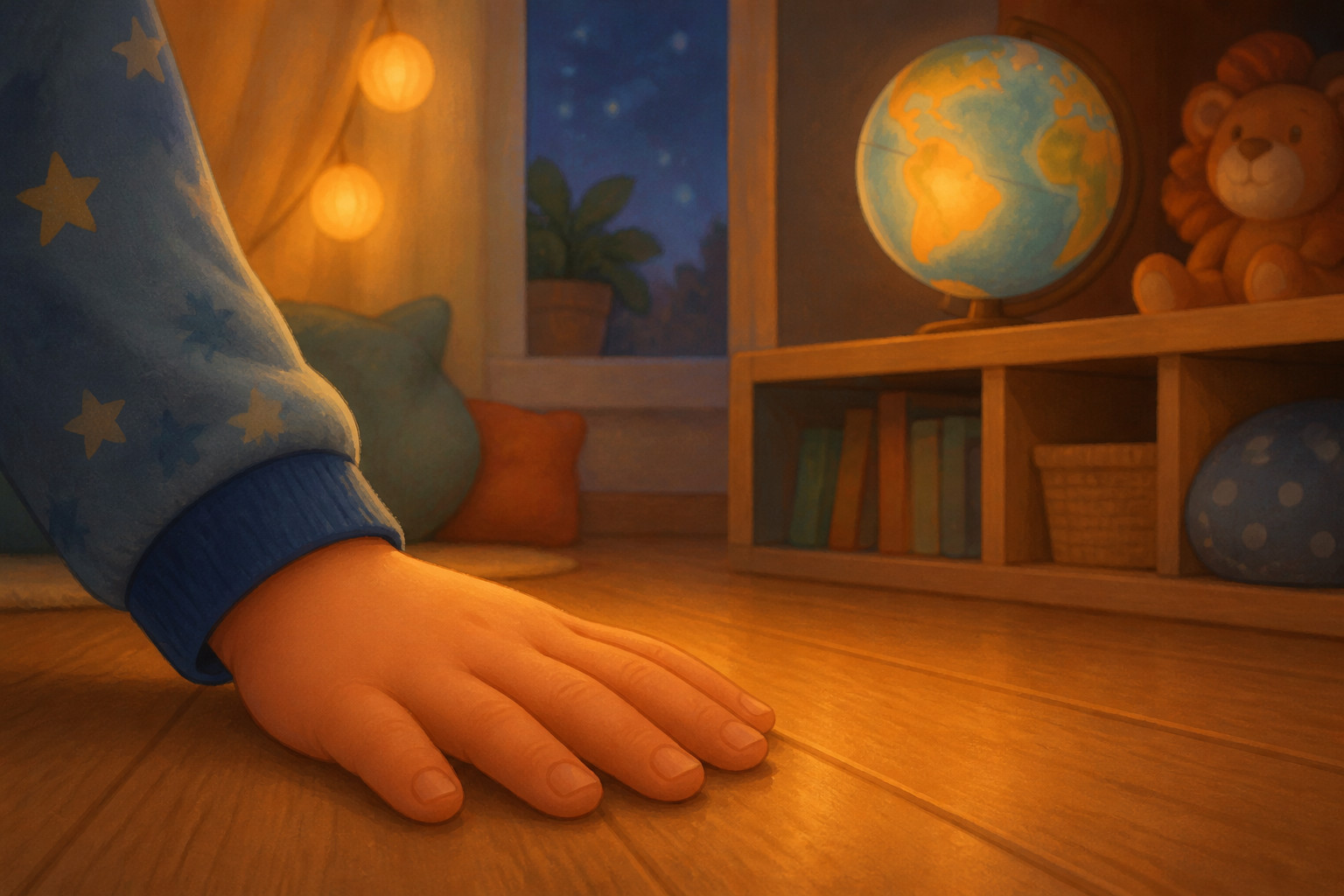
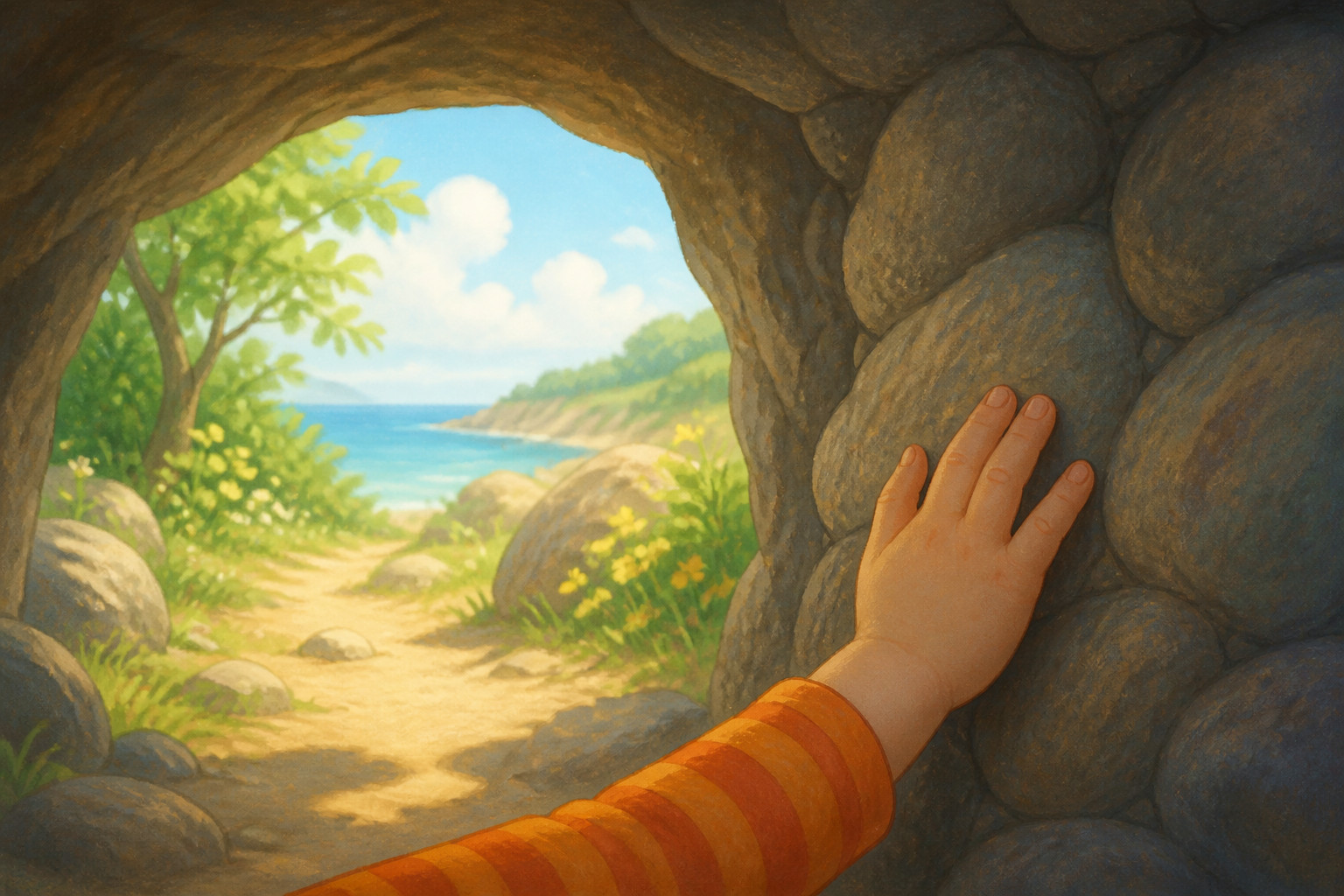
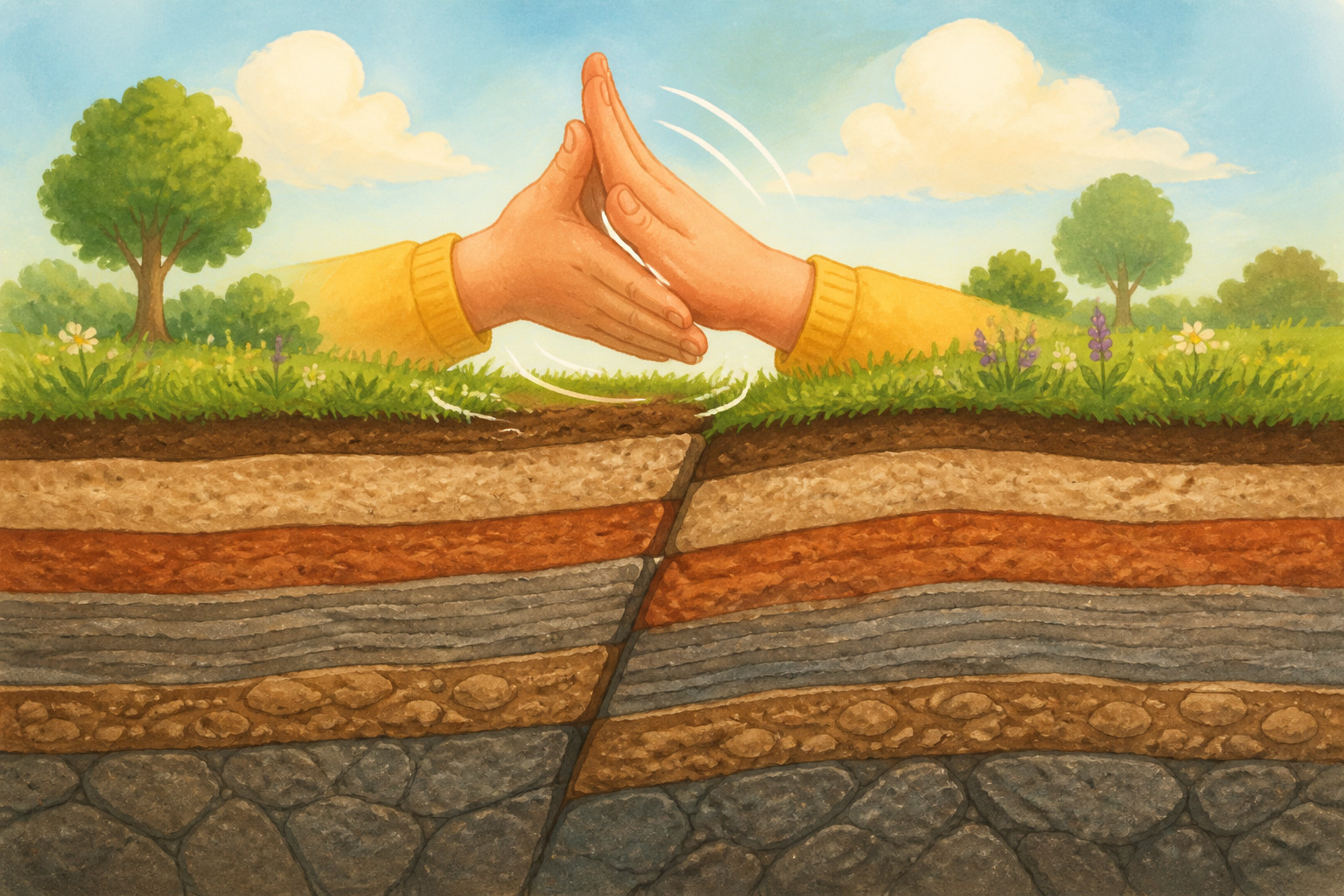
Press your hands flat together and slide one palm past the other. Can you feel your skin rub and drag as it goes? Deep under our feet, giant pieces of rock rub past each other too. So what happens when Earth's plates slide past each other?
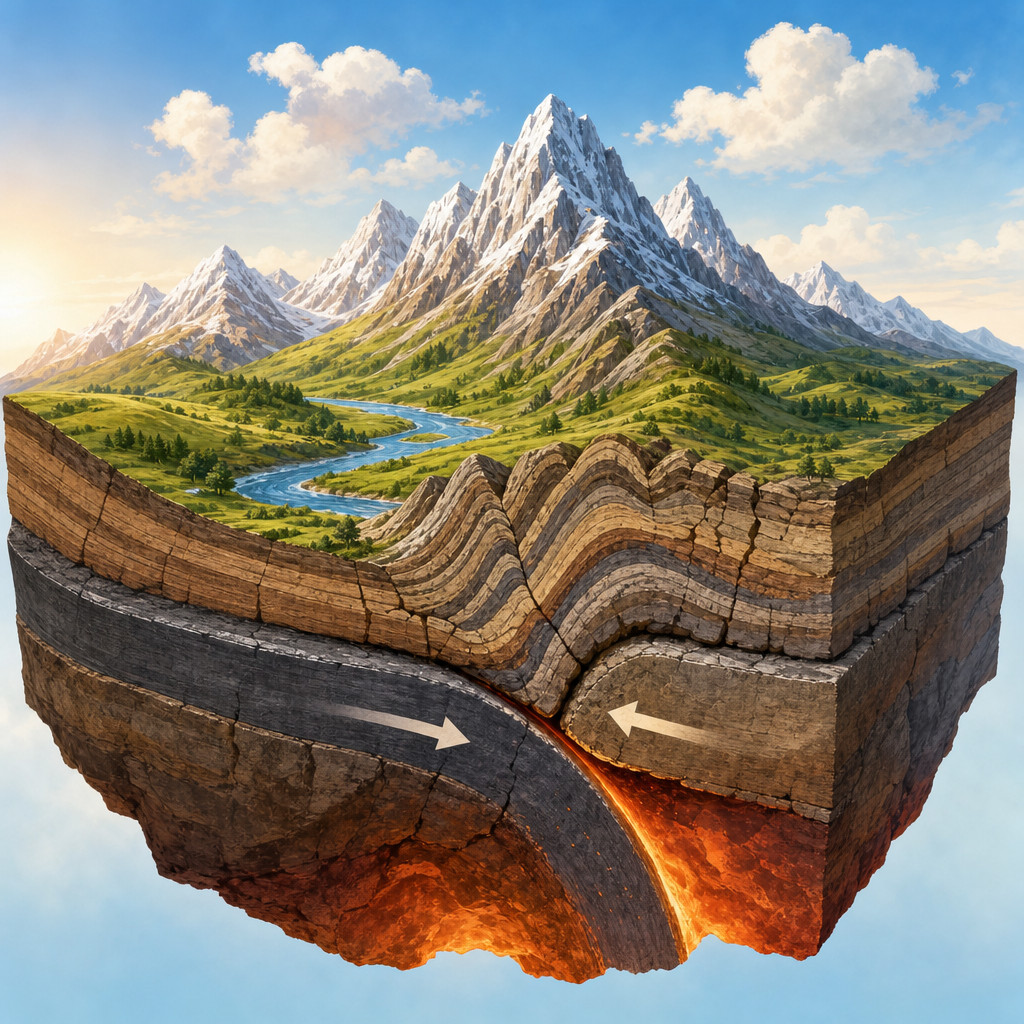
Earth's rocky outside is cracked like the shell of a boiled egg. Each giant piece is called a plate, and it carries land and sea on top. The plates creep along very slowly, about as fast as your fingernails grow.
In some places, two plates slide side by side, each one heading its own way. The long crack where they meet is called a fault, which means a crack where two plates rub past each other.
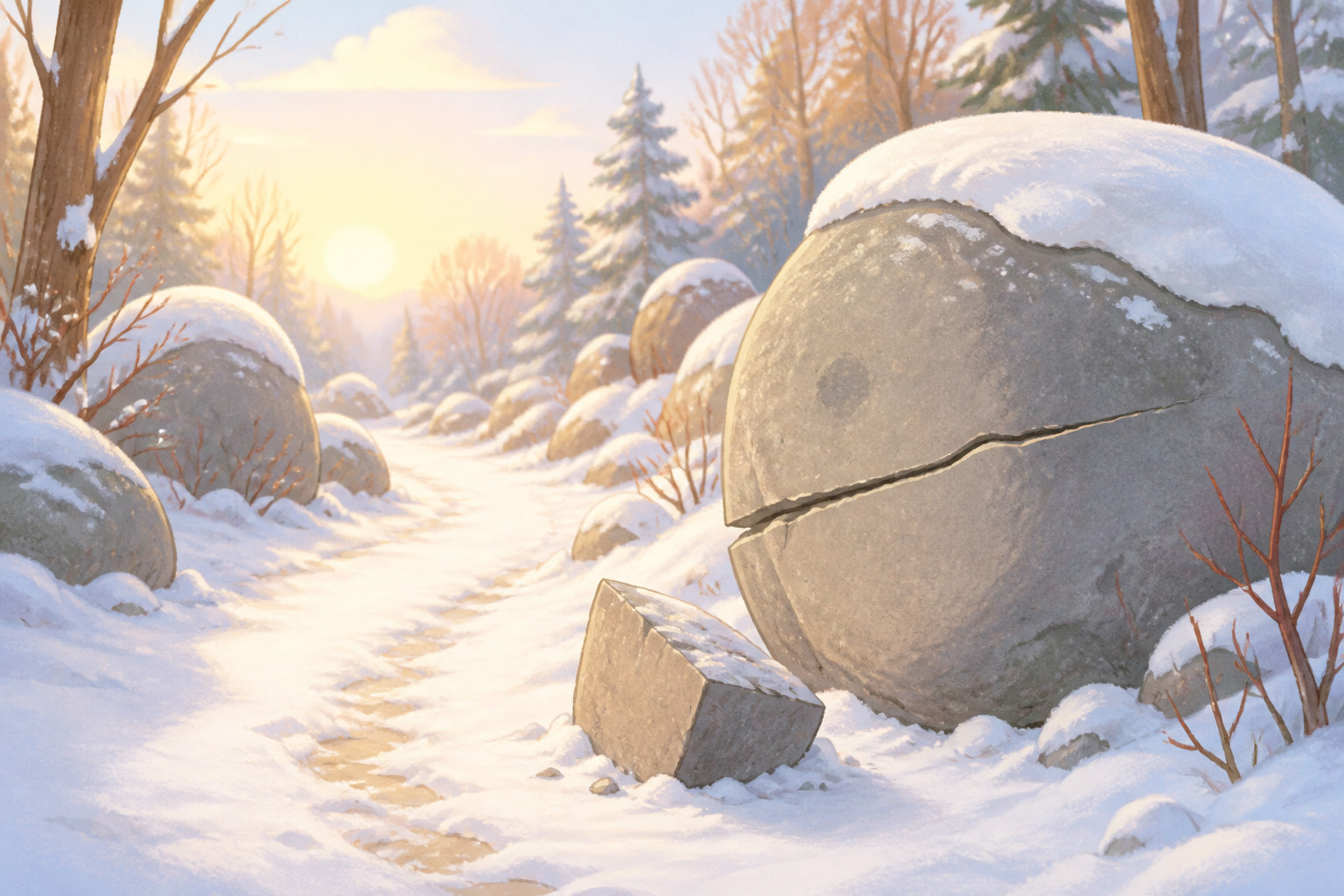
The edges of the plates are rough, jagged rock, not smooth like ice. So instead of gliding, the rocks at the fault catch on each other and get stuck. The two plates hold tight, like your palms when you press them hard.
Deep down, the plates keep on pushing, even while their edges stay stuck. The rock near the fault bends a tiny bit, like a ruler you bend between your hands, and the push builds up and up. What do you think happens when the rock cannot bend any more?
Snap! The rock can hold no more, so the stuck edges suddenly break free and the plates jump past each other in a few seconds. All the push that built up lets go at once.
That sudden jump sends shaking out through the ground, like ripples spreading when you drop a pebble in a pond. When the shaking reaches the top, the ground trembles under houses and trees. We call that shaking an earthquake.
A small jump at the fault makes just a tiny wiggle that nobody even notices. A big jump makes a big shake that people can feel from far away.
Our special word today is fault. When Earth's plates slide past each other, their rough edges get stuck at a fault, the push builds up, and then the rocks suddenly slip and shake the ground in an earthquake.
Sleep well, little explorer, safe and snug while the giant plates creep slowly far beneath you.