What happens inside my skin when I get a splinter?
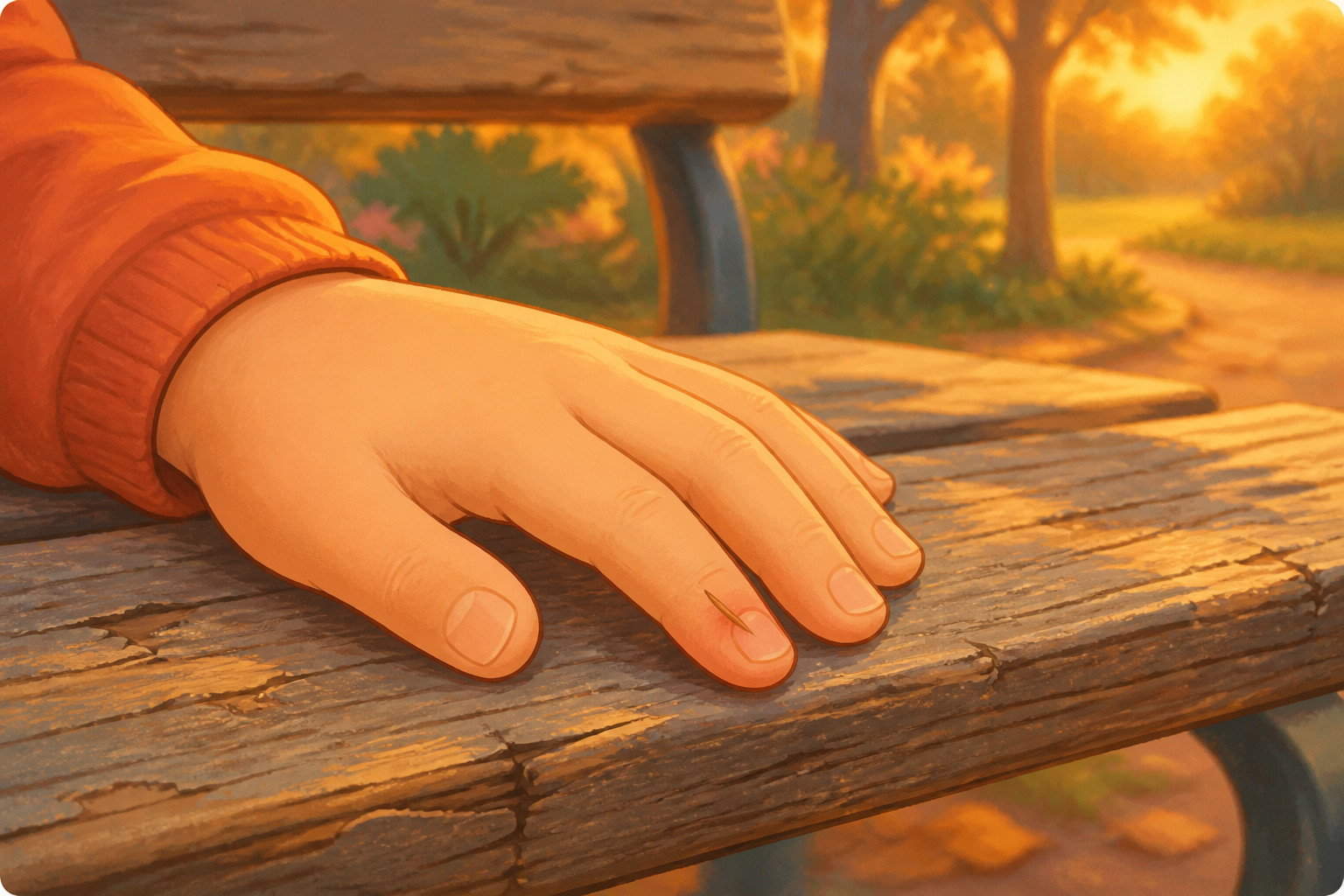
Picture running your hand along a rough wooden bench. A sliver of wood slides into your finger with a sharp prick. Now you can see a thin dark line resting just under your skin.
Ouch, a splinter! So what happens inside your skin when a splinter gets stuck there? Let's peek below the surface and find out.
Your skin has a tough outer layer on top, like a coat that keeps dirt and germs outside. The splinter's sharp tip pushes right through that coat. It slides into the softer skin underneath and gets stuck there.
That soft skin is full of nerves. Your nerves feel the poke and send a quick message to your brain. Your brain reads that message as ouch, and that is why a splinter stings.
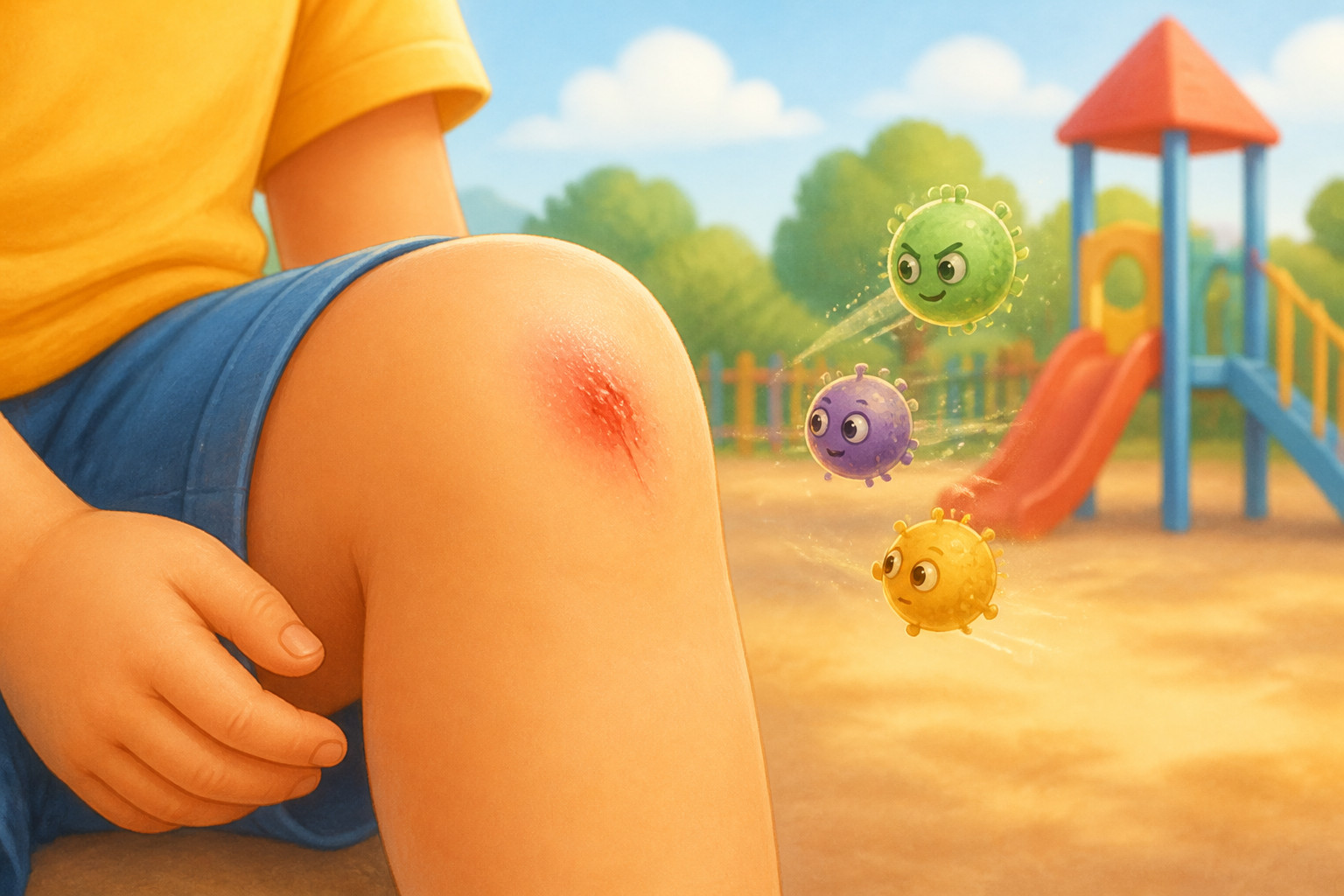
The splinter also carries germs from the wood into that soft skin. Those germs are now inside, past your skin's tough coat. Your body gets busy at once to stop them from spreading.
Right away, more blood flows into the skin around the splinter. All that blood makes the spot turn pink, feel warm and puff up a bit. What do you think the extra blood is carrying to the splinter?
It carries white blood cells, tiny helpers in your blood that hunt down germs. They squeeze out of the blood and crawl toward the splinter. Thousands of them gather around it, like guards circling a castle gate.
The white blood cells swallow the germs whole, one after another. That keeps the germs from spreading deeper into your finger. While this battle goes on, the spot stays red and tender.
When a splinter pokes through your skin's tough coat, it brings germs inside, so your body sends extra blood full of white blood cells to swallow them. All that extra blood is why the spot turns red, warm and puffy.
Down under that thin dark line, the white blood cells stay close around the splinter. Like guards at a castle gate, they swallow germ after germ and keep your finger safe.