How does my body keep germs from getting in?
Think about the last time you squished your fingers into cool, soft mud or patted a friendly dog. Your hands picked up germs, living things far too small to see. Germs float in the air and sit on doorknobs, toys and shoes.
Some germs can make you sick if they get inside you. Yet right now you feel just fine. So how does your body keep germs from getting in?
Your skin is the first guard. It wraps your whole body like a snug coat, and its layers press tightly together. Germs cannot squeeze through, so they stay on the outside.
The outside of your skin keeps shedding flakes so small you never notice them. New skin grows underneath and pushes the old flakes off. When the flakes fall away, they carry the germs sitting on them away too.
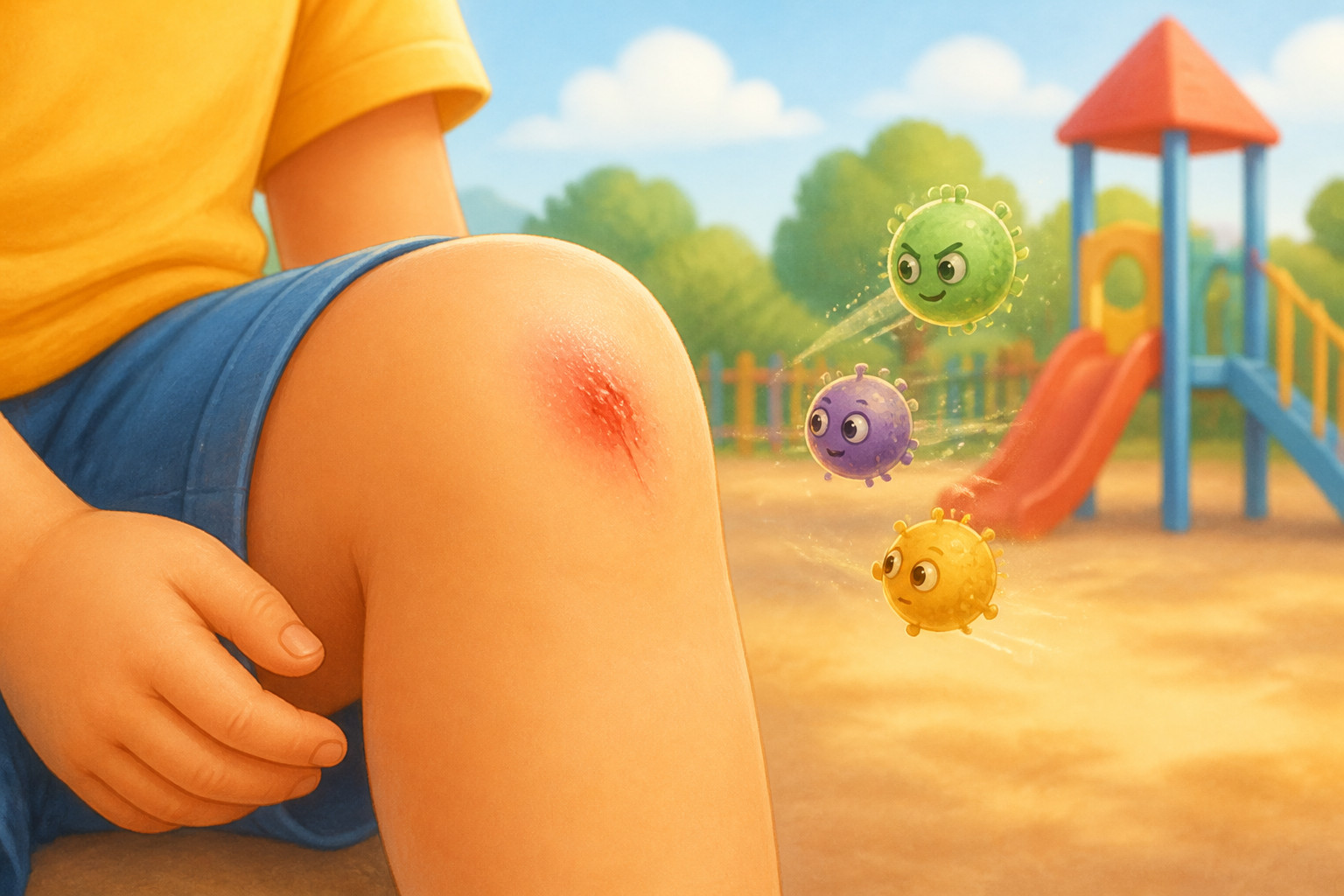
When you scrape your knee, your skin coat gets a little gap where germs could slip in. Your blood thickens into a scab, a hard crust that closes the gap like a lid and keeps germs out. Under the scab, new skin grows until the coat is whole again.
Your skin cannot cover everything, though. Your nose and mouth must stay open so you can breathe and eat, and germs drift right in with the air. What do you think waits inside your nose to stop them?
Inside your nose waits mucus, which means the wet, sticky slime that coats the inside of your nose. You might call it snot! Germs that float in get stuck in the mucus, like crumbs stuck in honey.
Your body does not keep that germy mucus inside. When you sneeze or blow your nose, the mucus shoots out, and the trapped germs leave with it. Achoo!
Mucus coats your mouth and throat too, so germs that slip past your nose get caught there. A cough pushes that mucus up and out, and the germs go with it.
Remember one word: mucus. Your body keeps germs out because your skin wraps you like a tight coat, and sticky mucus traps the germs that drift into your nose and mouth.
Sleep well, and give a quiet thank you to your hardworking skin and nose for guarding you all night long.