How does a cut close up and grow new skin?
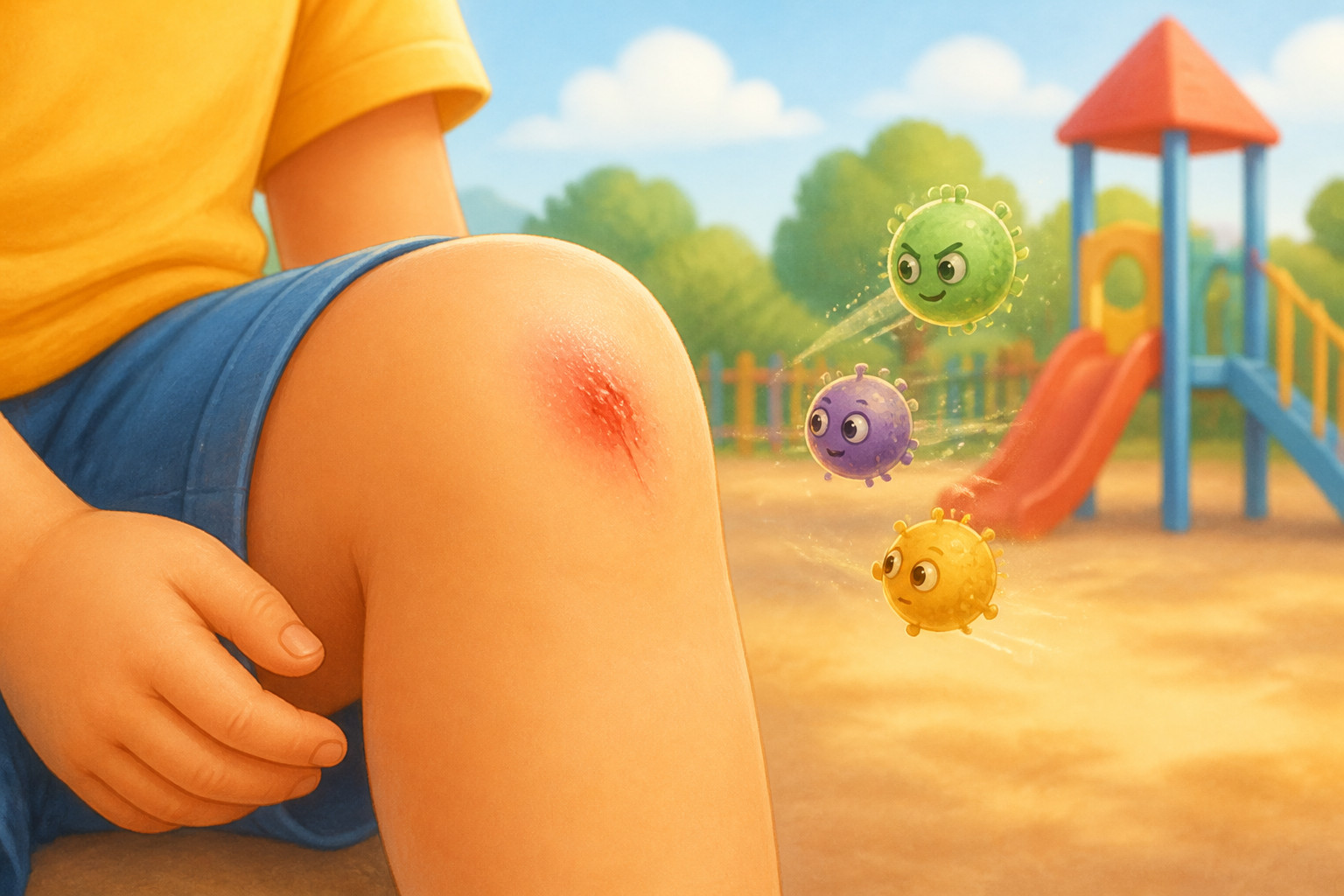
Think of a time you tumbled on the playground and scraped your knee. You might remember the sting, and a thin red line of blood. A few days later, that scrape was gone, and smooth skin covered the spot again.
So how does a cut close up and grow new skin? Your body has a clever plan for it. Let's follow that plan from the very first moment.
Your skin works like a wall around your body that keeps dirt and germs out. A cut opens a gap in that wall, and blood flows out from the thin tubes just under your skin. To keep germs out again, your body needs to close that gap.
Tiny sticky bits in your blood rush to the gap and cling together. They catch more blood and make a clot, which means a soft, sticky plug of blood. The clot stops the bleeding, like a cork in a bottle.
Next, the air dries the top of the clot. It turns hard and dark, and that crusty lid is the scab you know. The scab covers the cut like a roof, so dirt and germs stay outside.
Under that roof, the real repair begins. Your whole skin is a crowd of skin cells, which means tiny living pieces of you, far too small to see. They sit packed side by side, like bricks in a wall.
Right at the edges of the cut, the skin cells start to split in two. One becomes two, two become four, and soon the edges hold lots of new skin cells. What do you think all those new skin cells do next?
They creep! The new skin cells slide slowly across the bottom of the cut, from every edge at once, under the scab. Bit by bit, they spread toward the middle to fill the gap.
When the skin cells from each side meet in the middle, they close the gap. They pile up in layers, and the wall of skin stands whole again.
Now the scab has nothing left to cover. It loosens and falls off by itself. Underneath sits a fresh, pink patch of brand new skin, made by your own body.
Clot, skin cells. A cut closes because sticky blood makes a clot that plugs the gap, and then skin cells at the edges make new copies and creep across until new skin covers the cut.
Next time you spot a scab on your knee, you can whisper a quiet thank you to the busy skin cells working underneath.