Can water travel through a paper towel?
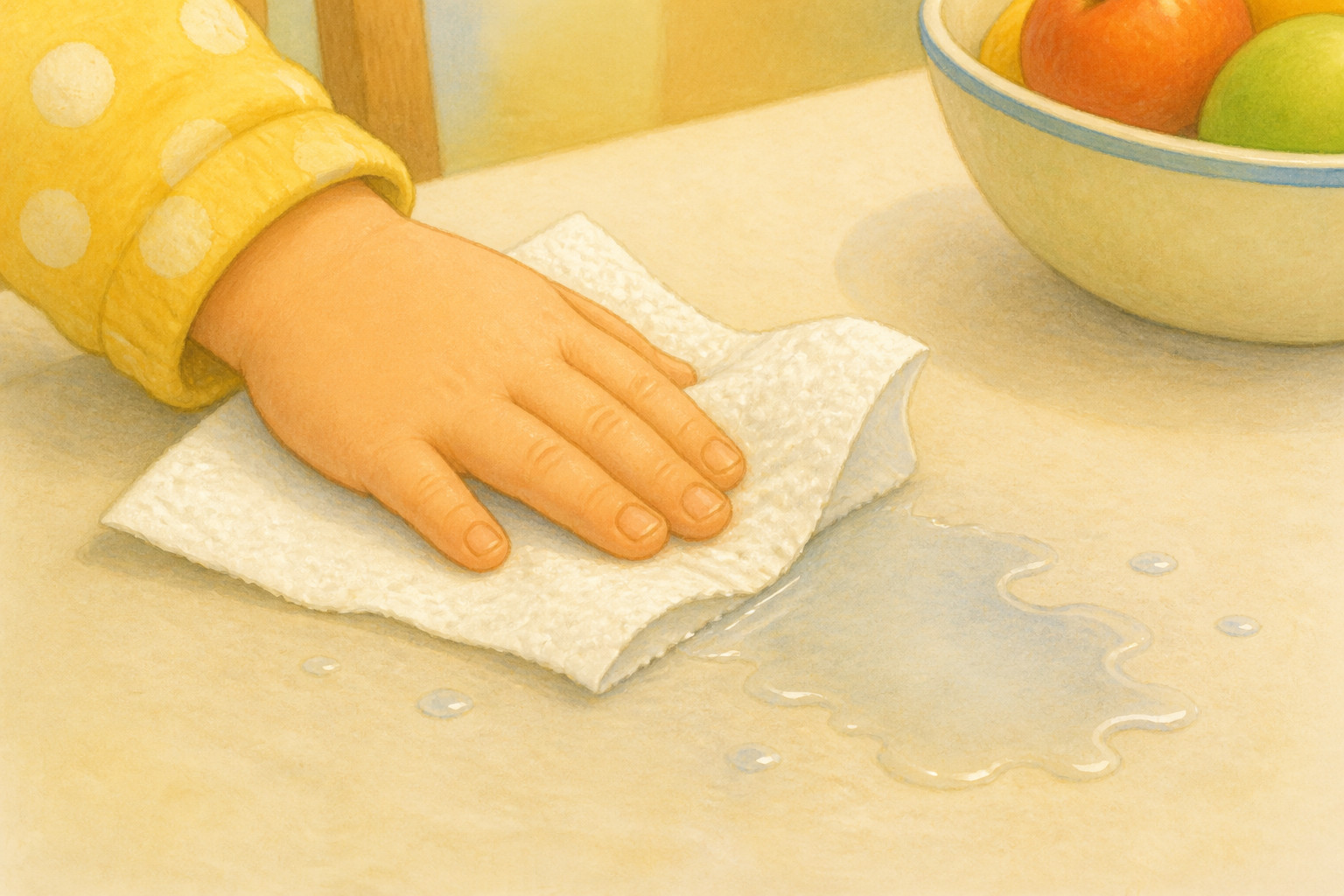
A little splash lands on the table, and you touch it with a paper towel. The wet patch spreads farther than the splash! Can water travel through a paper towel?
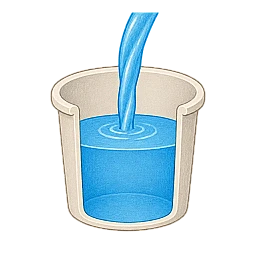
Yes, it can, and a small cup of water helps us see how. You can rest one end of a strip of paper towel in the water, with the other end hanging over the cup's edge. Only the bottom tip needs to touch the water.
Paper makers use fibers, tiny threads mostly from wood, to make a paper towel. The fibers cross over one another and hold together to form the soft sheet you can carry.
The fibers do not fit tightly together everywhere. They leave gaps, little spaces between the threads. Many gaps join up, making narrow paths through the paper towel, rather like paths winding through a garden.
At the bottom of the strip, water touches the fibers and sticks to them. Water can cling to the towel's fibers instead of just slipping away. That cling helps water spread into the tiny gaps beside them.
The towel's tip looks wet now, but the part above the water still looks dry. Can you guess whether the wet patch will stay at the tip or creep higher? Let's give it a quiet moment.
The wet patch creeps higher! Water sticks to the fibers, and water also sticks to other water. As some water moves farther into the gaps, it pulls more water along behind it, keeping the wet patch growing.
Those narrow gaps help the water climb a little way up the towel. Gravity, the pull that makes things fall down, pulls on water too. But inside these tiny spaces, water's cling can pull it upward against that downward pull.
Water can spread sideways through the towel too, because the paths between the fibers lead in different directions. That explains the splash on the table. Water travels away from the spot where the towel first touches it, making a wider wet patch.
A paper towel cannot keep taking in water forever. As water fills more of its gaps, the towel has less room for another splash. When the towel feels wet all over, a fresh, dry towel has more empty spaces ready to hold water.
Here is the little trail again: fibers, gaps, water clinging, water pulling more water along, a spreading wet patch. Yes, water can travel through a paper towel because it sticks to the fibers and to itself, drawing more water through the tiny gaps.
The next time you wipe up a little splash, you can know that water has tiny paths to follow inside your paper towel.
 Fenn
 1
 2
 3