Why is one T-shirt made in lots of places?
Pull on your favourite T-shirt and feel the soft cloth on your arms. Now peek at the little label inside the collar. Many labels name a country far from your home. So why is one T-shirt made in lots of places?
Before you can wear it, a T-shirt needs several different jobs, one after another. Each job needs something different, like warm sunshine, big machines or quick hands. No single place has all of those things.
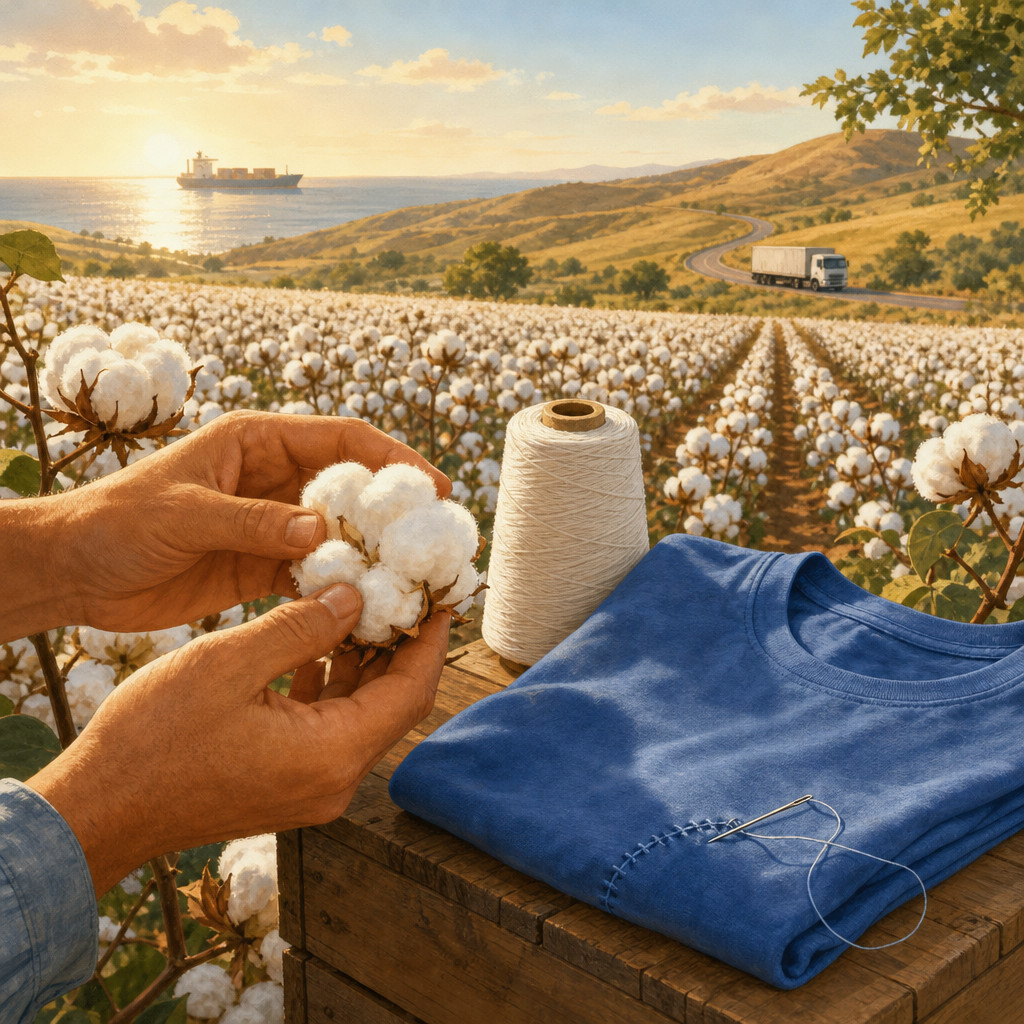
The first job happens on a farm. Cotton plants need lots of sunshine and warm weather to grow their fluffy white balls. So farmers grow cotton in warm, sunny places, like parts of India and Texas.
The next job happens in a factory in another country, such as China. Factory workers run big, fast machines that twist the fluff into thread and knit the thread into soft cloth. Those machines cost a lot, so only some countries have built lots of cloth factories, and they make cloth for shirt makers all over the world.
When the people in one place do the same job again and again, that place specializes, which means it sticks to one job and does it well. Farmers in sunny places specialize in growing cotton. Workers in big cloth factories specialize in making cloth.
Doing the same job every day makes the workers faster and better at it. Their cloth comes out smooth and strong, and they make heaps of it. That way each piece costs less to make, too.
The last job is sewing, and it needs many people, because floppy cloth is hard for machines to guide. Shirt makers send this job to countries such as Bangladesh, where many workers specialize in sewing. The workers there earn less money than in richer countries, so each shirt costs less to sew. How do you think the cotton, the cloth and the shirts travel from one country to the next?
Sailors steer giant cargo ships that carry them across the ocean. One ship holds thousands of big metal boxes, each packed with cotton, cloth or shirts. Because one ship carries so much at once, moving each shirt costs only a few pennies.
So one T-shirt is made in lots of places because each country specializes in the job it does best and most cheaply, and big ships carry the pieces between them for very little money.
And when that soft shirt slips over your head, it holds a little of the sunny cotton fields, the humming factory machines and the busy sewing tables, all stitched together into one.