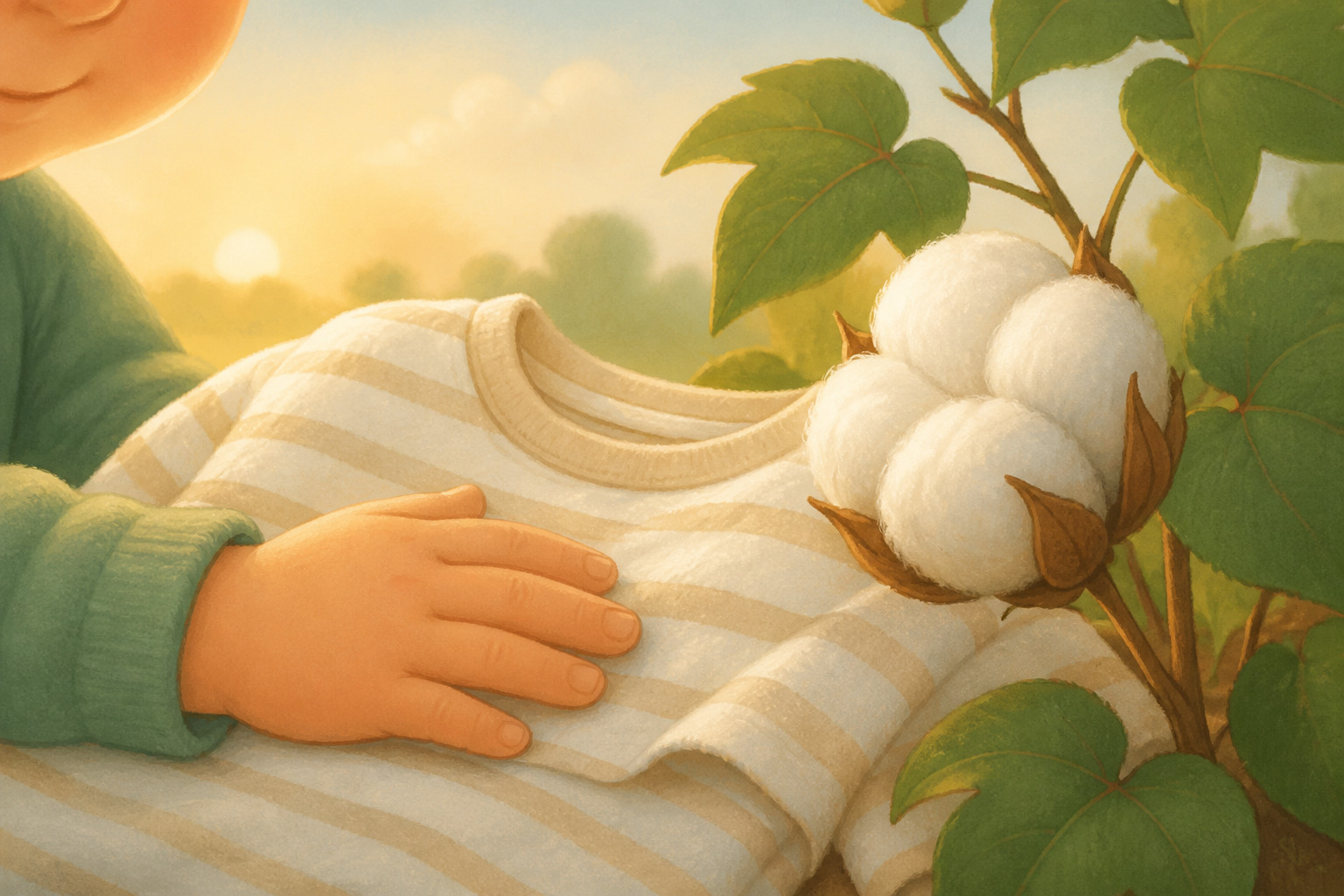
How does fluffy cotton become a T-shirt?
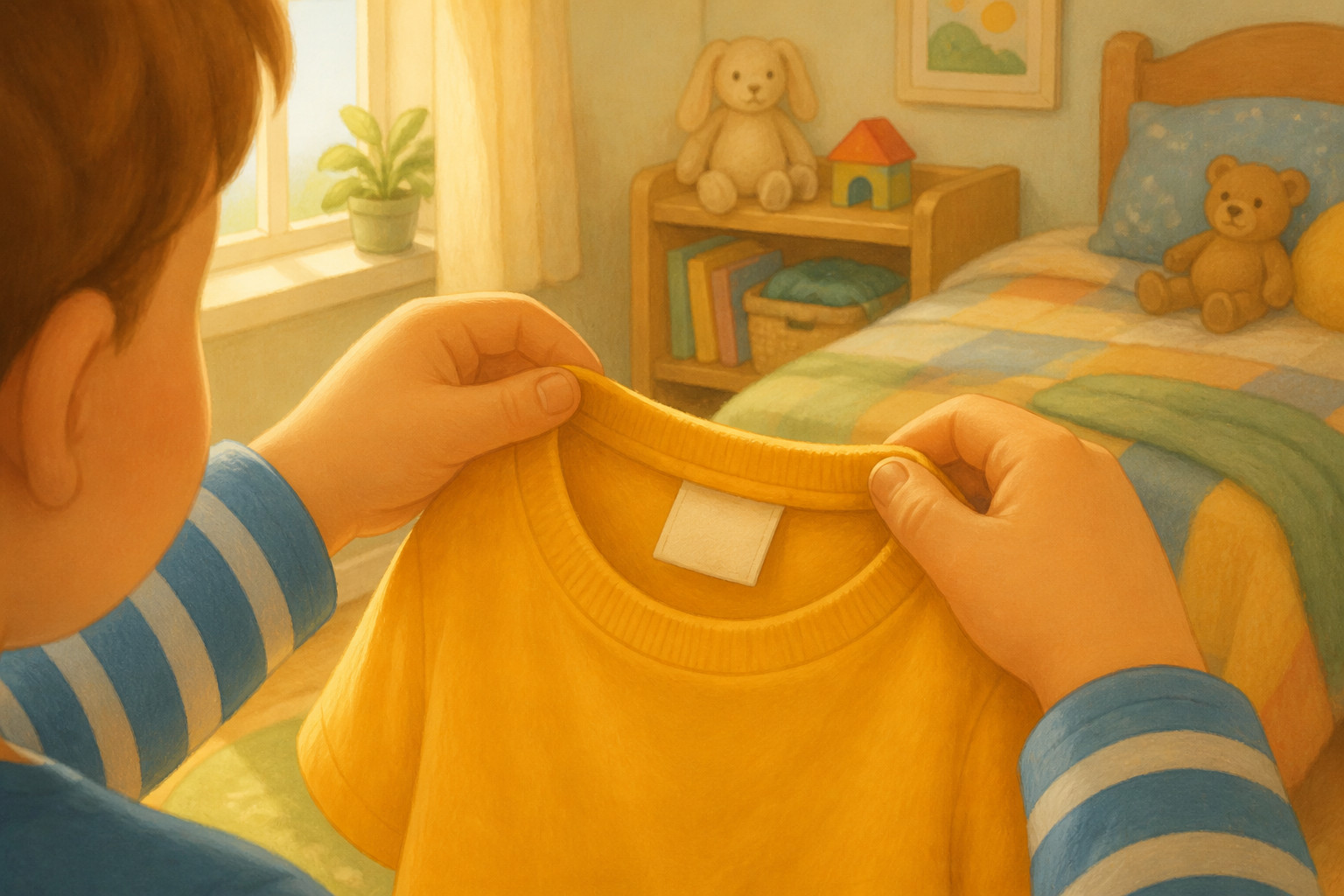
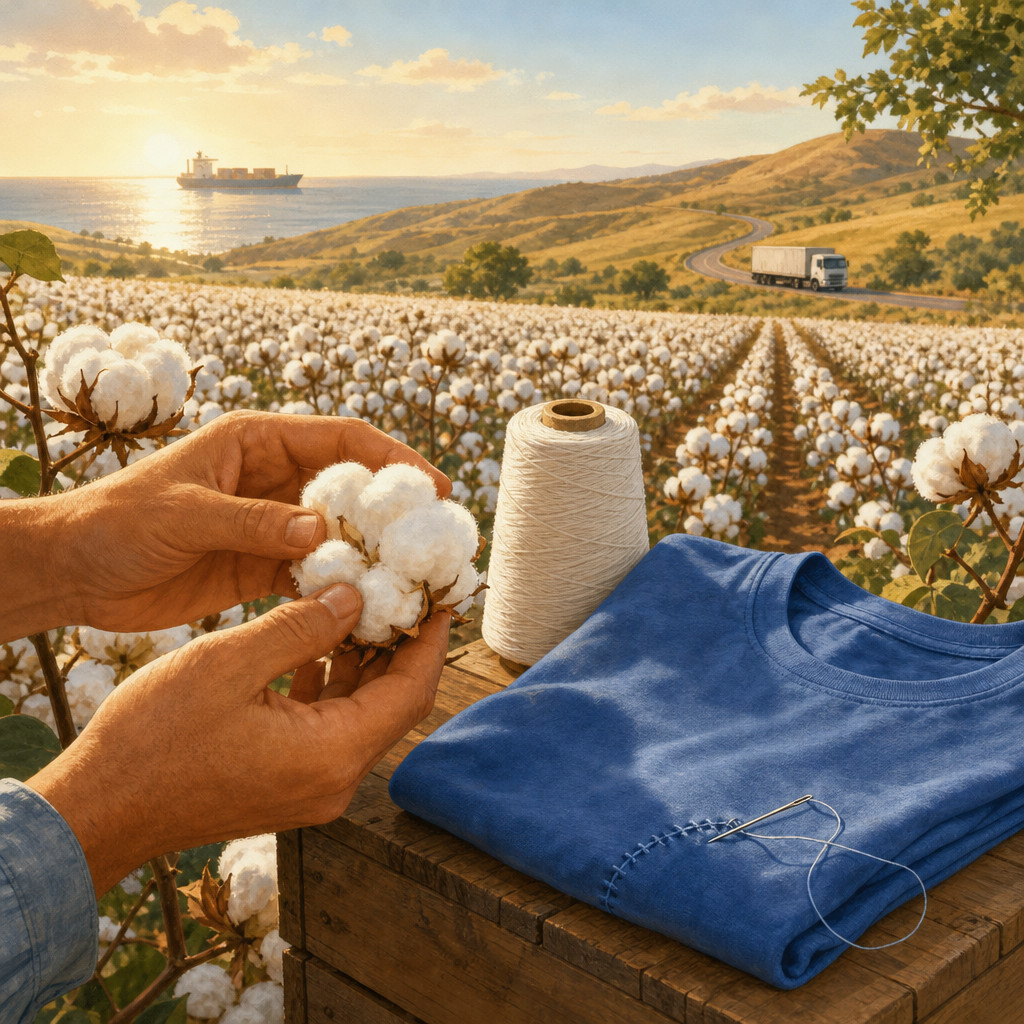
Put your hand on your T-shirt and rub it gently. It feels soft and smooth, a bit like a cloud you could wear. Now picture a puff of fluffy white cotton, the kind that grows on a plant in a field.
That puff looks nothing like a shirt. It has no sleeves and no neck, and it falls apart when you pull it. So how does fluffy cotton become a T-shirt?
First, workers at a cotton factory send the fluff through a machine with rows of tiny teeth. The teeth grab the fluff and pull it away from the seeds hiding inside. That matters, because seeds would leave hard lumps in a shirt. What comes out is clean, soft fluff.
If you look closely, that fluff is made of thousands of tiny hairs called fibers, which means thin threads that grew on the cotton seed. Each fiber is shorter than your finger. On its own, one fiber is far too weak to hold a shirt together.
Next, workers at a mill run the fibers between big rollers covered in wire combs. The combs brush the fibers until they all lie the same way, just like brushing out tangled hair. Straight fibers sit side by side, so later they twist into smooth, even yarn instead of lumps. The cotton comes out as a soft, loose rope.
Workers load the soft rope onto spinning machines, which pull it thin and twist it tight. The twist makes the fibers grip each other, so the long strand of yarn turns strong. What do you think happens to all that yarn next?
Workers feed the yarn into big round knitting machines. Hundreds of tiny needles loop the yarn through itself, row after row, a lot like knitting by hand but much faster. The loops make a soft, stretchy cloth, and that stretch is why your T-shirt pulls easily over your head.
After that, a cutting worker lays many layers of cloth flat on a long table. The worker follows a paper pattern to cut out a front, a back and two sleeves. Every piece has the same shape, so every shirt comes out the same size.
Sewing workers then stitch the pieces together at their sewing machines. They join the front to the back, add the sleeves, and finish the neck with a stretchy band. Their stitches stretch too, so the shirt does not split when you move.
So fluffy cotton becomes a T-shirt because people comb its fibers straight, twist the fibers into strong yarn, knit the yarn into stretchy cloth, and then cut and sew that cloth into a shirt.
And all those tiny fibers, each one shorter than your finger, are holding on to each other in the soft shirt you are wearing right now.