Why does a bus map show bus stops but not hills?
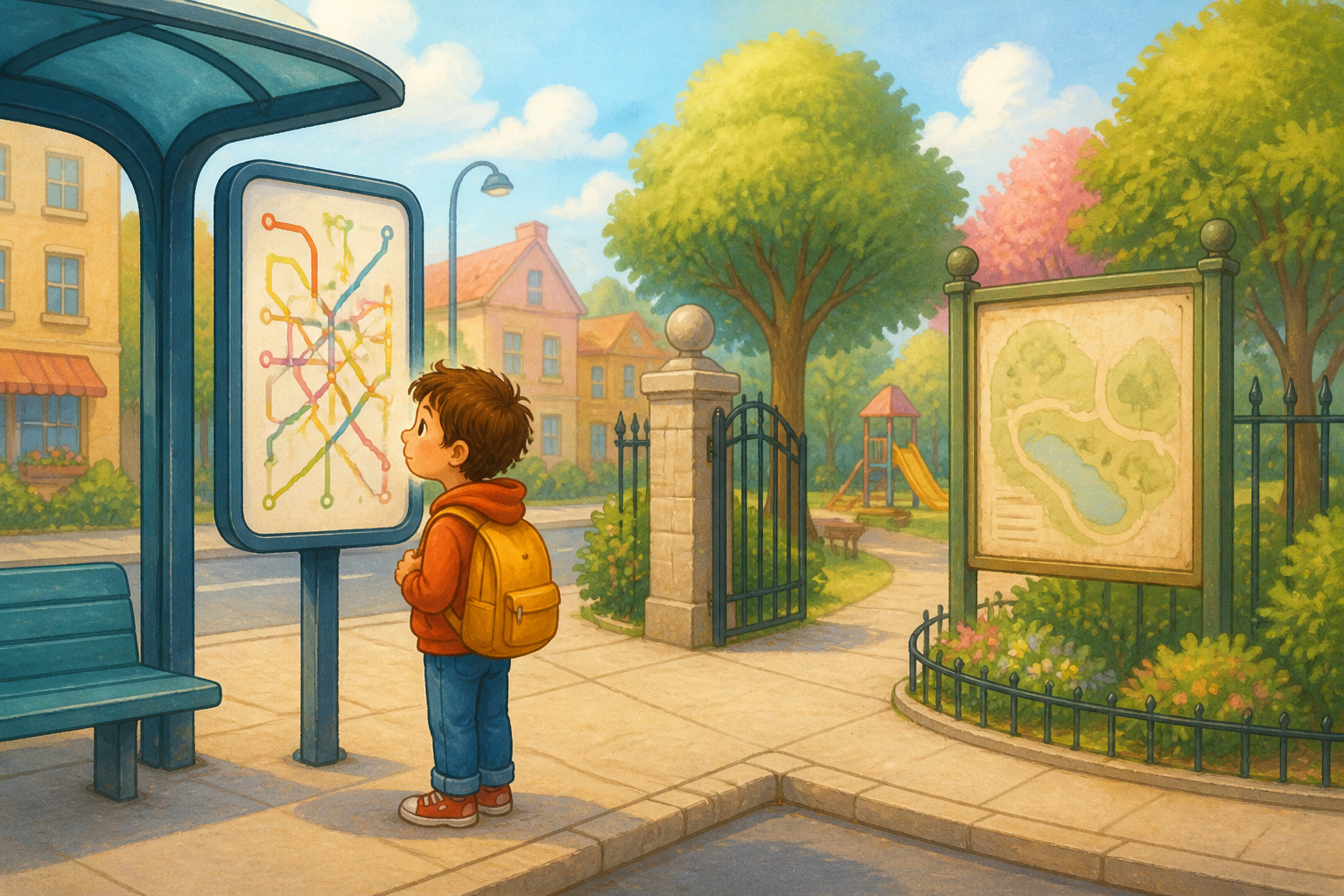
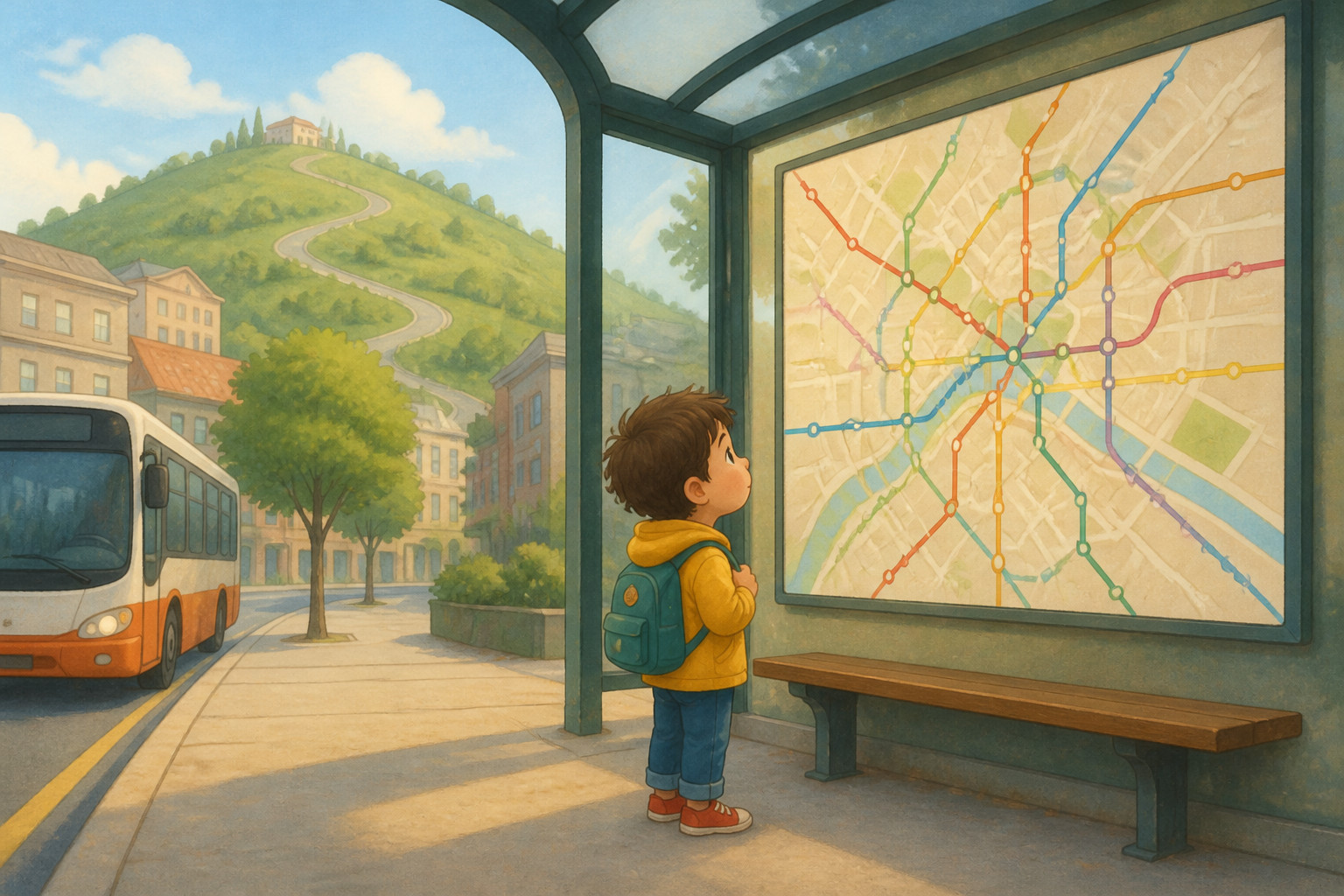
Picture the big bus map on the wall at a bus stop, with bright colored lines and little round dots. Imagine running your finger along one line, from dot to dot, smooth and flat. Then you climb aboard, and the bus groans its way up a steep hill. Yet that hill is nowhere on the map!
So why does a bus map show bus stops but not hills? The hill is real, and you can feel the bus climb it. Let's find out why the map leaves it off.
A mapmaker draws every map for one job. Before the first line, the mapmaker asks who will use the map and what they need. Walkers on a mountain trail want to know where the steep parts are, so their map shows hills. A bus map, though, is for bus riders.
Riders want to know which bus to take, where to get on, and where to get off. So the mapmaker draws each bus's route, which means the path that bus drives on every single trip. Each route has its own color, so you can tell one bus from another.
Along every route, the mapmaker adds a dot for each bus stop, because those are the only places you can get on or off. By counting the dots, you can tell how many stops to ride before yours.
Now think about the hill. The bus driver steers up it and down again, but the hill changes nothing about the route or the stops along it. Knowing about the hill won't help you pick a bus or find your stop, so the mapmaker leaves it out.
The mapmaker leaves out trees, houses and puddles for the same reason, because riders don't need them to make their trip. Choosing what to leave out is a big part of the mapmaker's job. What do you think the map would look like if the mapmaker drew every hill, tree and house on it too?
It would turn into a jumble! Mapmakers call that clutter, which means too many things crowded into one small space. With clutter everywhere, your eyes couldn't find the bright route lines or the little dots.
And riders are in a hurry, with a bus coming around the corner! A map with no clutter lets you spot your route and your stop in a moment, so you hop on the right bus.
A bus map shows stops but not hills because the mapmaker draws only what riders need to follow a route and find their stop, and leaves the hills off so that clutter can't hide the stops.
Up the hill the bus rumbles, and down the other side it rolls. Back on the wall at the bus stop, the bright route runs on, smooth and flat, from one little dot to the next.