Why doesn't a map show every tree and house?
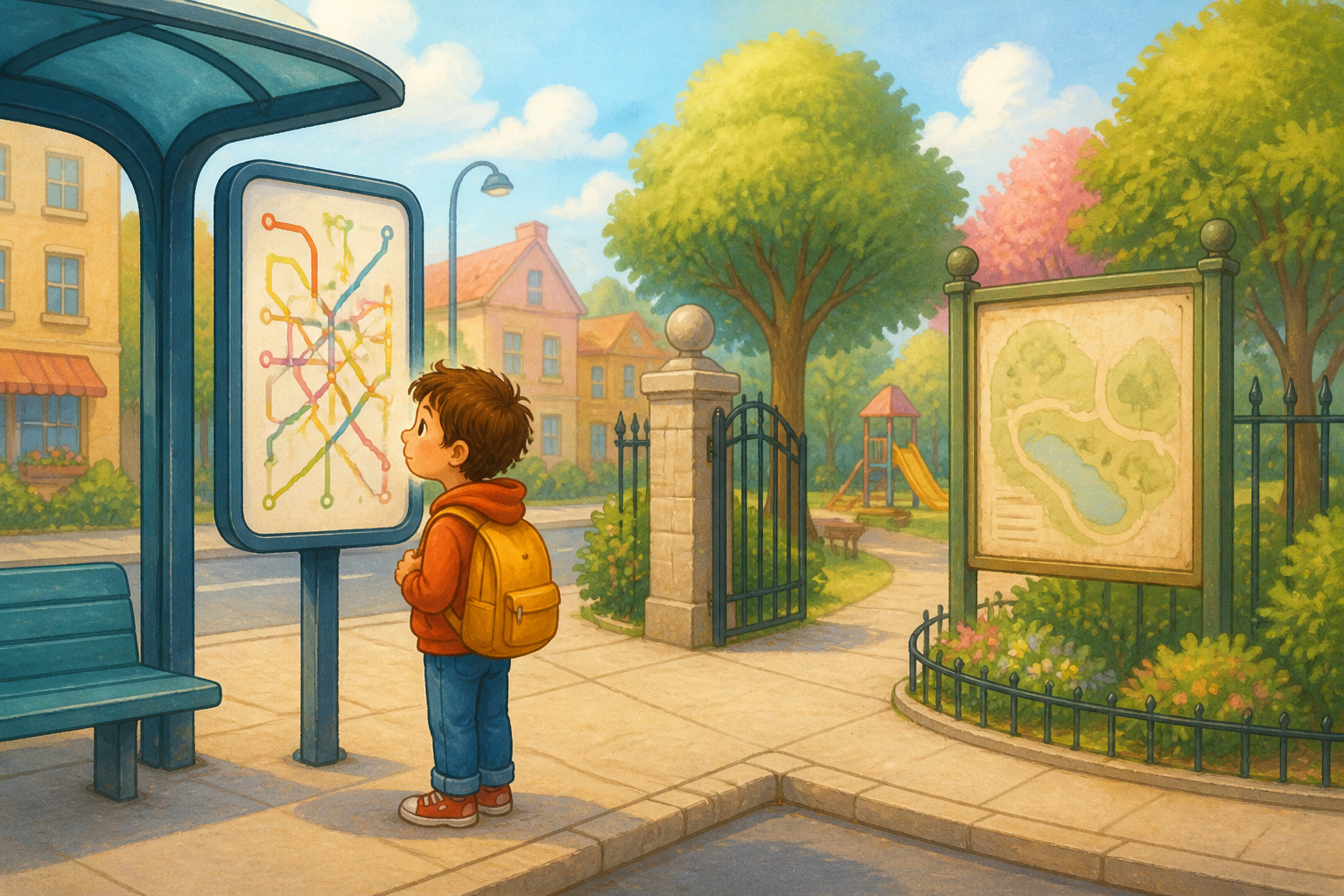
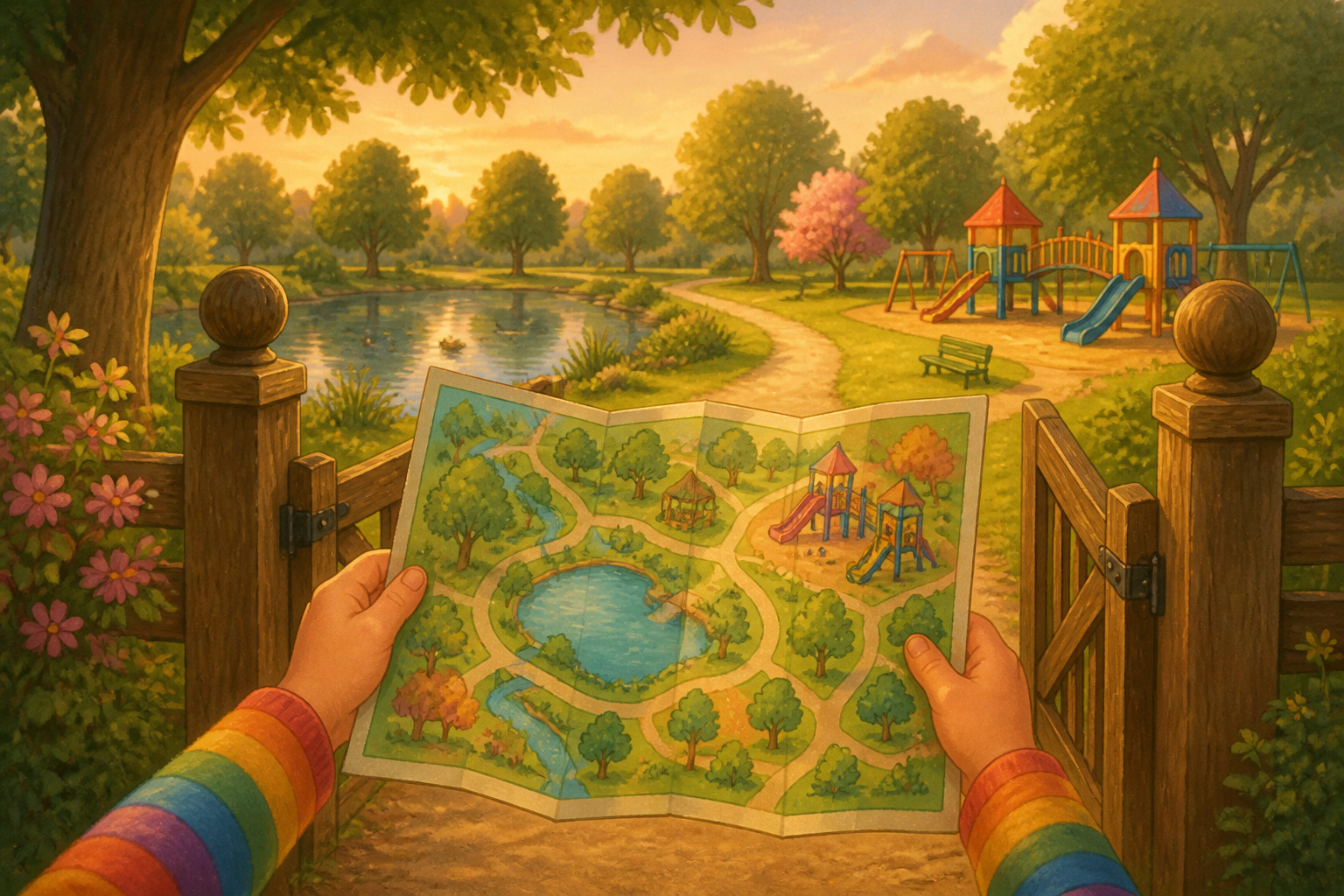
Picture unfolding a big paper map at the park gate and running your finger along its winding paths. You can find the pond, the playground and the café. But where are all the trees? And where is every house on the street outside?
There are hundreds of trees in that park, yet the map doesn't show a little tree for each of them. So why doesn't a map show every tree and house? Let's find out together.
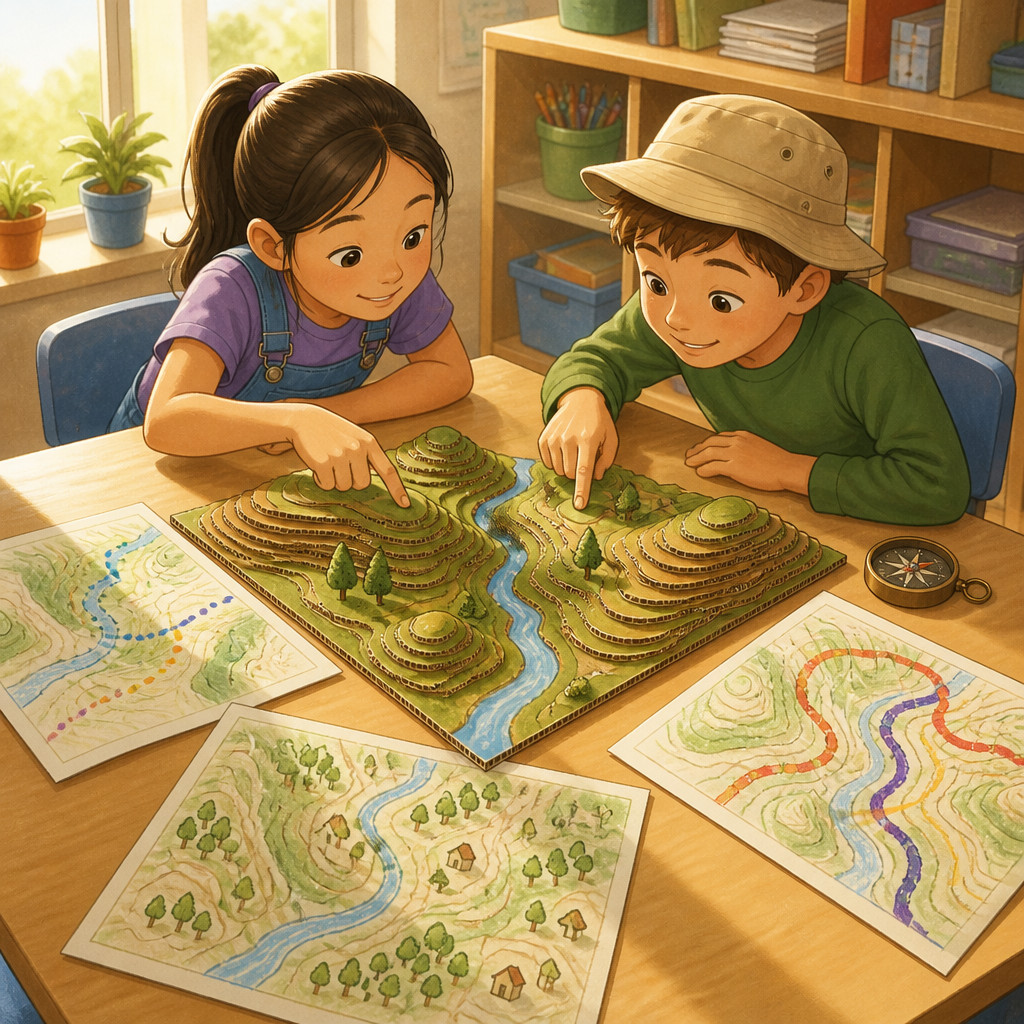
A mapmaker draws a big place on a small piece of paper. A whole town has to fit on a page you can hold in your two hands. So the mapmaker shrinks everything by the same amount, until it all fits.
Mapmakers call that amount the scale, which means how much smaller the map is than the real place. On a map of a whole town, the space under your fingertip can stand for a long street. That way, you can carry the whole town in your pocket.
At that scale, a house shrinks to a dot smaller than a crumb, and a tree becomes a speck no bigger than a grain of sand. Now imagine the mapmaker drew every one of those specks anyway. What do you think the map would look like?
It would be a crowded jumble, with thousands of dots squeezed together. You couldn't spot the road, the river or the way to the park. A map is for finding your way, so it has to stay clear and easy to read.
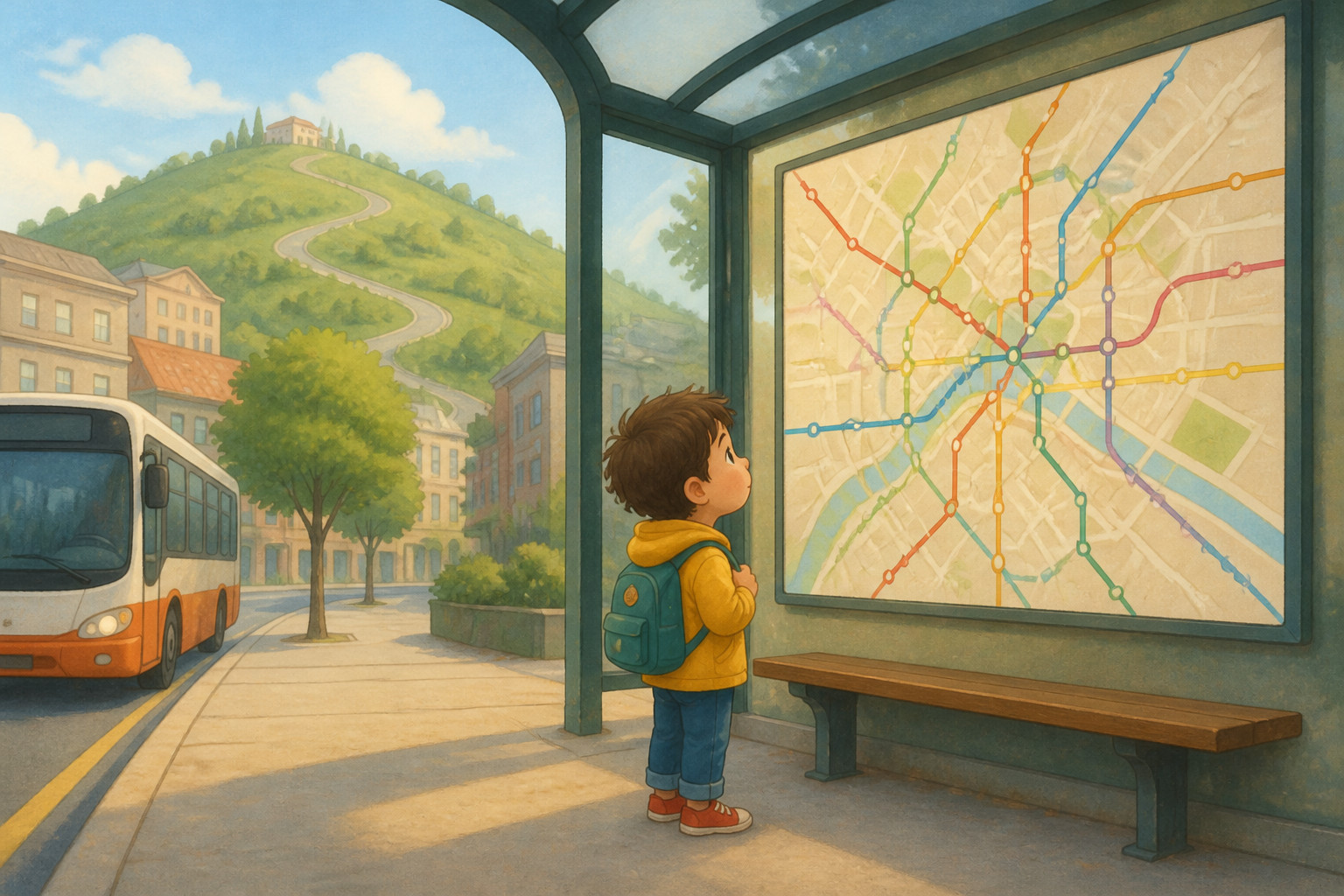
So the mapmaker chooses what to keep by thinking about what the map is for. A map for walkers keeps paths, bridges and hills. A map for drivers keeps the big roads and the towns, and leaves the small paths out.
Everything the mapmaker keeps becomes a symbol, which means a simple mark that stands for a real thing. A whole wood becomes one green patch instead of thousands of trees. On a map of a whole town, a street full of houses becomes one shaded block.
Each symbol is plain and easy to spot, so your eyes find what you need in a moment. A blue line tells you a river runs there. A green patch tells you there's a wood to walk through.
A map doesn't show every tree and house because the mapmaker shrinks a whole place down to a tiny scale, where they would turn into a jumble of specks. So the mapmaker keeps only what the people using the map need and draws those things as clear symbols you can spot.
Back at the park gate, your finger follows a winding path across the paper. One green patch holds all those hundreds of trees, and the way to the pond stays easy to see.