How many people help make a T-shirt?
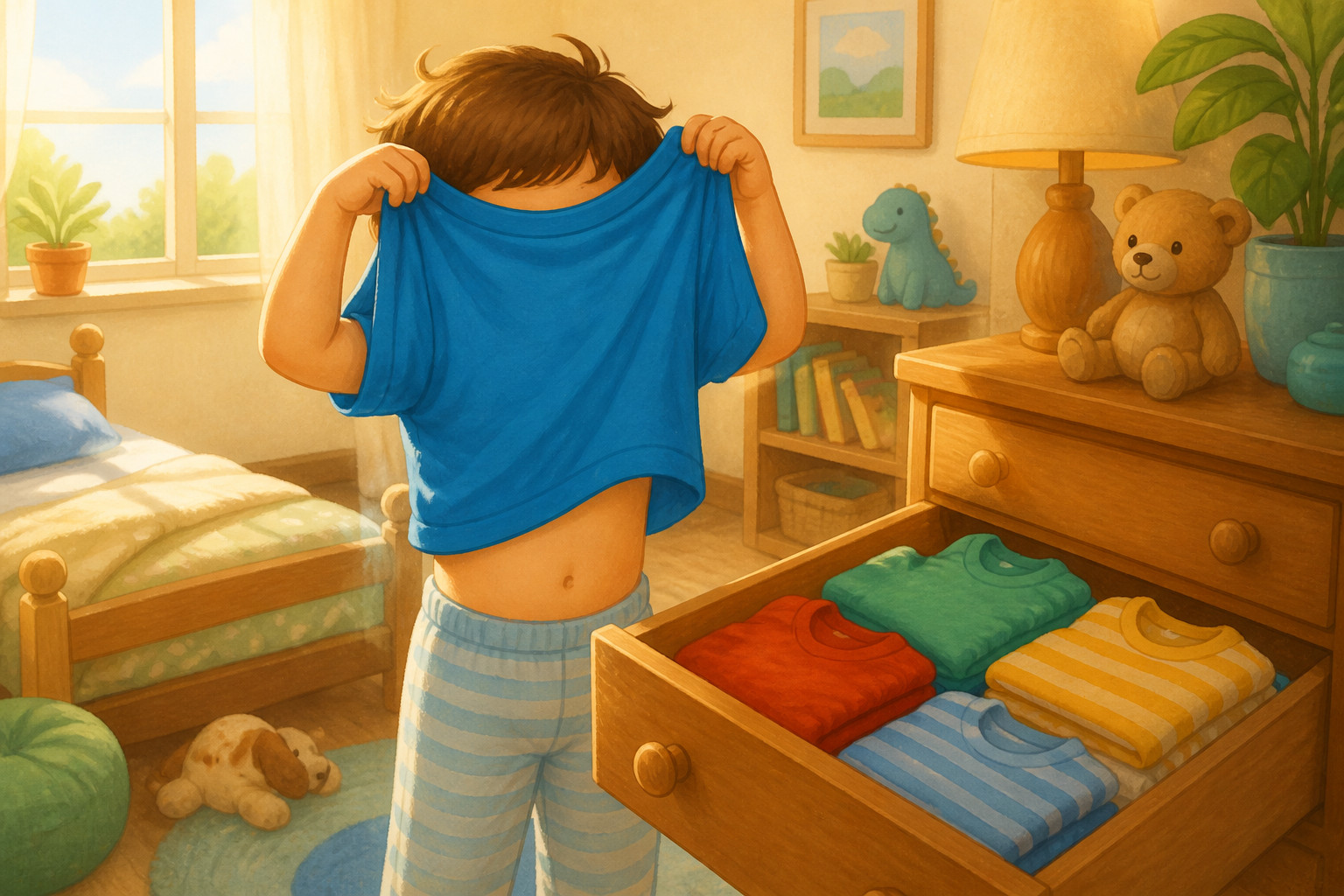
Pull a T-shirt over your head and feel it. The cloth is soft and a little stretchy, and it smells clean when it comes out of the drawer.
Somebody had to make your shirt long before it reached your drawer. Was it one person, or a whole crowd? So let's wonder together: how many people help make a T-shirt?
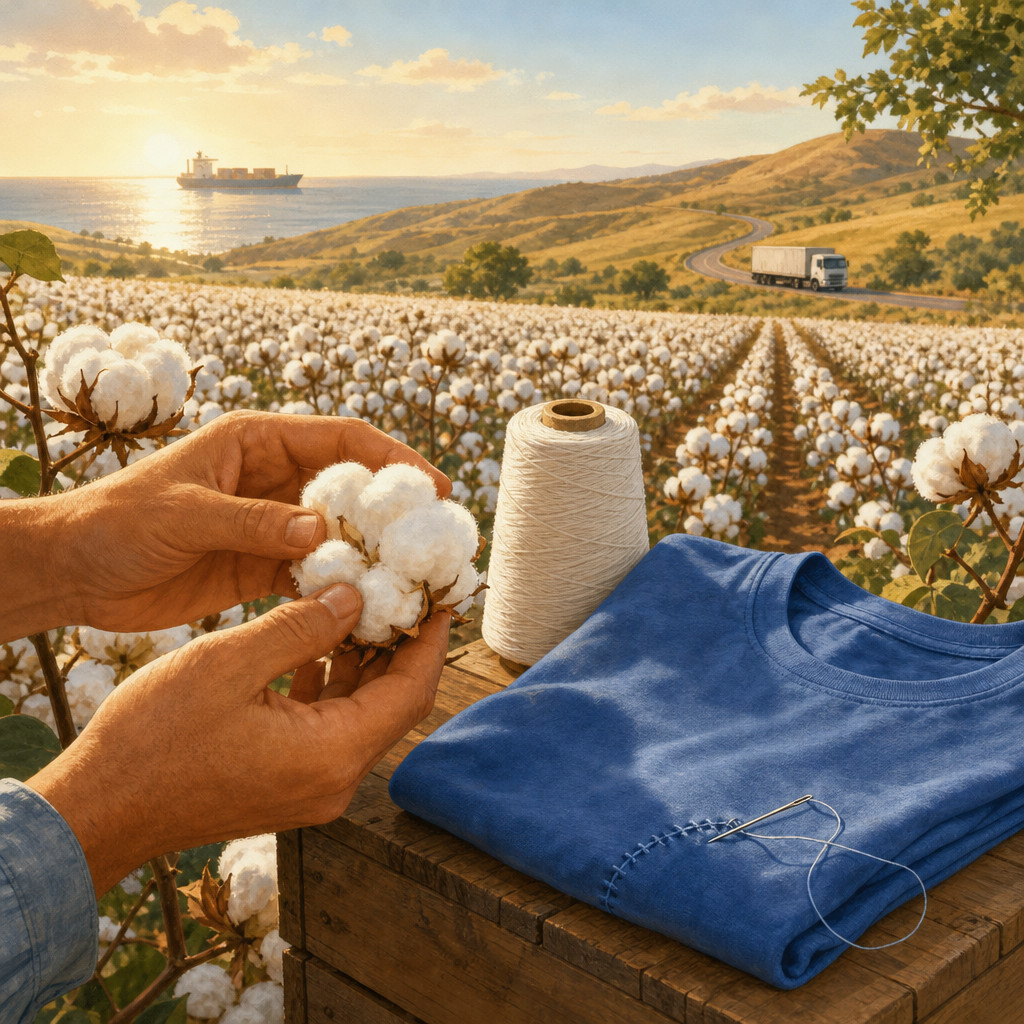
The story of your shirt starts on a farm, with a farmer who plants cotton seeds. The plants grow tall in the warm sun, and then round pods burst open into fluffy white puffs. Each pod is a cotton boll, which means the round case where a cotton plant keeps its seeds and fluff.
When the cotton bolls are dry and open, farmers drive big picking machines across the field to pull out the fluff. The farmers press all that fluffy cotton into giant bundles, so truck drivers can carry lots of it at once to a cleaning mill.
At the cleaning mill, workers run machines that pull out the seeds and the bits of leaf. They clean the cotton so that only soft, white fluff goes on to the next helpers.
Then truck drivers bring the clean fluff to another mill, where spinners work at whirring machines. Spinning, which means twisting loose fluff into one long thread, makes the cotton strong. A thin wisp of fluff breaks with a tiny tug, but a twisted thread holds tight.
After that, knitters take the spools of thread from the spinning mill. They run knitting machines that loop the thread into soft cloth, and those tiny loops let your shirt stretch. Now the cloth is plain white, yet most T-shirts have bright colors. Who do you think works on the cloth next?
Dyers do! They dip the white cloth into huge tubs of colored water, red or blue or green. The color soaks deep into every thread, so it stays in your shirt when you wash it.
Then cutters lay many layers of cloth on a long table. They follow a paper pattern and cut out a front piece, a back piece and two sleeves. Each piece has its own shape, so the finished shirt fits your body.
Sewers sit at sewing machines and stitch the pieces into one whole shirt. Each sewer does just one part, so the shirt passes from hand to hand. One sewer joins the sleeves, another adds the collar, and another hems the bottom.
Let's count the helpers: farmers, truck drivers, cleaners, spinners, knitters, dyers, cutters and sewers. Nobody knows the exact number for one shirt, but it is more people than you have fingers and toes.
Cotton boll, spinning. Many people help make a T-shirt, more than your fingers and toes, because farmers grow the cotton bolls and then other workers take turns with cleaning, spinning, knitting, dyeing, cutting and sewing.
The next time you pull on your soft T-shirt, you can think of all the kind hands that helped make it for you.