Why does it matter where an old thing was found?
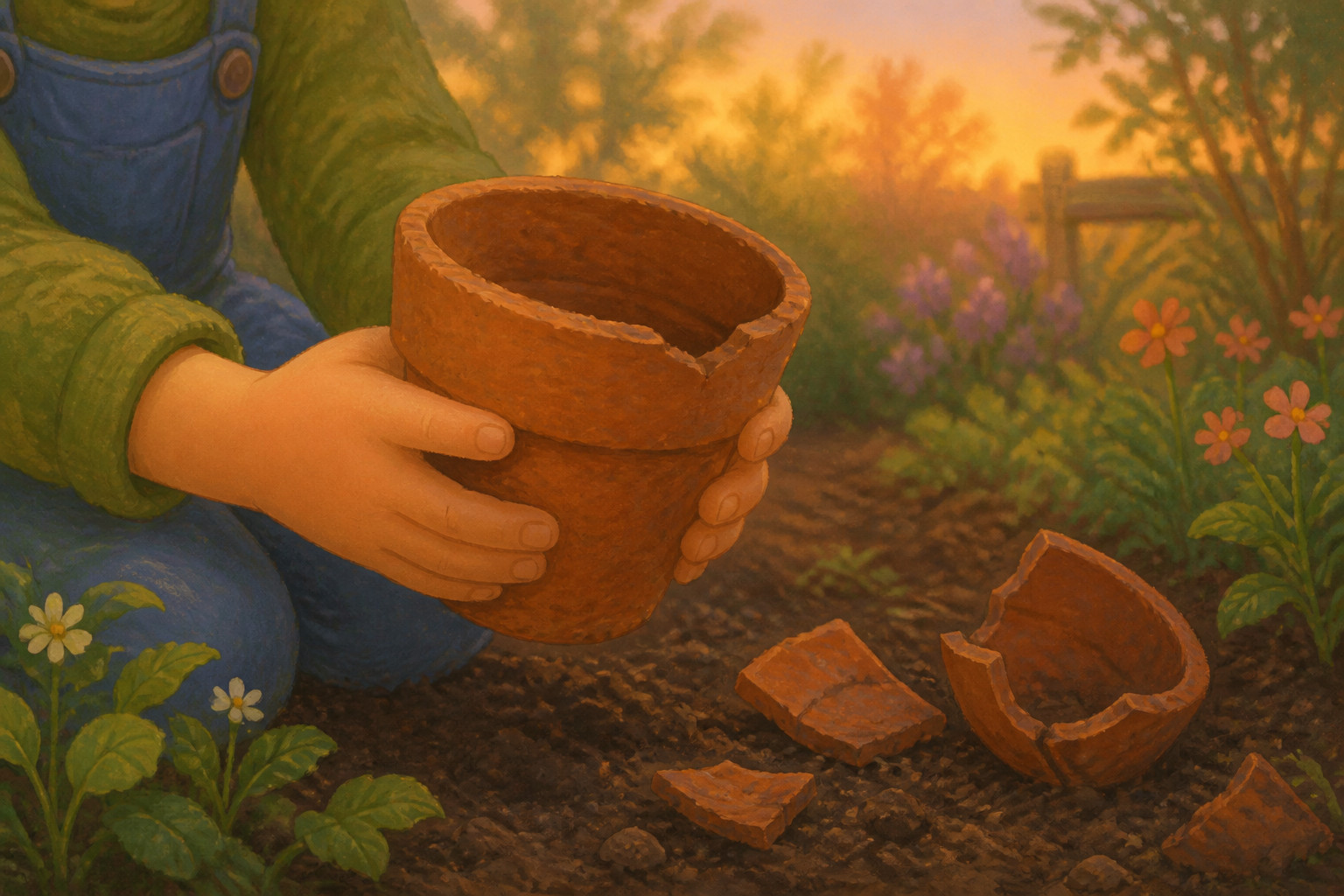
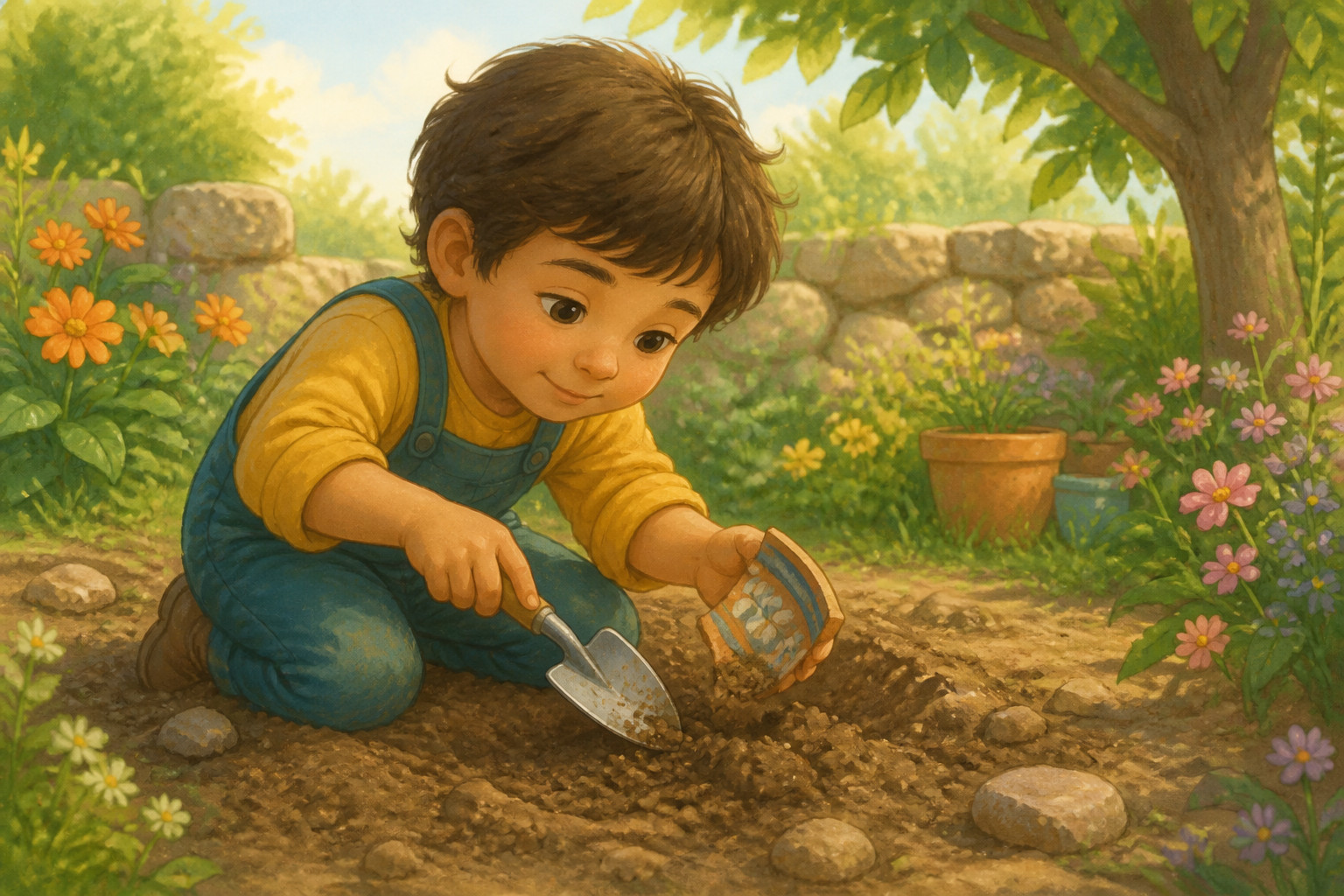
Imagine you are digging in the garden with a little spade. The soil feels cool and crumbly in your fingers, and then your spade taps something hard. You brush it off and find a piece of an old cup, very old indeed.
Who drank from that cup, and how long ago? People who study old things care a lot about the exact spot where a find was lying. So why does it matter where an old thing was found?
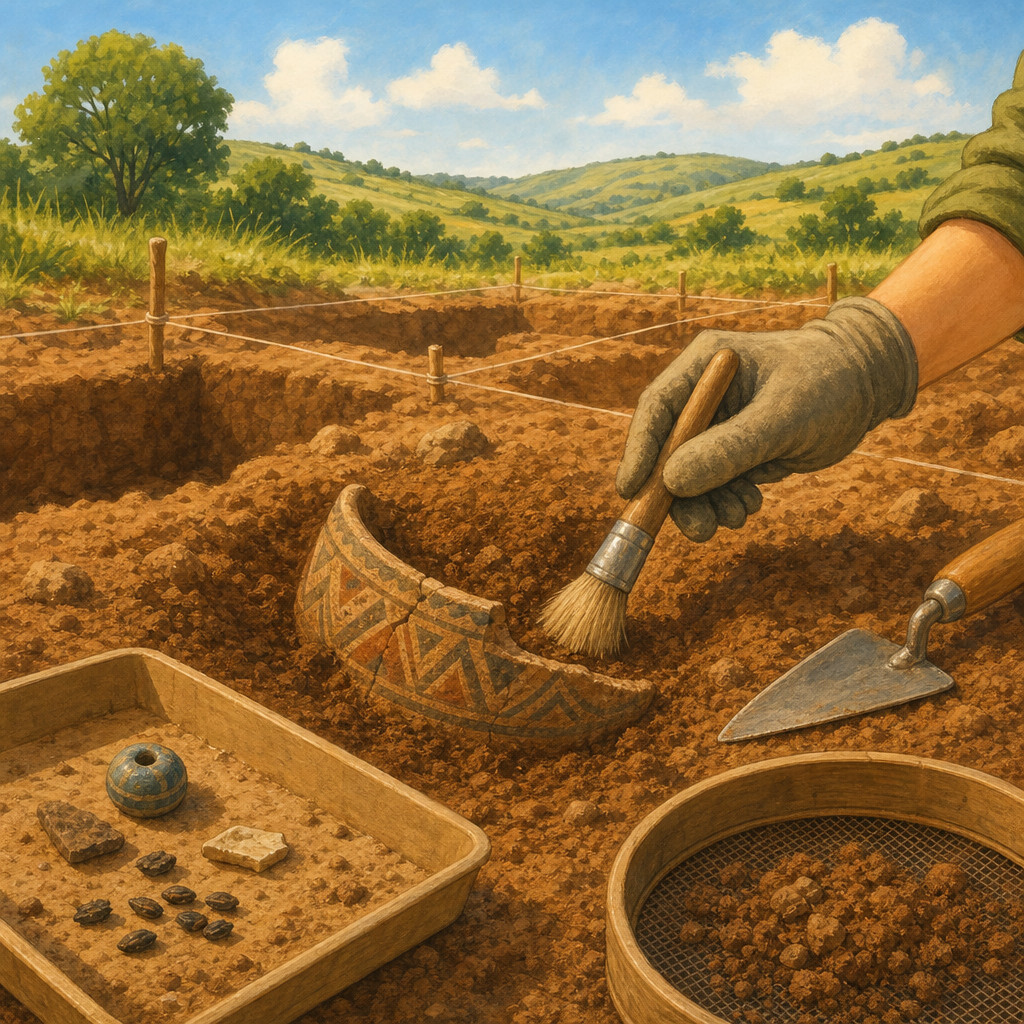
A person who digs up old things to learn how people lived long ago is called an archaeologist. Before an archaeologist lifts anything out, she writes down and photographs exactly where it lies. She does this because the spot itself holds clues.
Year after year, dust, leaves and mud settle over the ground, and people build new floors on top of old ones. Slowly the ground grows upward in layers, stacked like pancakes on a plate. Which layer do you think is the oldest, the one on top or the one at the bottom?
The bottom one, because it was there first and everything else piled on top of it later. So when an archaeologist finds a cup deep down and a coin higher up, she knows the cup is older. The layer tells her how old each thing is.
The things lying beside a find give the second clue. Picture the cup resting next to a stone oven, cooking pots and burnt bits of bread. Together they show the archaeologist a kitchen where a family cooked and ate their meals.
Now picture the very same cup in a big hall, surrounded by many cups and plates. This time its neighbours tell of a feast, where lots of people ate together. One cup, two different stories, all because of what lay around it.
If someone pulls the cup out and carries it away without noting the spot, both clues are gone forever. Nobody can tell its layer or its neighbours any more. That is why an archaeologist asks people who find old things to leave them in place and tell a grown-up.
Our new word today was archaeologist. Where an old thing was found matters because the ground piles up in layers, so its layer tells an archaeologist how old it is, and the things beside it show how people used it.
Sleep well, little explorer, and dream of all the stories waiting quietly under the ground.