What can a broken bit of old pot tell us?
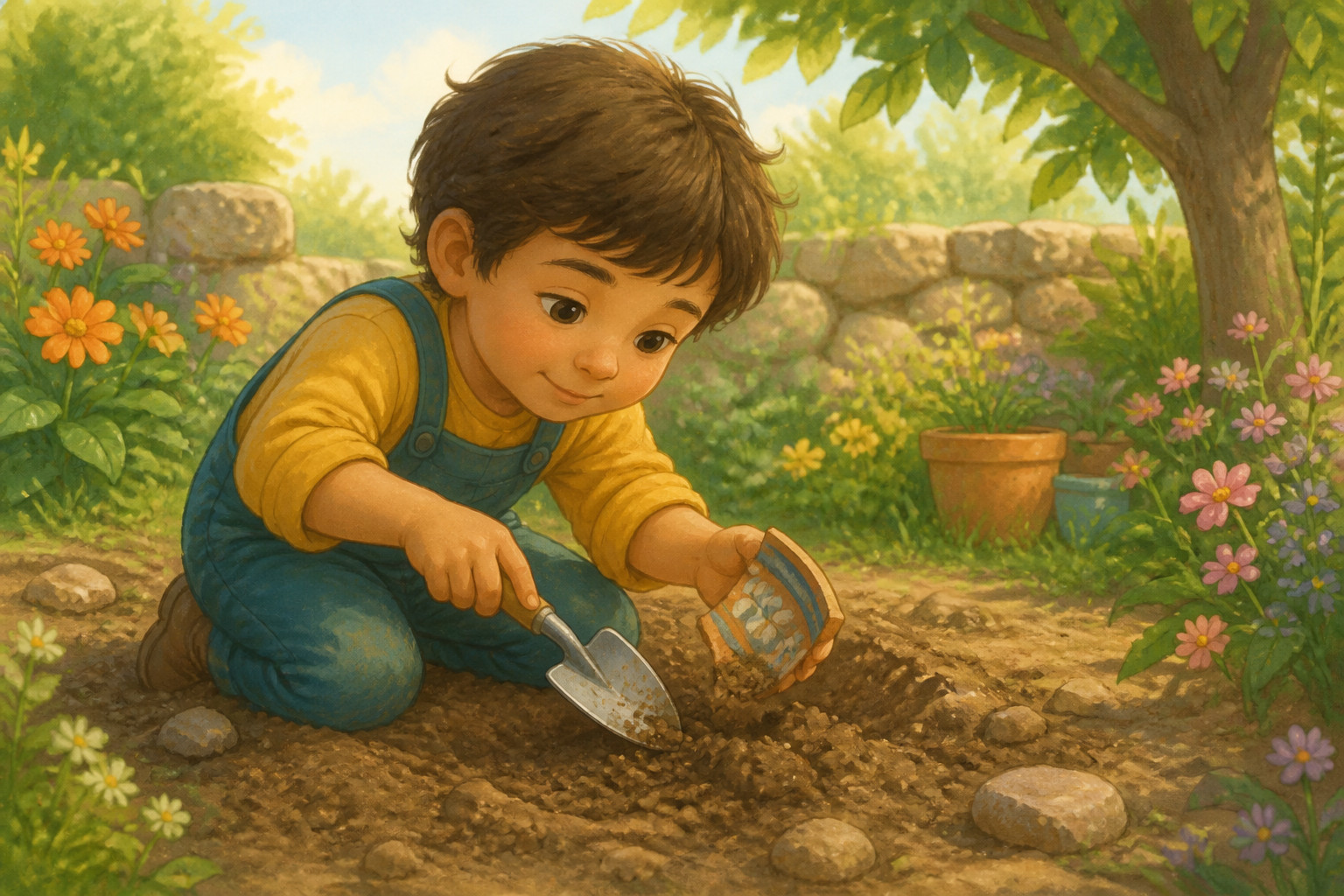
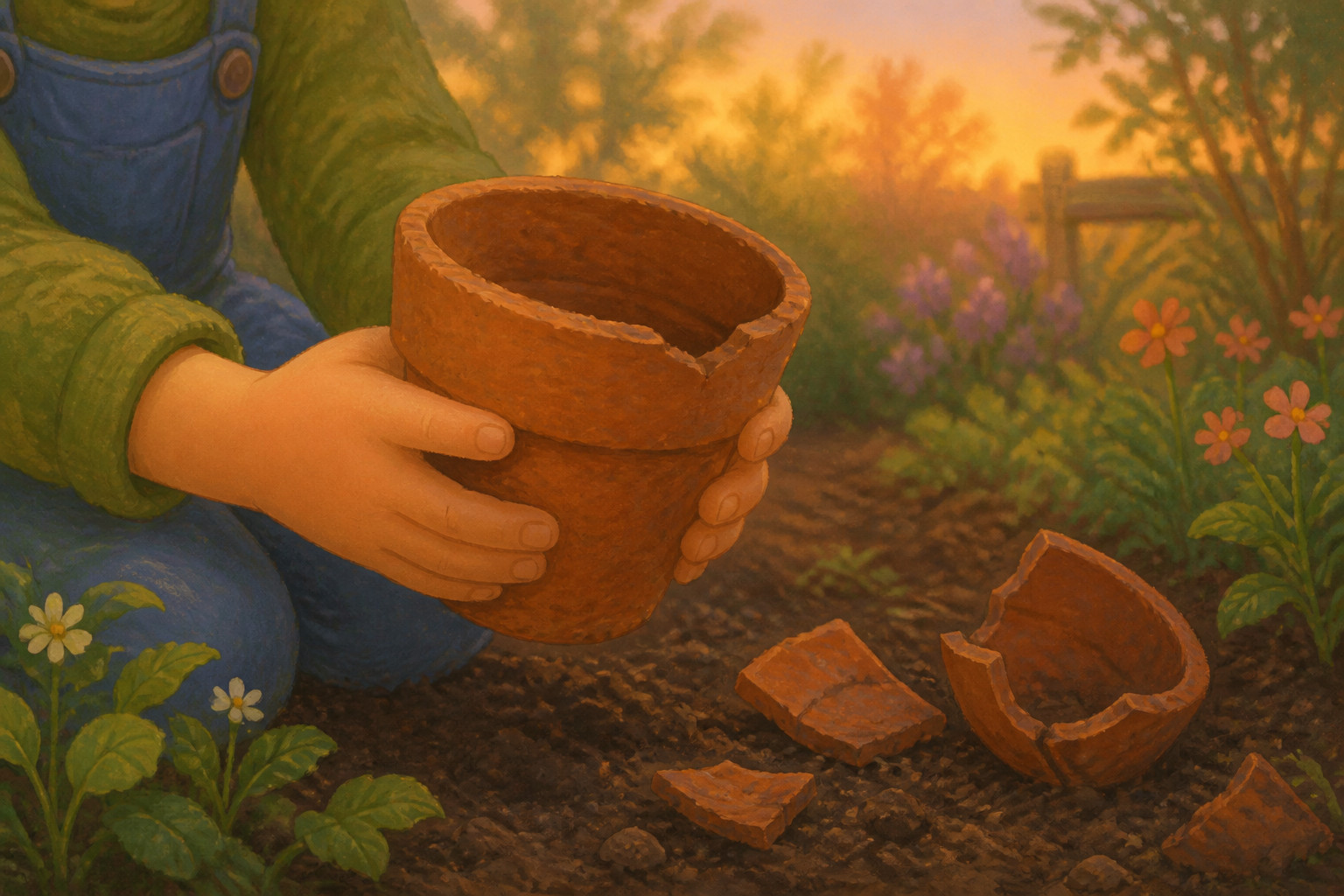
Have you ever held a clay flowerpot and rubbed its rough, sandy side? People have shaped pots from clay and baked them hard for thousands of years. When one of those old pots cracked, its owners tossed the pieces away, and the pieces stayed in the ground.
Clay pieces do not rot like wood or cloth, so they wait in the earth for a very long time. Imagine finding one, small and brown, with a curved edge. What can a broken bit of old pot tell us?
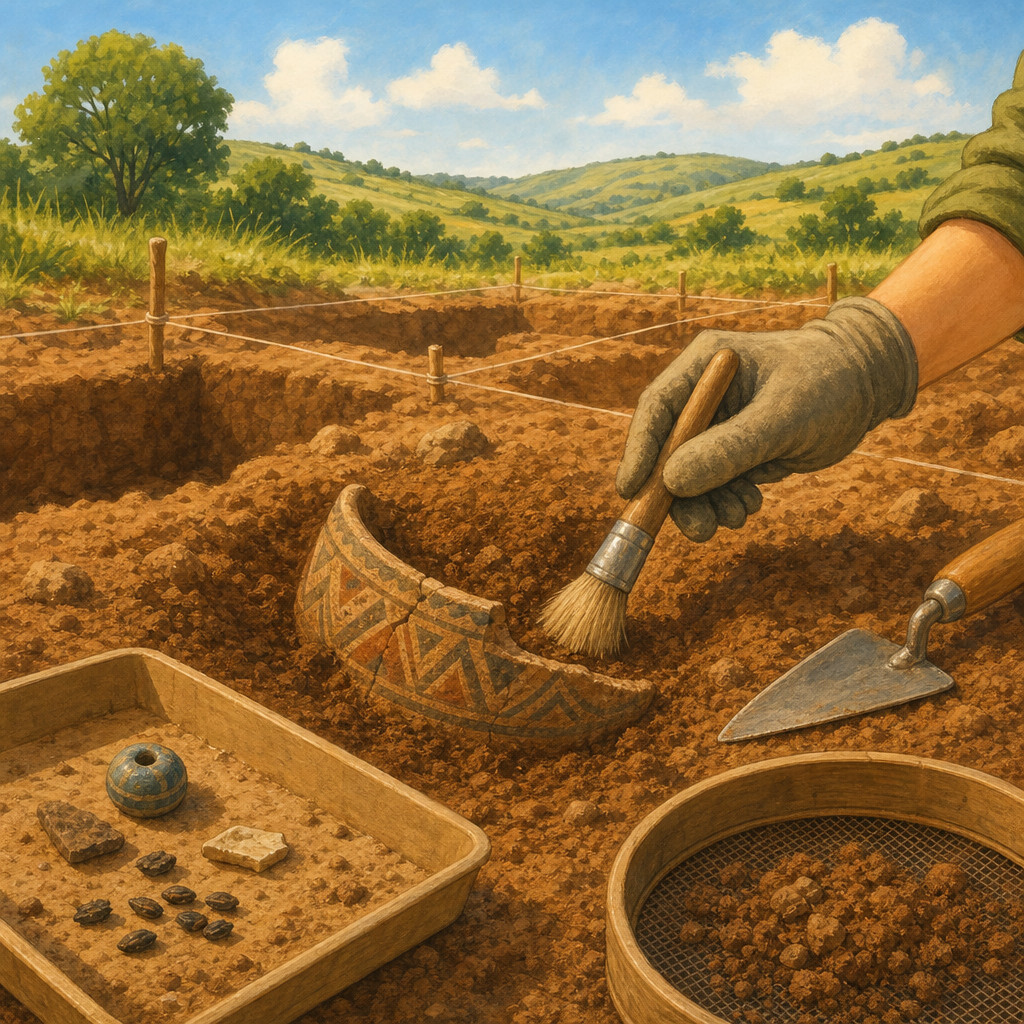
The person who digs up these pieces is called an archaeologist, which means someone who digs up old things to learn about people from long ago. The archaeologist brushes the soil away gently with a small brush, so the old piece does not crack and its marks stay clear. Each piece is a clue about the people who once used that pot.
First, the archaeologist looks at the curve of the edge, because that curve shows the shape of the whole pot. A wide, open curve came from a bowl for eating, and a narrow neck came from a tall jar that kept water or grain. So the shape tells what the pot was for.
Next, the archaeologist turns the piece over and spots a dark, black patch on the outside. The patch covers the part that was once the bottom of the pot. What do you think made that black patch?
It was a cooking fire! The pot sat over hot flames, and the smoke left black soot on its bottom. Now the archaeologist knows that the people who used this pot cooked their meals in it.
Cooking also leaves something on the inside. Little bits of food soaked into the clay, far too small to see. Scientists in a lab test those hidden traces and find out what the people ate, like milk, porridge or fish soup.
Then the archaeologist looks closely at the pattern pressed into the clay, such as lines, dots or rope marks. People in each place and time made their own kind of pattern, and it changed slowly over hundreds of years. The archaeologist matches this pattern with other pots whose age is already known. That match shows when these people lived.
Last, scientists look at the tiny grains of sand and stone mixed into the clay. Clay from each place has its own grains, so the grains show where the clay was dug. So when the grains came from far away, the pot travelled a long way to reach the people who used it.
Our key word today is archaeologist. One small bit of old pot shows an archaeologist what its owners used it for, what they cooked and ate, when they lived, and how far their things travelled.
Next time you hold a clay pot, picture the little stories it could tell someone far in the future.