Why does water change the sound of a glass?
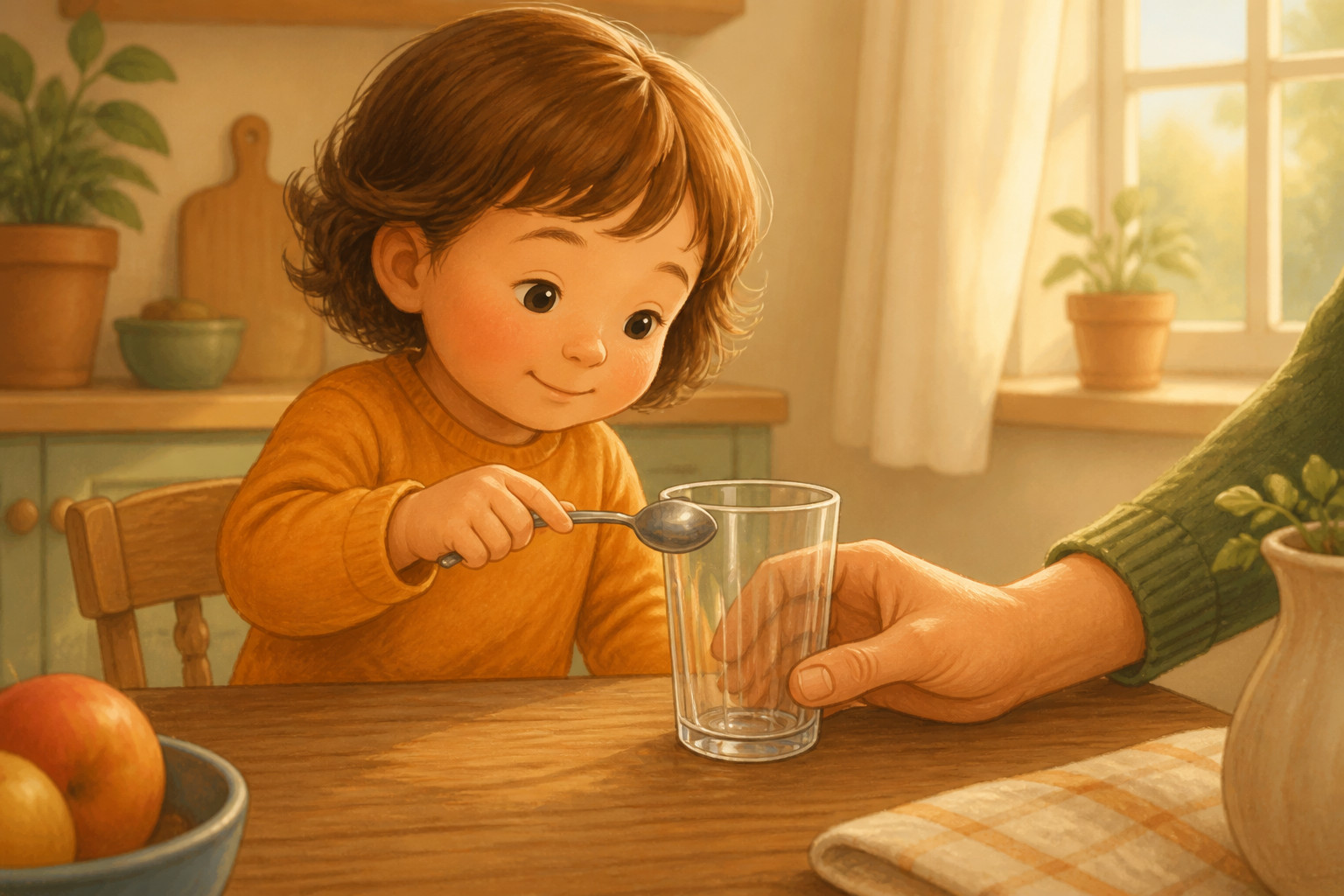
Have you ever tapped a glass with a spoon? Ting! It makes a bright, ringing sound. A grown-up holds the glass while you tap it gently.
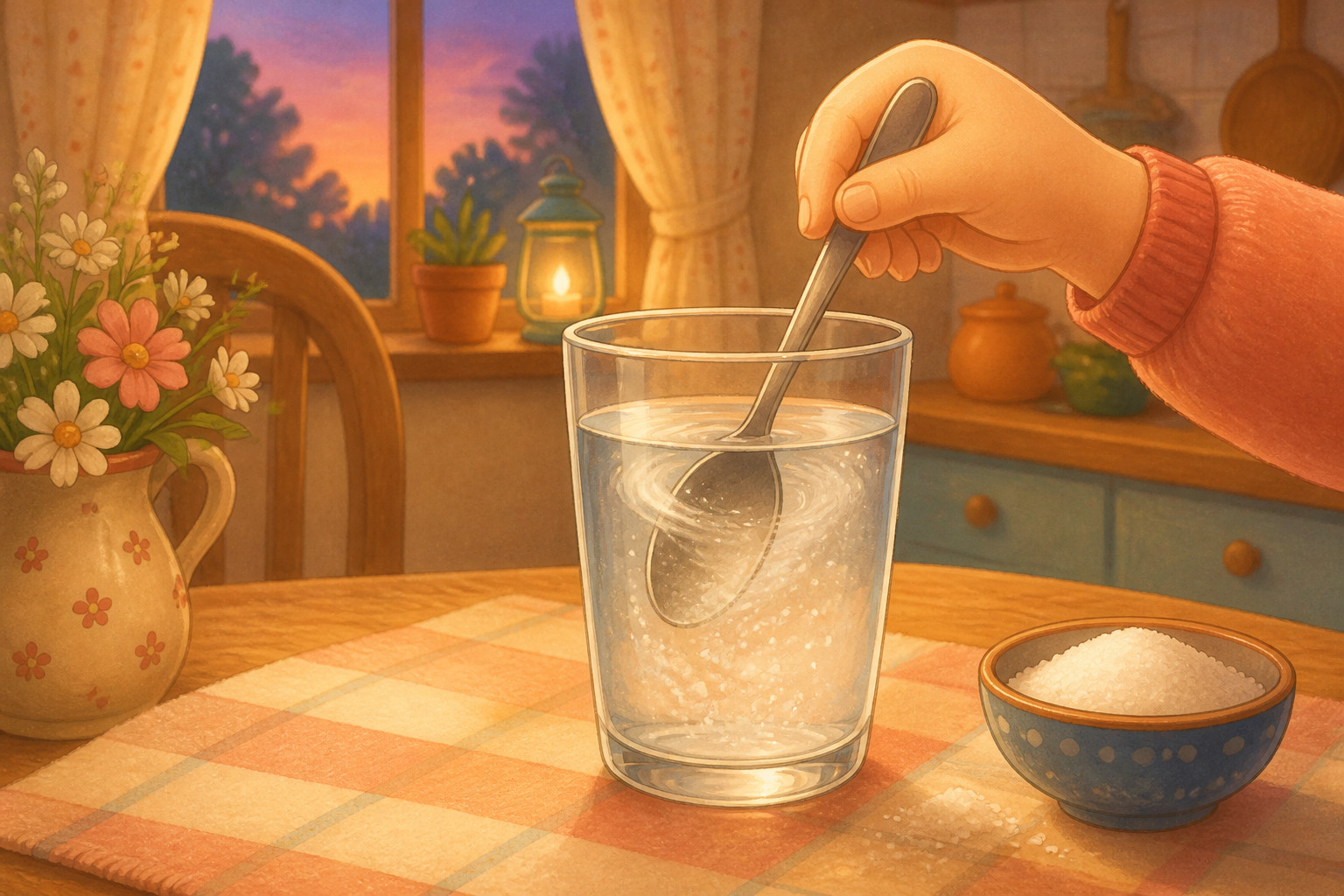
Now a grown-up pours some water into the glass. You tap again, and the sound is not the same. Why does water change the sound of a glass?
When the spoon hits the glass, the sides of the glass vibrate, which means they shake back and forth very fast. They move so fast that your eyes cannot see it.
As the glass sides vibrate, they push on the air all around them. The air carries that shaking to your ears. That is the ringing sound you hear.
Fast shaking makes a high sound, like a tiny bird's peep. Slow shaking makes a low sound, like a big cow's moo.
Now think about the glass with water inside. The water sits right against the glass sides. So when the sides vibrate, they have to move the water too.
Water is heavy to push, like a big backpack when you run. The heavy water makes the glass sides vibrate more slowly. So what do you think happens to the sound?
The sound goes lower! Slow, heavy shaking makes a deeper ring, like a bigger bell.
More water means even more for the glass to push. A glass filled up high makes the lowest sound. A glass with just a little water sounds higher.
Let's remember our word: vibrate. Your tap makes the glass vibrate, and water slows it, so the sound goes lower.
Sleep well, and may your dreams ring softly, like a tiny glass bell.