Why does snow crunch under our boots?
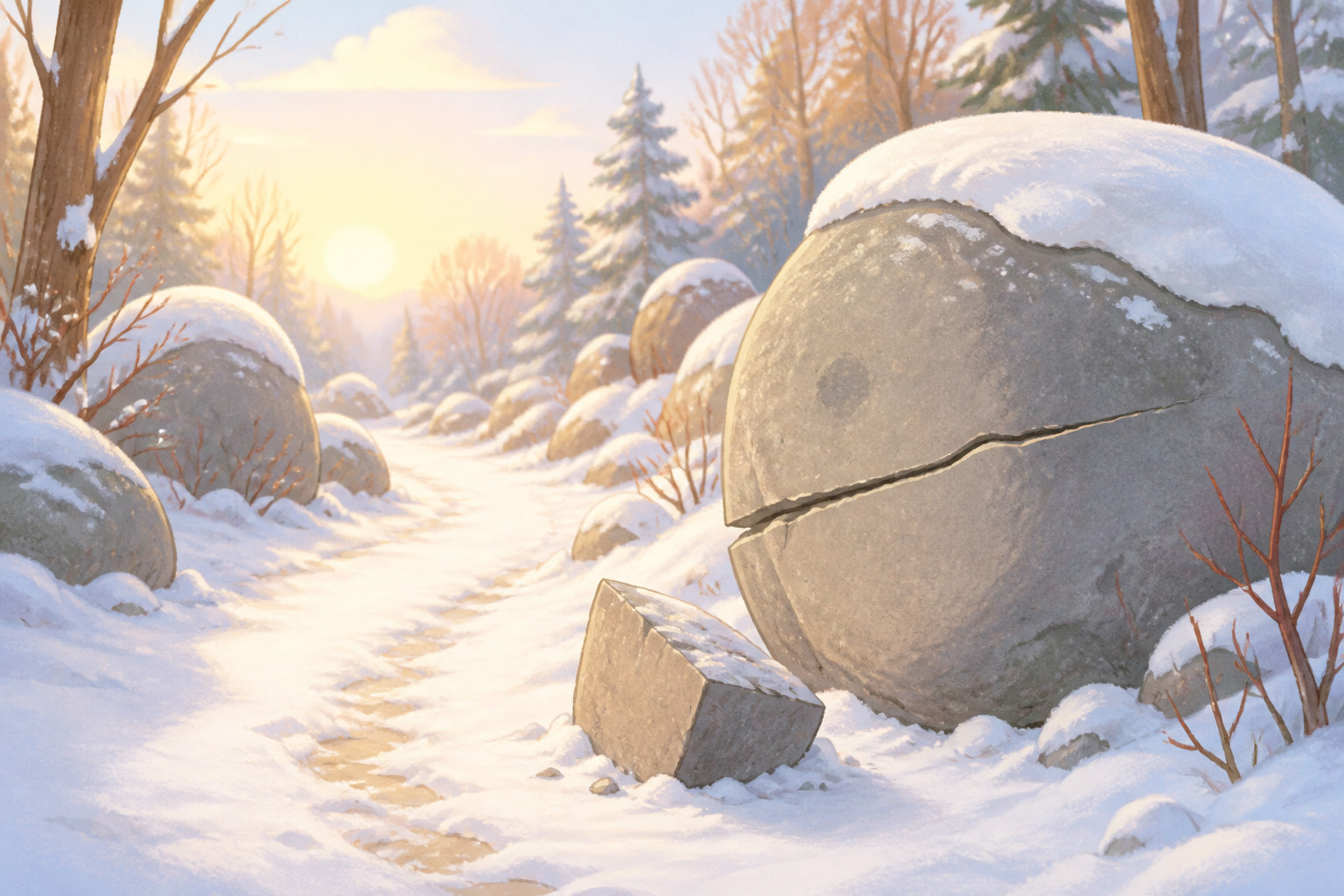
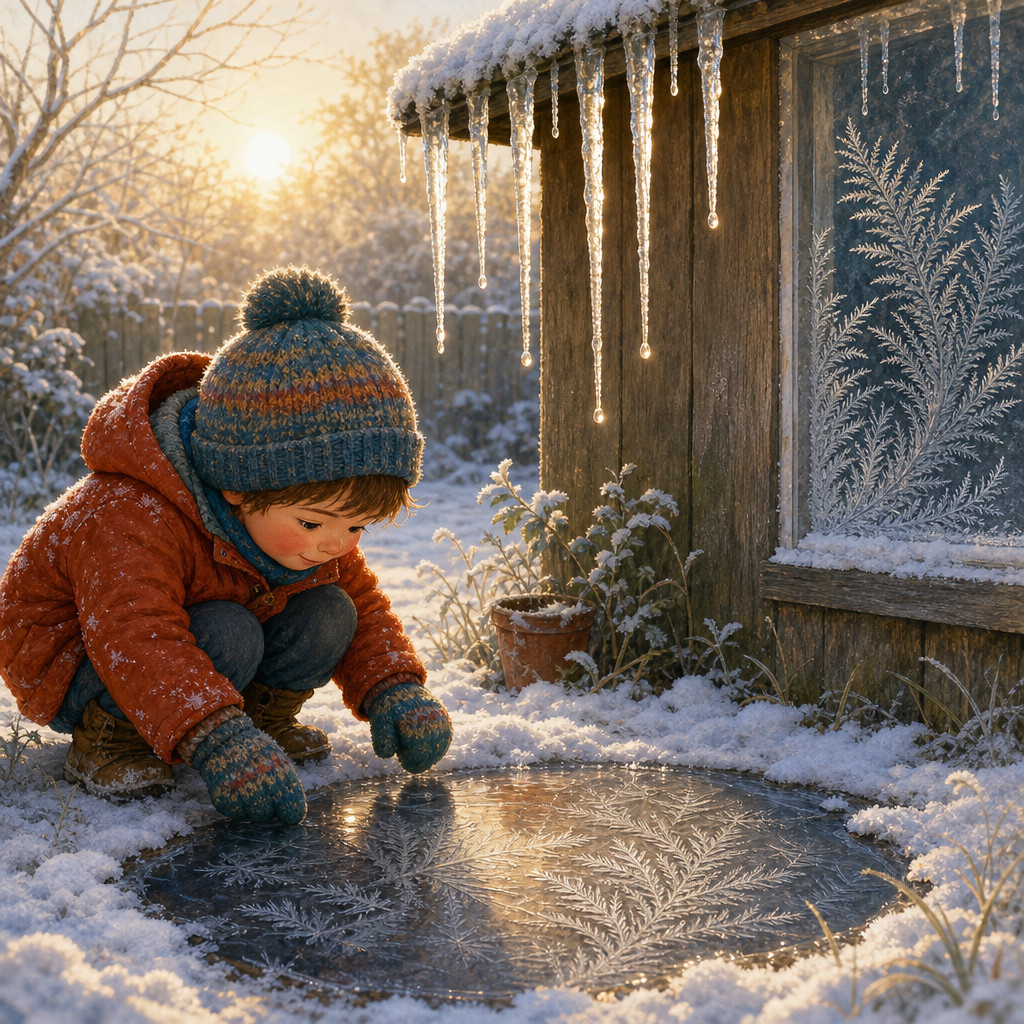
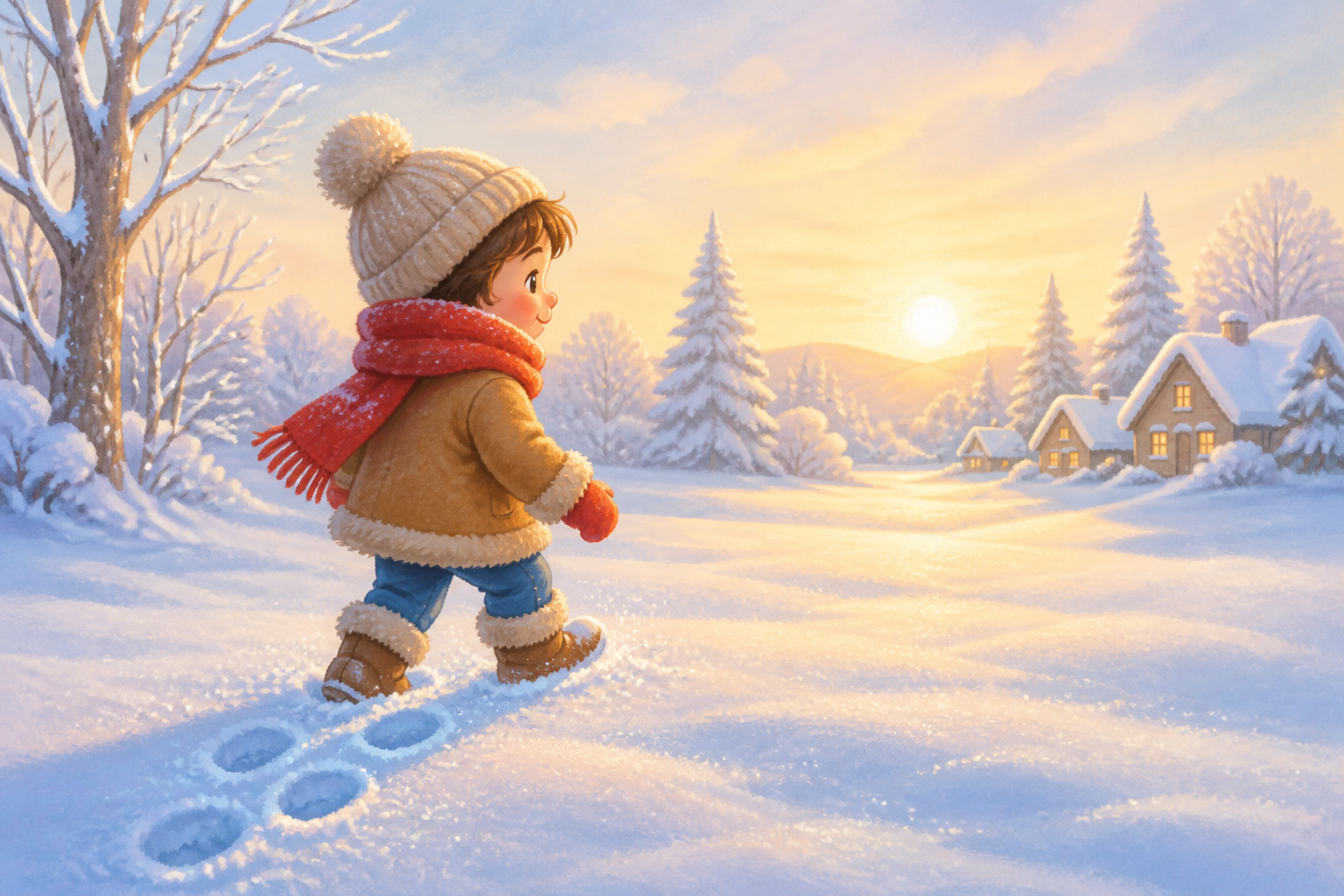
Picture a cold winter morning. You pull on your boots and step outside. The chilly air tickles your nose and cheeks. Crunch, crunch, crunch! Listen to the crispy sound your feet make in the snow.
Snow looks soft, like a fluffy white blanket. A soft pillow makes no sound when you squeeze it. Yet snow makes that crunchy sound when you walk. So why does snow crunch under our boots? Let's find out together.
Snow on the ground is a big pile of snowflakes. Each snowflake is a crystal, which means a tiny piece of ice with thin, pointy arms. Fresh snow holds lots and lots of them.
Now you take a step. Your heavy boot presses down on many crystals at once. It squeezes their thin little arms very hard. What do you think happens to those little arms under your boot?
Snap! The thin arms break. Cold crystals are hard, like tiny bits of glass. They cannot bend, so they snap instead.
One crystal makes a teeny snap. On its own, that snap is too quiet for you to hear. But your boot breaks lots of crystals at the very same moment.
All those tiny snaps happen together. Together they make one big sound, and that sound is the crunch. With every step, your boot finds new crystals to break. So each step makes a brand new crunch.
Our special word today is crystal. Your boot snaps lots of tiny ice crystals at once, and that makes the crunch.
Next time you walk in the snow, listen closely for all those tiny crystals snapping under your cozy boots.
 1
 2
 3
 Fenn