Why does a squashed sponge puff back up?
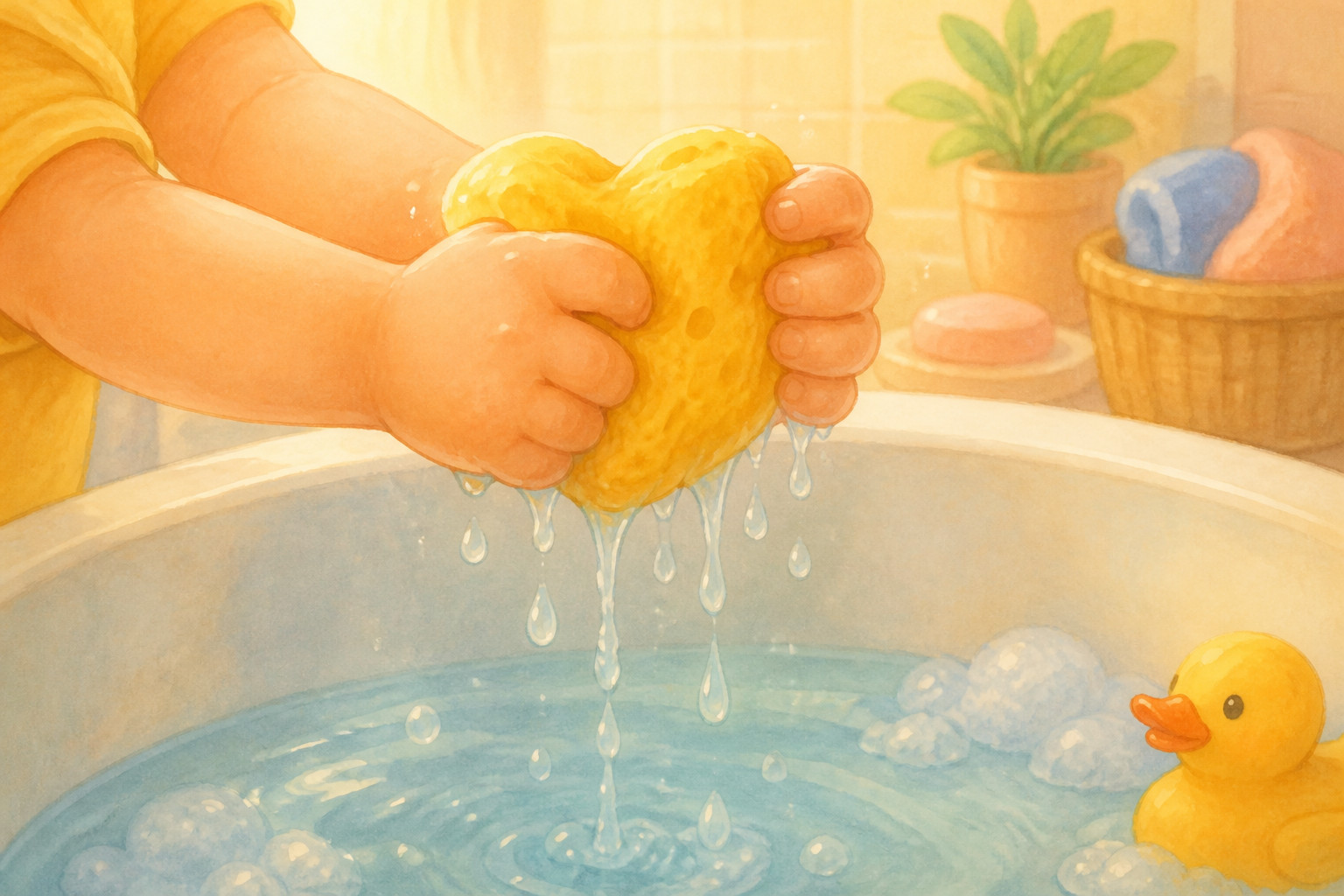
At bath time, you can squeeze a soft sponge in your hand. Feel how it squishes small and water drips out. Then you open your hand, and puff, it grows big again! Squeeze it once more, and the very same thing happens.
It looks almost like magic. No one pulls it back open. Why does a squashed sponge puff back up? Let's look closely and find out.
Up close, a sponge is full of tiny holes. Some holes are big, and some are so tiny you can hardly see them. Thin walls sit between the holes, like the walls between little rooms. These walls hold the sponge in its puffy shape.
When you squeeze, your fingers press on those thin walls. The walls bend and fold over. The holes get squashed flat, so the whole sponge gets small. That is why water drips out when you squeeze.
Those walls are springy, which means they push back to their own shape after bending. A rubber ball is springy too, so press it, and it pops back to round. Even while squashed, the springy walls keep pushing on your fingers.
While you hold tight, the sponge stays small. That is because your fingers push harder than the springy walls. Your hand wins the push for now, and the holes stay squashed flat.
When you open your hand, your fingers stop pushing. Now nothing holds the walls down. The springy walls straighten up again, and every hole opens wide. What do you think slips into all those open holes?
As each hole opens, air rushes in to fill it. In the bath, water slips in instead. Hole by hole, the sponge grows big and puffy again. Soon it looks the same as before you squeezed it.
Our special word today is springy. The springy walls inside a sponge push back to their shape, so it puffs up.
Next time you squeeze a sponge, you will know just why it puffs back up.