What changes when modelling clay is flattened?
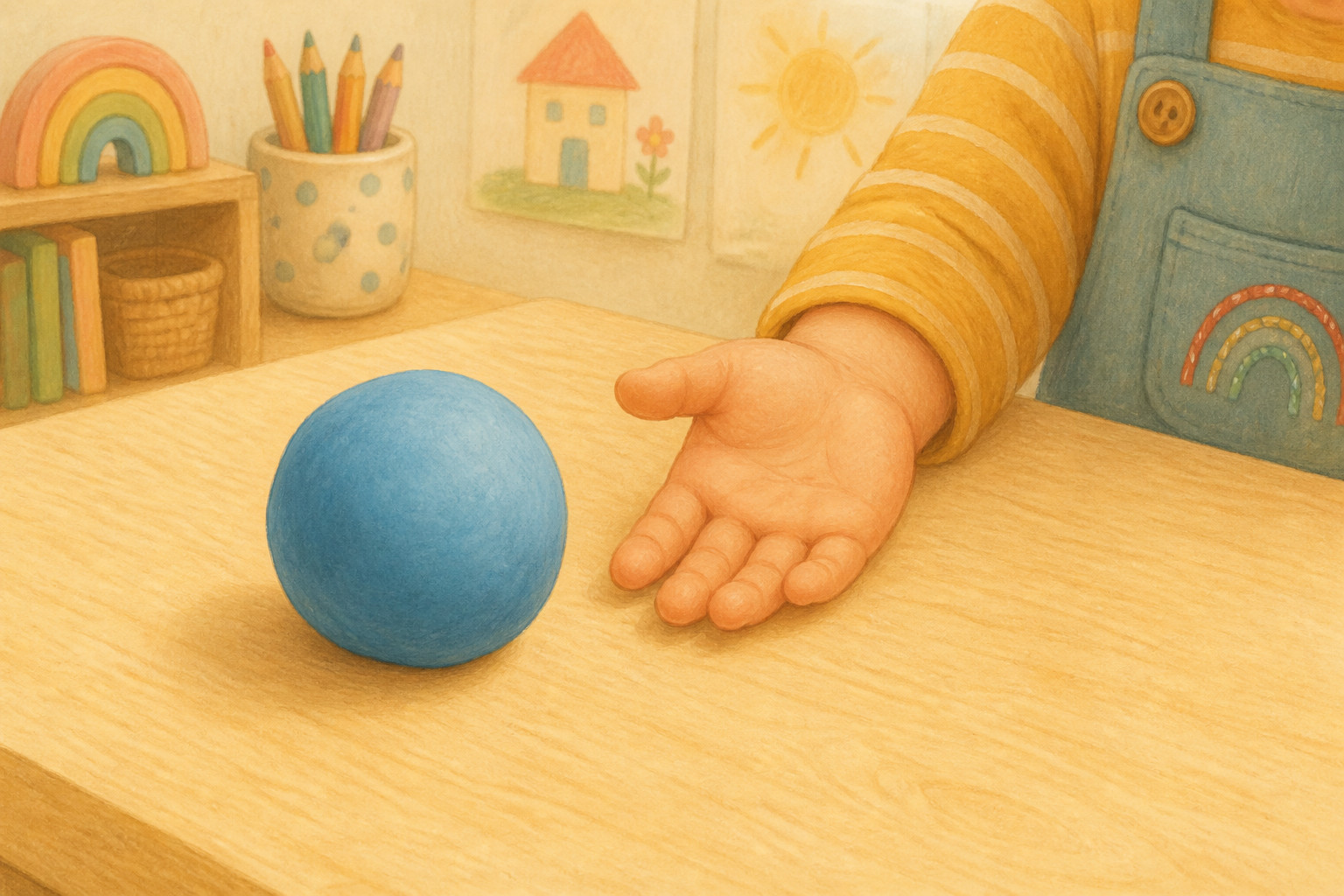
A soft ball of modelling clay sits on the table, ready for a squish. Your hand can turn that little ball into something like a pancake. What changes when modelling clay is flattened?
The ball has a shape, the form of its outside. Right now, its shape is round, with a top that stands up from the table. You can change that shape because modelling clay is soft enough to bend and squish.
You put your palm on top of the clay and gently press down. Your hand pushes the top towards the table. The table supports the bottom, so your hand squashes the clay between them.
As you press, the top moves closer to the bottom. That makes the clay thinner, with less clay from top to bottom. The tall, round ball starts to look low and flat.
But where does the clay go as your hand presses down? Can you guess whether it spreads out at the sides or disappears? Your soft little ball still has all its clay.
The clay spreads out at the sides because your hand pushes it down against the table. Now the clay reaches farther across the table. It becomes wider as it becomes thinner.
That wider shape can look like more clay, but you have not added any. If you keep all the clay together, you have the same amount as before. You have simply moved it into a flatter shape.
When you lift your hand, the modelling clay keeps its flatter shape instead of bouncing back into a ball. It is still the same soft modelling clay. You can roll it into a ball again because you can bend and squish it.
Round ball, pressing hand, thinner middle, wider sides, flatter shape. When you flatten modelling clay, you change its shape to make it thinner and wider, but the amount of clay stays the same.
Your next gentle squish can turn the same little piece of clay into a lovely new shape.