What's the difference between magma and lava?
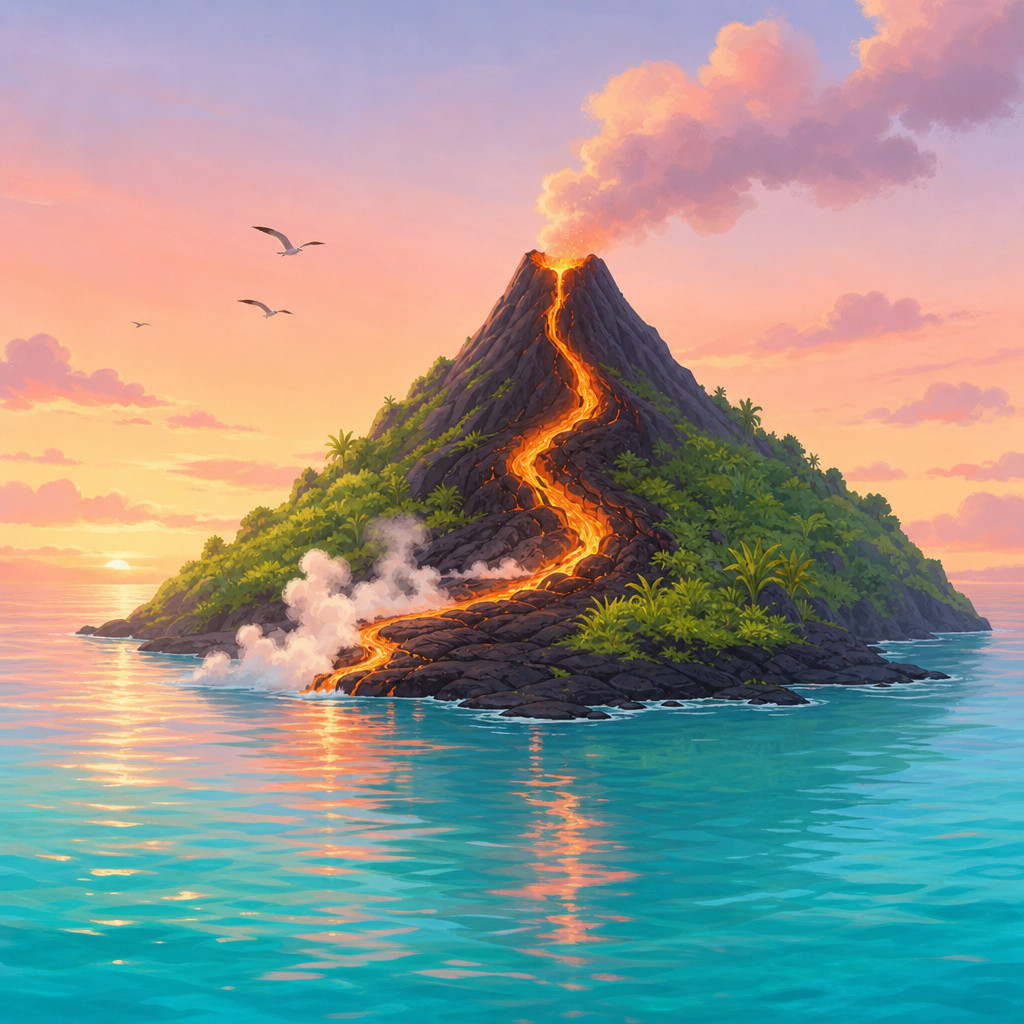
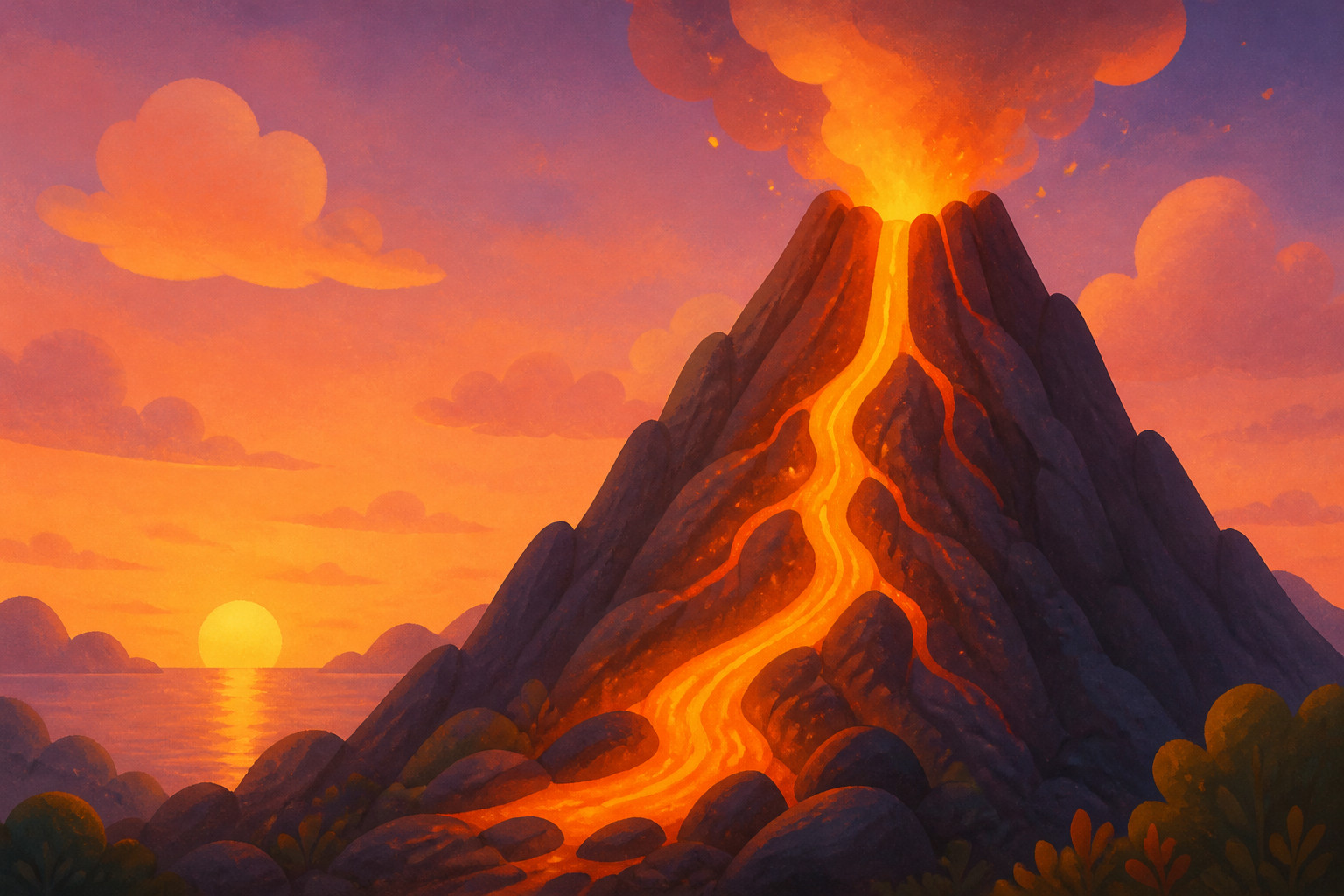
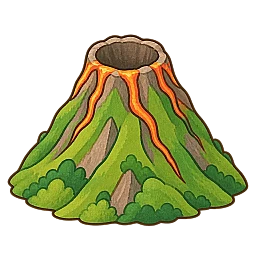
Have you ever seen a picture of a volcano with bright orange rock pouring down its side? Imagine feeling its warmth on your cheeks from far away, and watching it creep along slowly, like thick honey.
Some books call that glowing rock lava, and other books talk about magma. Are they two different things? Let's find out: what's the difference between magma and lava?
Far below the ground, deeper than any cave, the inside of the Earth is so hot that some rock melts. We call melted rock like this molten, which means melted until it runs like thick syrup.
While this molten rock stays down under the ground, it has a special name: magma. Magma gathers in big hidden pockets deep under volcanoes, where nobody can see it.
Magma is lighter than the hard rock all around it, so it slowly pushes upward, the way a bubble rises in a bath. It squeezes through cracks, closer and closer to the top of the volcano. What do you think happens when it reaches the very top?
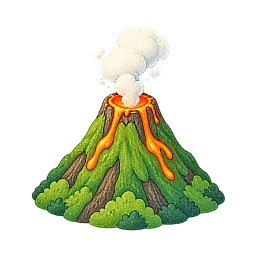
Whoosh, the volcano erupts! The magma bursts up and out through an opening at its top, into the open air.
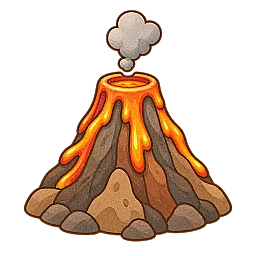
And here is the whole difference. Once the molten rock leaves the ground, it gets a new name: lava. It is the very same rock, only now it is outside, under the sky.
So the bright orange rock pouring down a volcano in your pictures is lava. It slides down the mountain's side out under the sky, where we can see it glow.
Molten. Magma and lava are the same molten rock: we call it magma while it hides under the ground, and lava once a volcano erupts and pushes it out into the open air.
Now you know how one hot rock gets two names, so rest easy and dream of warm, glowing mountains.
 1
 2
 3
 Fenn