What happens when lava cools?
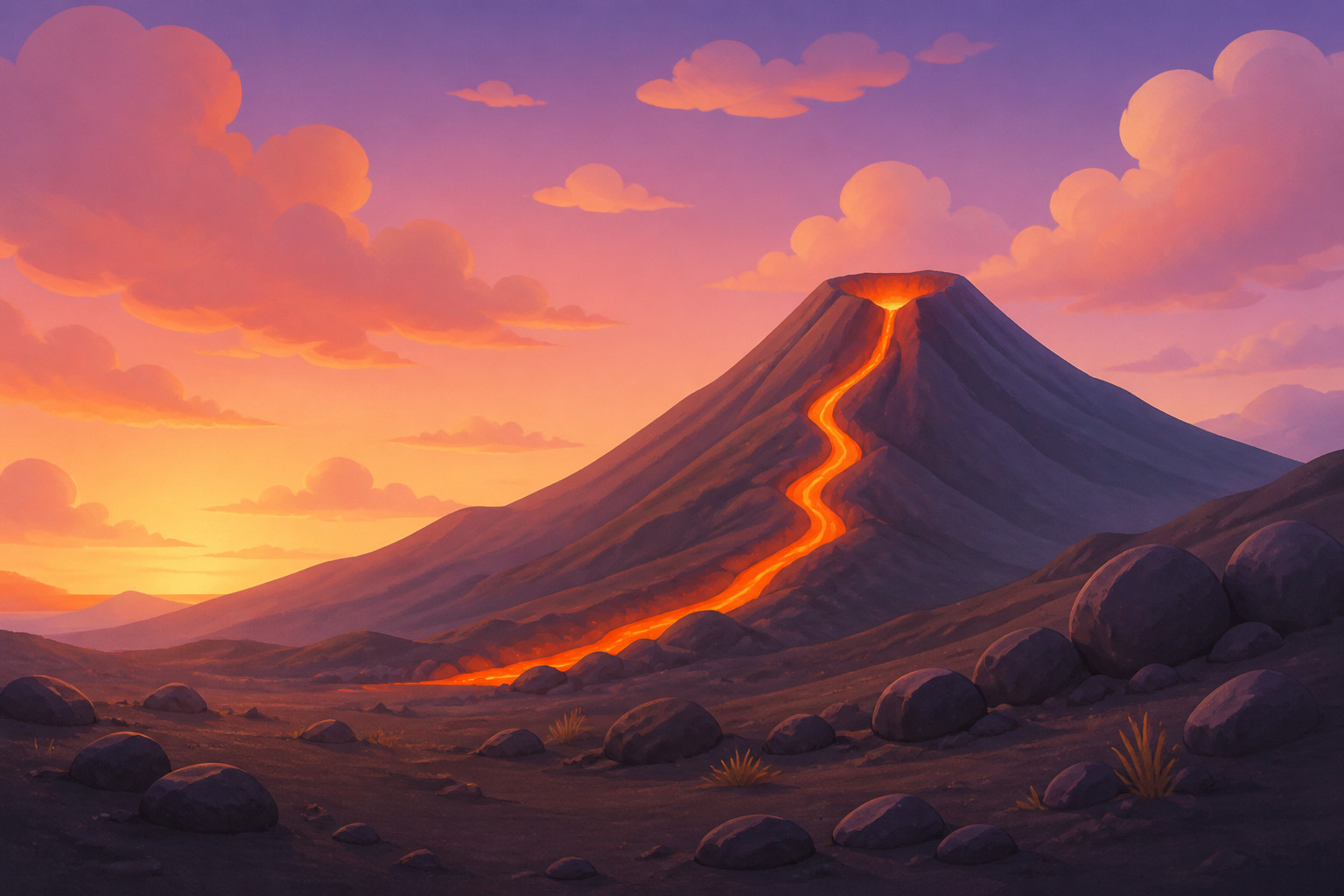
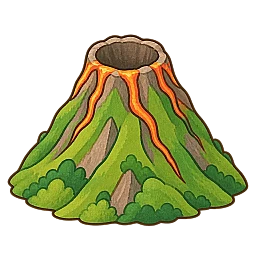
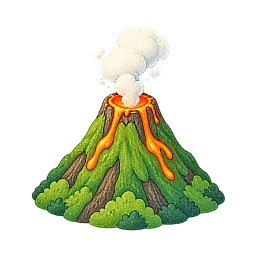
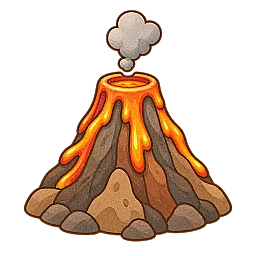
In a picture of a volcano, you might have seen a glowing orange stream. That stream is lava, melted rock that has reached Earth's surface. What happens when lava cools?
Lava starts out hot enough to flow instead of staying in one hard shape. Some lava flows slowly and thickly, while other lava spreads more easily. People watch lava from a safe distance because its heat can hurt them.
The air and ground around lava are usually much cooler than the lava itself. Heat moves from the hot lava into those cooler surroundings. As lava loses heat, its temperature drops.
The outside of a lava flow loses heat first because it touches the cooler air and ground. As that outside cools, it stops flowing and becomes solid. The glowing surface darkens, too.
That solid outside makes a crust, a hard outer layer. A crust can cover the top of a lava flow like a lid. Under that lid, lava can still stay hot enough to move.
Can you guess whether a dark crust means all the lava underneath has cooled, too? Not yet! The outside can look still while hot lava keeps moving below.
The crust slows down the escape of heat from underneath. A thick lava flow has lots of heat to lose, so its middle can take a long time to cool. A thin flow usually cools much sooner.
Little by little, more heat escapes and more lava becomes solid. Eventually, the whole flow turns into solid rock. Cooling does not make the lava disappear; it changes melted rock into hard rock.
Sometimes lava carries bubbles of gas. If the lava becomes solid before the bubbles escape, the new rock keeps little holes where the bubbles were. Those holes tell a tiny part of the rock's story.
The new rock stays where the lava cooled. Over time, many lava flows can add layers of rock and build up a volcanic mountain. Each flow leaves another piece behind.
Lava, crust, solid rock. When lava cools, it loses heat and turns into solid rock, starting on the outside and continuing inward.
Now you know how a glowing stream can become a quiet new piece of Earth.
 1
 2
 3
 Fenn