What can a dinosaur tooth tell us?
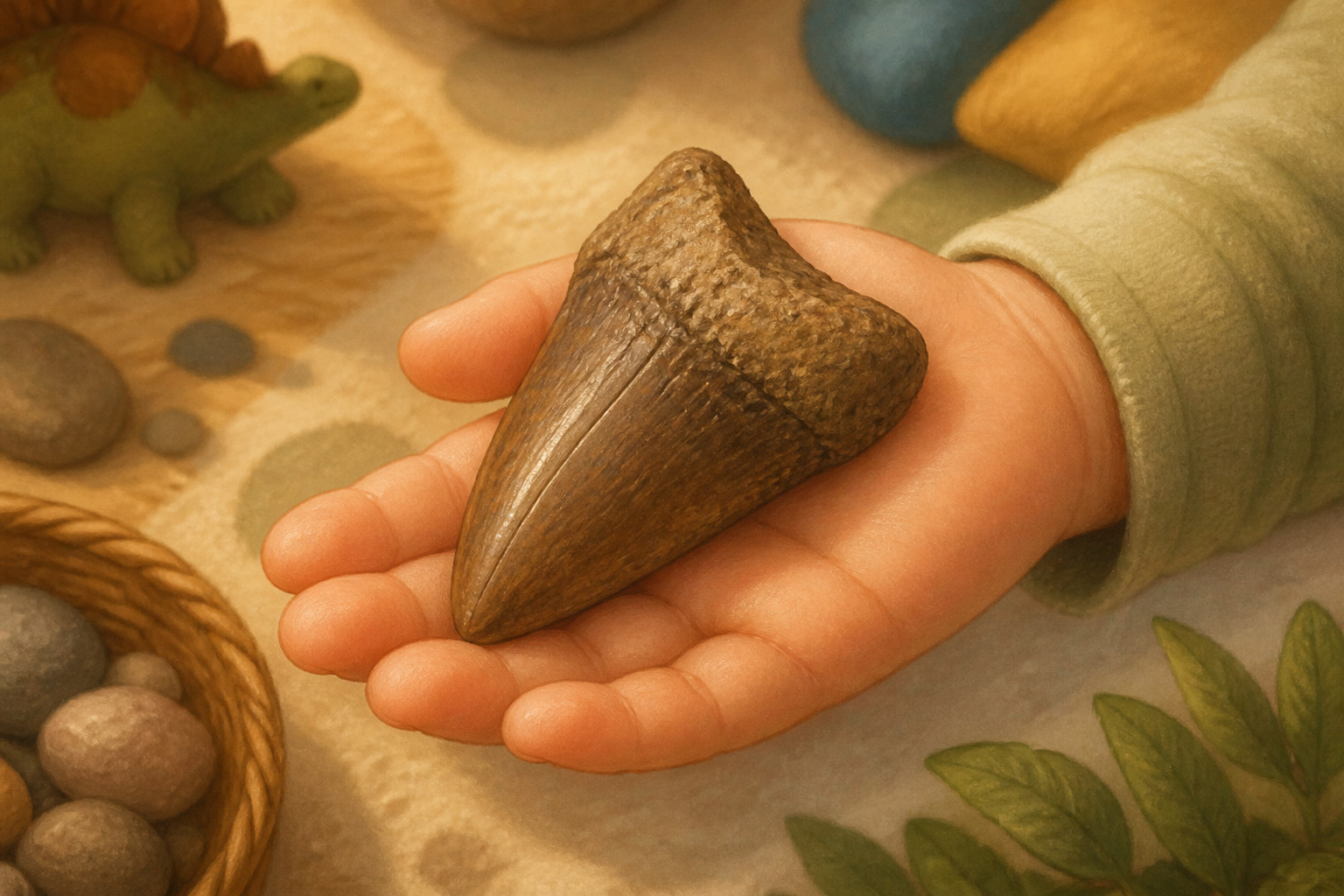
Imagine holding a dinosaur tooth in your hand. It feels cool, hard and heavy, like a pebble from the beach. Long ago it was a real tooth, and over a very long time it turned to stone.
No person has ever seen a living dinosaur. The dinosaurs were gone millions of years before the first people walked the Earth. So what can one small fossil tooth tell us?
A dinosaur scientist picks up the fossil and looks closely at its shape. An animal's teeth fit the food it eats, the way a fork fits spaghetti and a spoon fits soup. So the shape of the tooth is a clue to what this dinosaur ate.
This tooth is long and pointed, and it curves backward like a hook. A tooth like that grips an animal and holds on tight, so the animal cannot wriggle away. Curved, pointed teeth like this belonged to hunters.
Next, the scientist runs a finger along the edge and feels tiny bumps. The edge is serrated, which means it has a row of little bumps like the edge of a bread knife. Serrated edges saw through meat, so this dinosaur was a meat-eater, like Tyrannosaurus rex. What do you think a plant-eater's tooth looks like?
A plant-eater's tooth looks quite different, because leaves do not need sawing like meat. Many plant-eaters had teeth shaped like a small leaf or a peg, with a rounded tip. Teeth like these snip and strip leaves off branches, the way you pull grapes off a stem.
Other plant-eaters, like the duck-billed dinosaurs, had rows and rows of flat-topped teeth packed tightly together. Their top and bottom teeth rubbed together and ground tough plants into mush. A flat, worn tooth tells the scientist that its owner chewed and chewed all day long.
Last of all, the scientist looks at the tooth under a microscope. Food leaves tiny scratches on teeth, and gritty plants scratch a tooth differently from meat and bone. Those marks show what the dinosaur chewed in its last days.
Serrated. A dinosaur's teeth fit the food it ate, so the shape, edges and scratches on a fossil tooth show a scientist whether that dinosaur ate meat or plants.
Next time you see a dinosaur tooth in a museum, you will know exactly how to read its secret, little tooth detective.