How can a few bones show how big a dinosaur was?
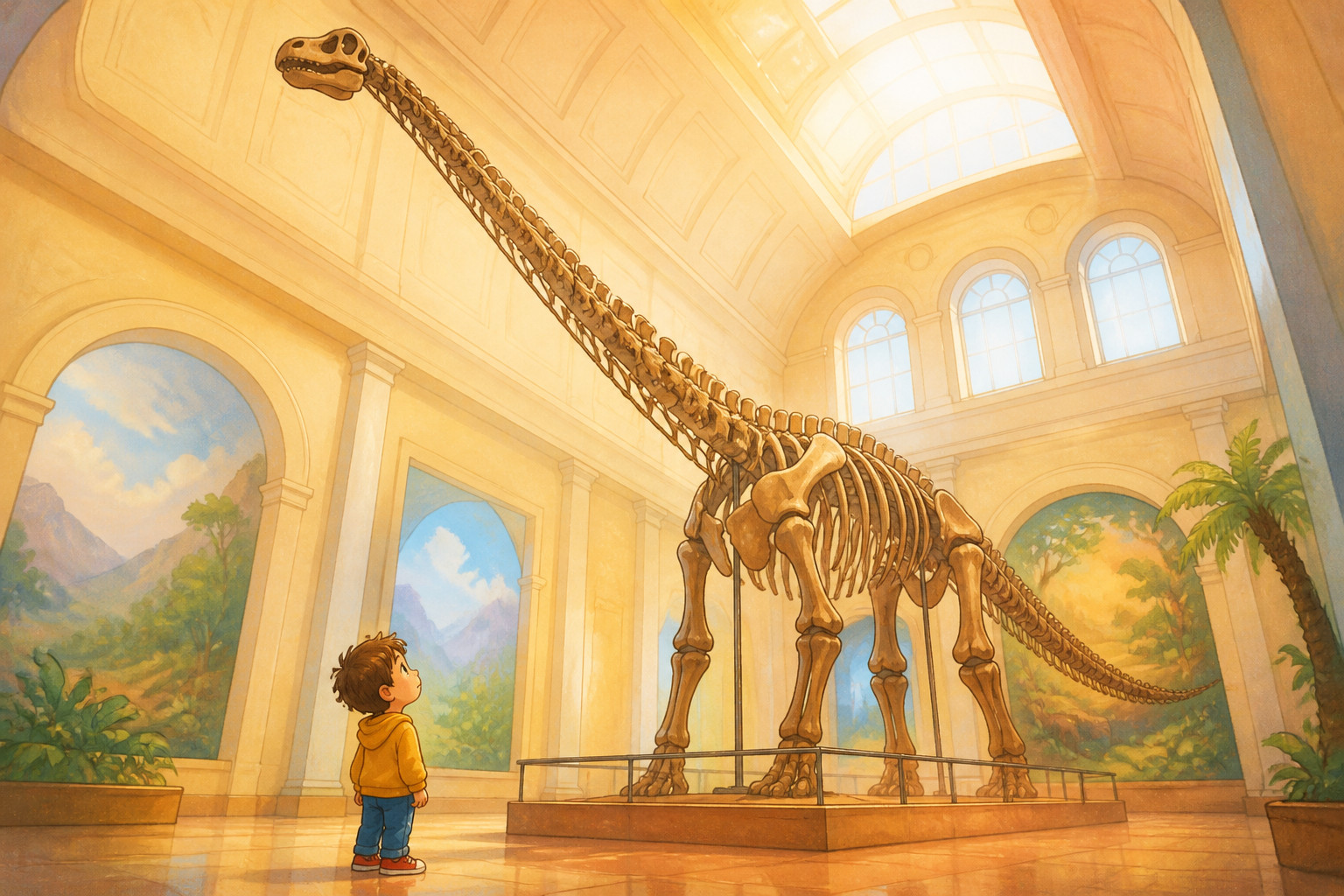
Have you ever stood under a giant dinosaur skeleton in a museum, or seen one in a book? Its long neck and tail can stretch higher than a house. Yet many dinosaurs left only a few bones behind in the rock.
Imagine you dig up just one huge leg bone, heavy and cool in your hands. There is no head, no tail, no ribs. So how can a few bones show how big a dinosaur was?
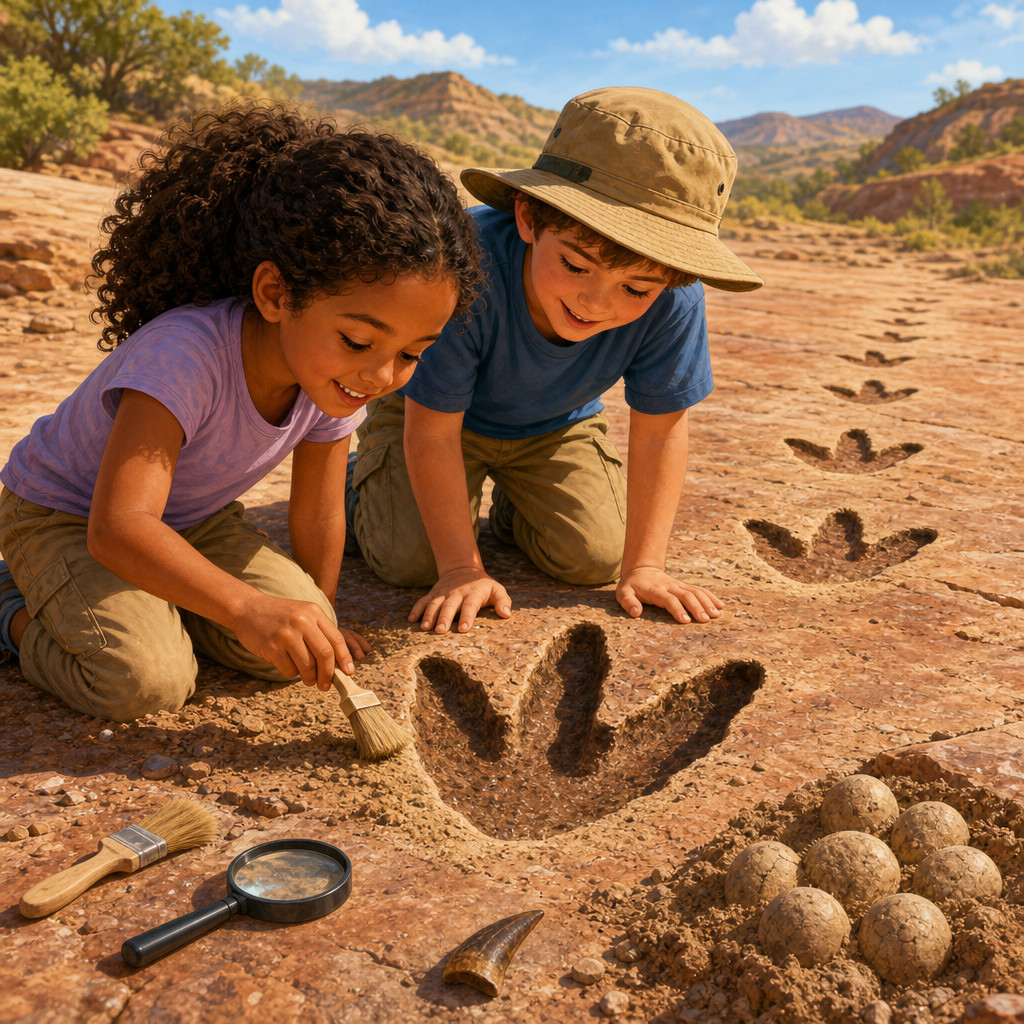
The people who answer this are paleontologists, which means scientists who dig up and study bones from long ago. First, a paleontologist measures the bone with a long tape. Its length and its thickness will each tell part of the answer.
Measuring helps because bones fit their body in a steady pattern. Your own thigh bone is about one quarter as long as you are tall. Animals of the same kind keep the same pattern, so a longer bone belongs to a longer body.
Next, the paleontologist looks for a cousin dinosaur, a close kind whose whole skeleton other paleontologists already dug up. Its bones have the same shapes, so it shows where every missing piece belongs. Say the new leg bone is twice as long as the cousin's leg bone. How big do you think the new dinosaur was?
It was about twice as long as its cousin, from nose to tail! The paleontologist draws the cousin's whole skeleton bigger, until its leg matches the new bone. That size is the paleontologist's careful best guess.
Thickness tells something else: how heavy the dinosaur was. A heavy body needs thick, strong legs to hold it up, just like an elephant has thicker legs than a deer. So a very thick leg bone means a very heavy dinosaur.
Paleontologist. A paleontologist measures a few bones and compares them with a cousin's whole skeleton, because longer, thicker bones belong to bigger, heavier bodies.
Sleep well, little bone explorer, and dream of giant footsteps far away.