How does a cat's tail stop it from falling?
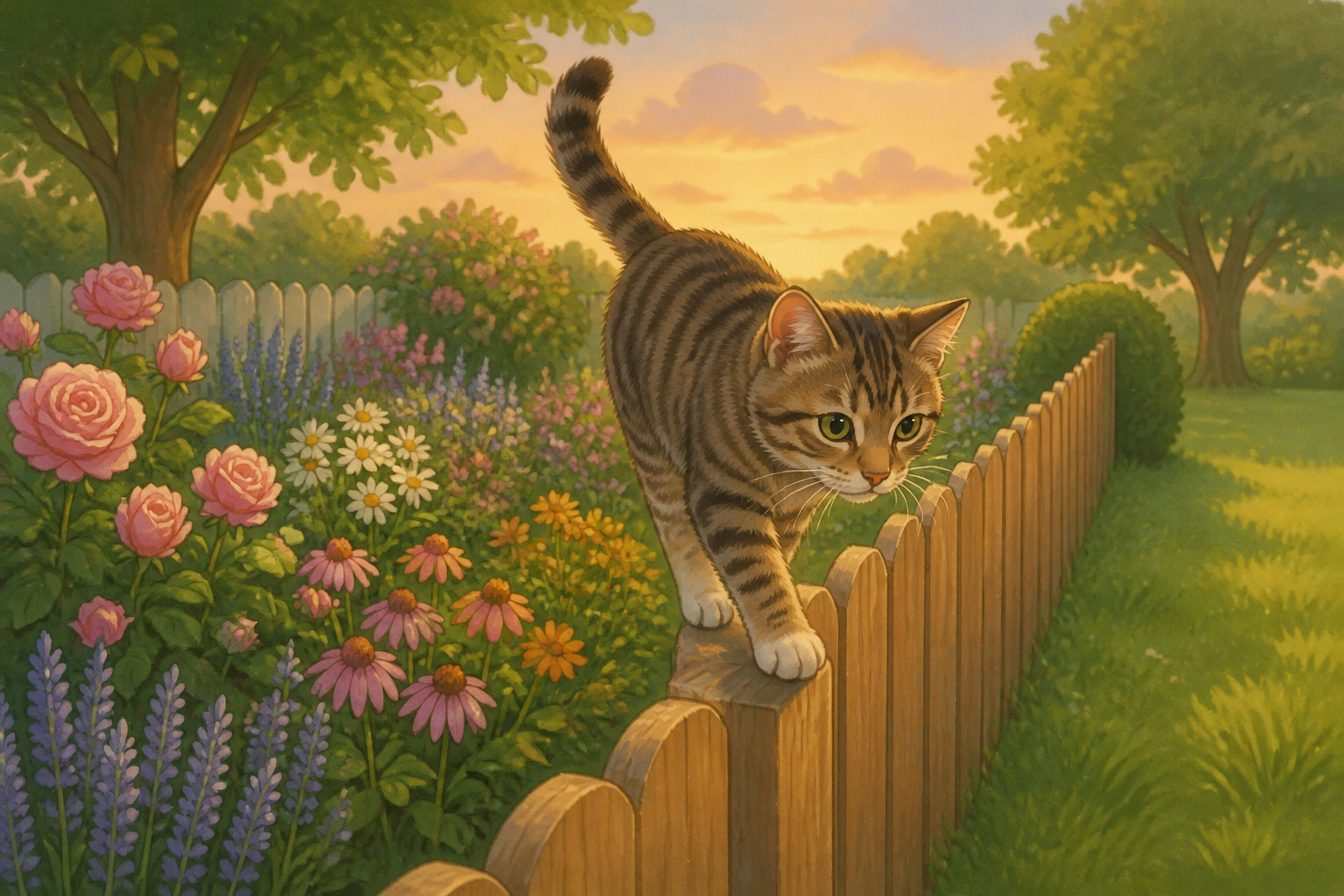
Have you ever watched a cat walk along the top of a garden fence? The top is as thin as a ruler, with flowers on one side and grass on the other. The cat's paws step one in front of the other. Its long tail floats up behind.
The cat does not fall off. So how does that long, swishy tail stop it from falling? Let's find out together.
Up on the thin fence, the cat has to keep its balance, which means staying steady without tipping over. Keeping its balance up there takes a lot of care.
Partway along, the cat's body starts to tip toward the flower bed. Its paws are close together, so it leans easily. If it kept leaning that way, it would slip off the fence.
Now look at the tail. A cat's tail has little bones and strong muscles inside, so it is heavier than it looks. The cat can swing it any way it likes. Which way do you think the cat will swing its tail?
The cat swings its tail the other way, out over the grass. It sends the tail away from the flower bed, so the tail can tug its body back.
The heavy tail pulls toward the grass, and that pull brings the cat's body back over the fence. Now the cat stands steady again. Its balance is back, so it can take the next step.
When the cat starts to tip, it swings its heavy tail the other way. The tail pulls its body back, so the cat keeps its balance.
Swish goes the tail, and the cat steps on along the fence. Flowers wave on one side and grass on the other. In between, one small cat walks on, tail held high.

 Fenn