How does a fish use its tail to swim?
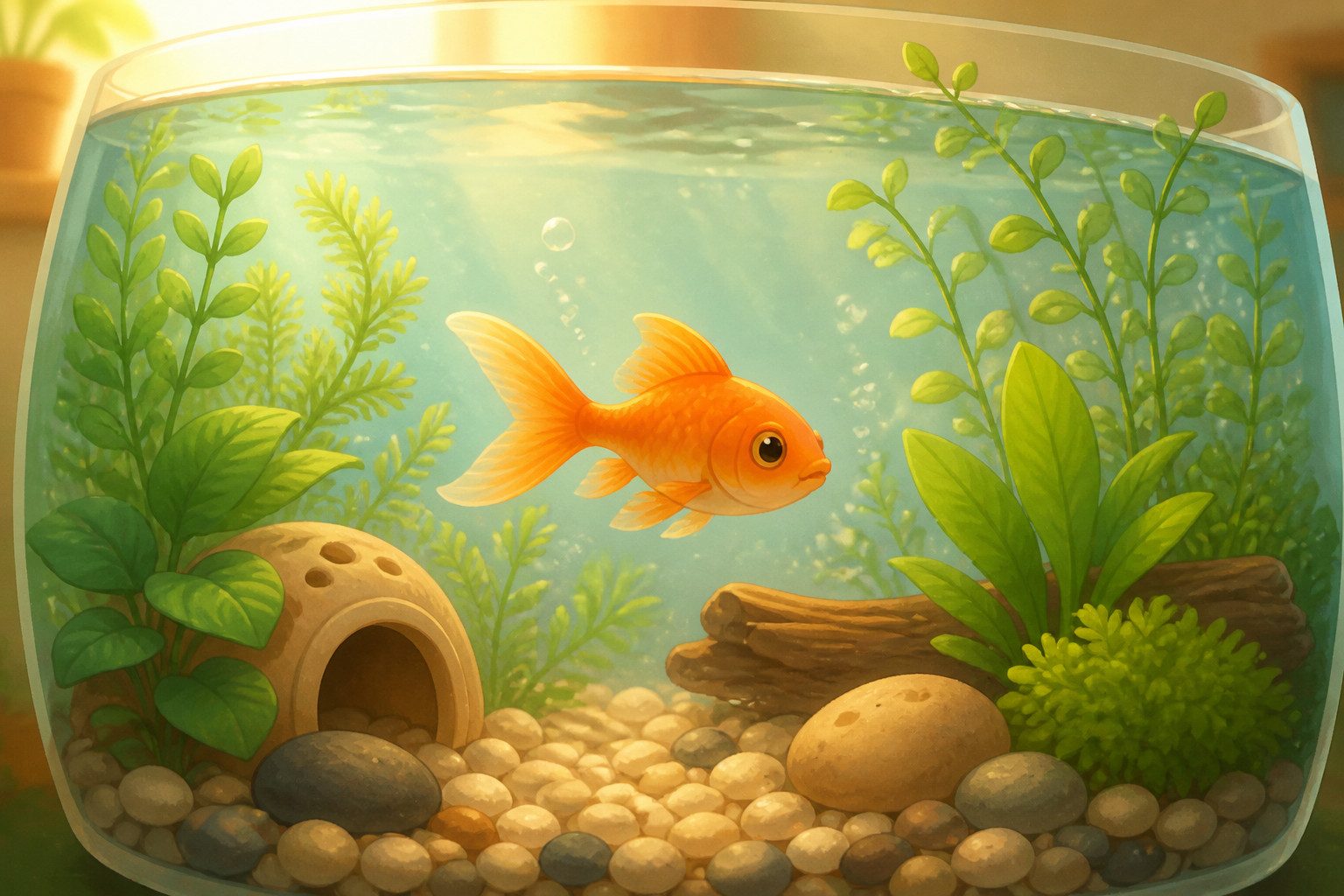
Have you ever watched a fish in a tank or a pond? It slips through the water so smoothly. It glides past plants and pebbles without a sound. Yet a fish has no arms to paddle and no legs to kick.
Look at the end of the fish, behind its body. There is its tail, swishing and swishing. So how does a fish use its tail to swim?
At the very end of the tail is a flat, wide part. It is called the tail fin, which means the thin fan at the end of a fish's tail. It is wide, so it can press on lots of water.
Strong muscles run along the fish's body. They pull one side, then the other side. Each pull bends the body, and the tail swings from side to side.
Each swing makes the tail fin press on the water. The tail fin pushes the water back, behind the fish. It works a bit like a paddle in a little boat. Now, when the water goes back, which way do you think the fish goes?
Forward! The water gives the tail fin a push the other way. That push sends the fish gliding ahead, nose first. The water goes one way, and the fish goes the other way.
Swish after swish, the tail fin keeps pushing water back. Every push moves the fish a little farther. That is how the fish keeps swimming along. It needs no arms and no legs, just its strong muscles and its tail fin.
Tail fin. The fish swishes its tail fin to push water back, so it moves forward.
Next time you see a fish, watch its tail fin swish, and wave hello to the little swimmer.

 Fenn