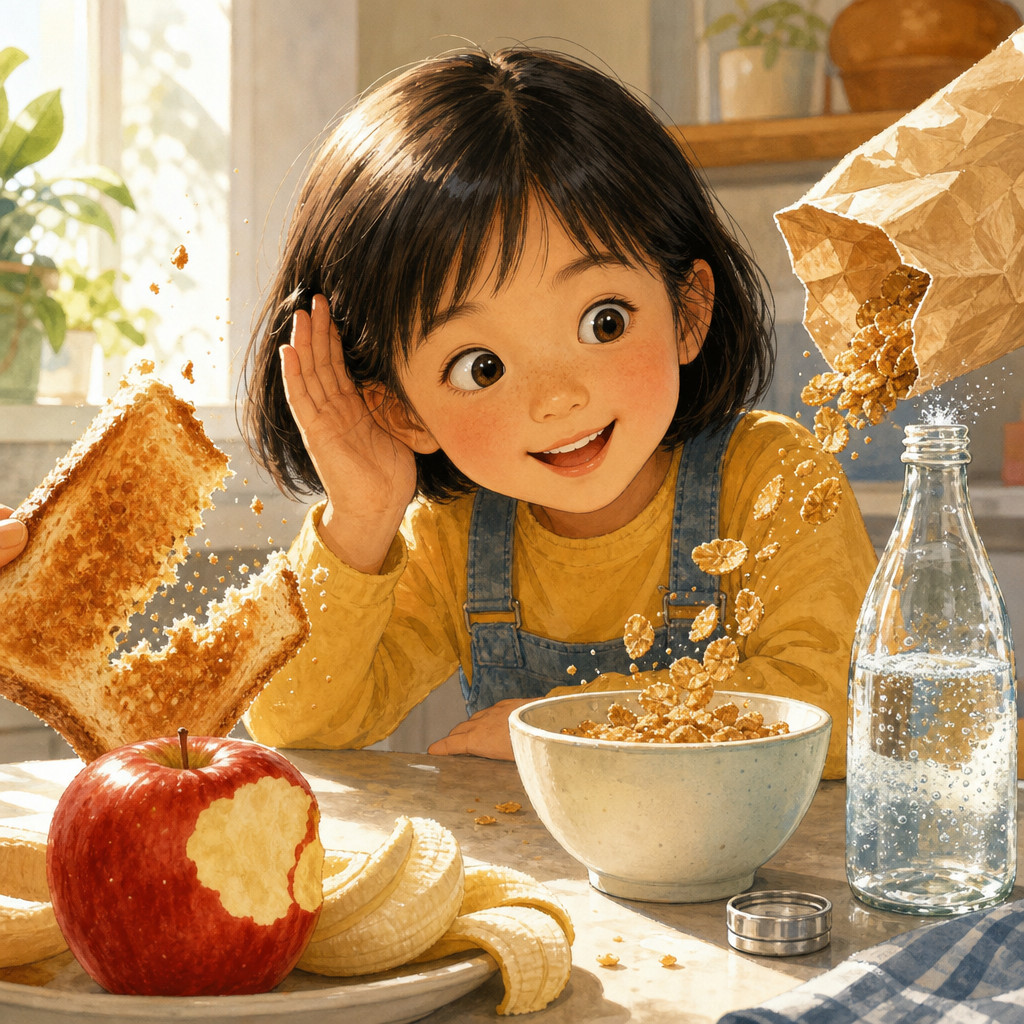
What can a crunch tell us about our food?
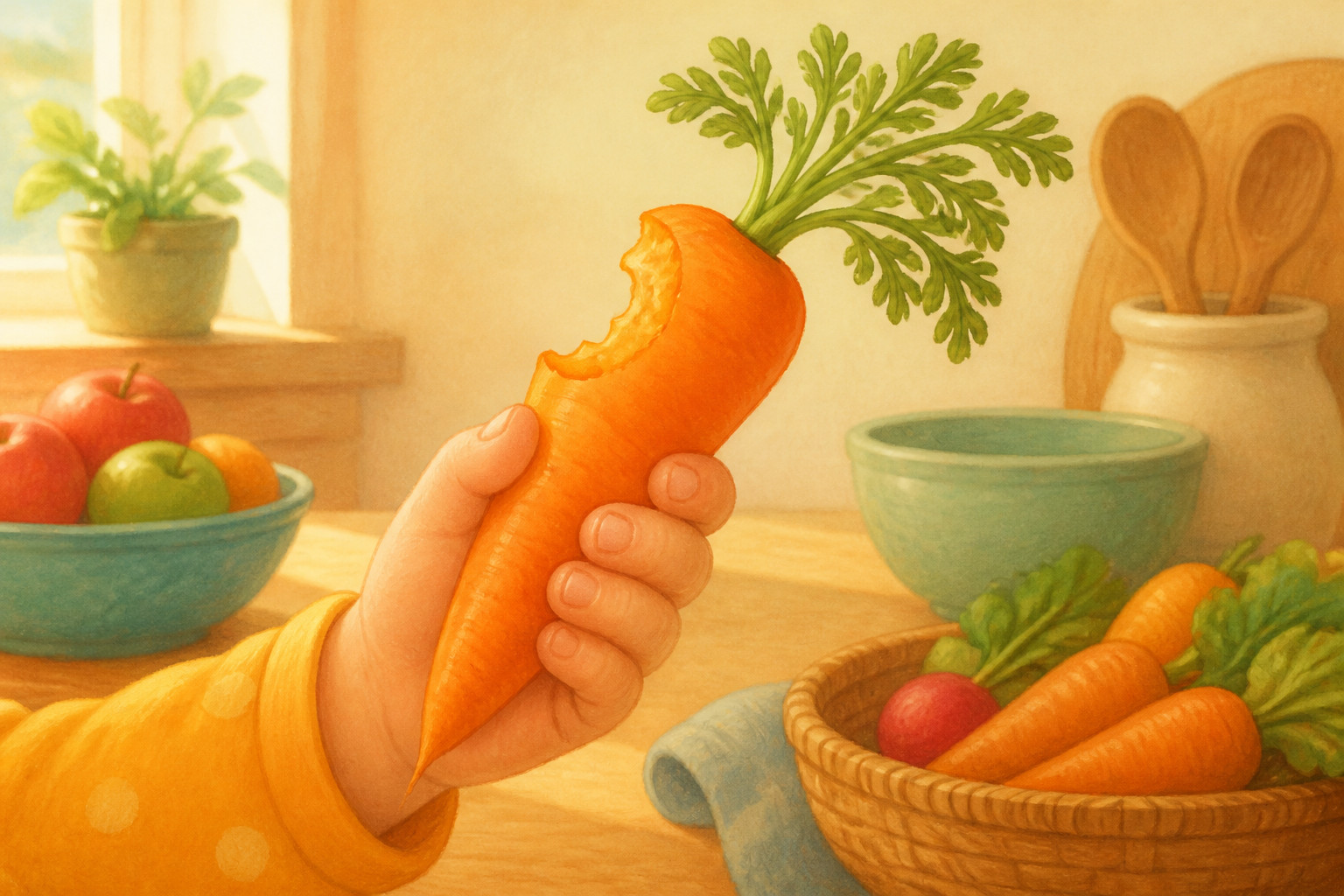
Imagine biting into a cold, fresh carrot. Crunch! You can feel it snap between your teeth. You can hear it too.
That crunch is a happy little sound. But it is also telling you something. What can a crunch tell us about our food?
Inside a carrot are tiny pockets, much too small to see. Each pocket is full of water. The water pushes on the pocket walls and makes them tight, like a balloon filled with air.
When your teeth bite down, those tight pockets break open. Lots of them snap at once, and all those snaps make the crunch you hear. A carrot like this is crisp, which means firm and snapping with a loud crunch.
A carrot pulled fresh from the garden has pockets full of water. That is why a fresh carrot is so crisp. So a loud crunch tells you the carrot is fresh.
Now picture a carrot left on the kitchen counter for many days. Bit by bit, the water inside slips out into the air. What do you think happens to its crunch?
The pockets lose their water and go soft, like a balloon letting out its air. The carrot bends instead of snapping. It is limp, which means soft and floppy. When you bite it, you hear hardly any crunch.
Celery and cucumbers work the same way. A crisp one is fresh and full of water. A limp one is old and has dried out.
Crisp and limp. Water fills fresh carrots tight, so a loud crunch tells you they are fresh.
Sweet dreams, and next time you hear a crunch, you will know just what your food is telling you.