How Does Corn Become Popcorn?
A little golden grain and a fluffy piece of popcorn look quite different. Yet one can turn into the other. How does corn become popcorn? The journey begins long before the popping, with a seed in the soil.
A farmer plants a corn seed from a special kind of corn called popcorn. Each seed is a kernel, one small grain of corn. Popcorn kernels have strong outer coats that help them pop later. Sweet corn for eating on the cob is a different kind.
In warm, damp soil, the seed begins to grow. A root reaches down for water, and a little green shoot pushes up into the light. This new little plant is a sprout. The farmer keeps the soil watered so the sprout can keep growing.
Over the summer, the sprout grows into a tall corn plant. Its roots take in water, and its green leaves use sunlight to help the plant make food. With that food, the corn plant grows bigger and begins to form ears of corn.
Each ear grows along the side of the tall stalk, wrapped in green leaves. Inside, rows of kernels grow on a cob, the firm middle that holds the grains. The farmer leaves the ears on the plants while the kernels finish growing.
Now picture the corn cob under its leafy wrapping. Can you guess whether fluffy popcorn is hiding there already? No, the corn cob still holds firm kernels. Growing the corn gives us the grains, but turning them into popcorn takes another step.
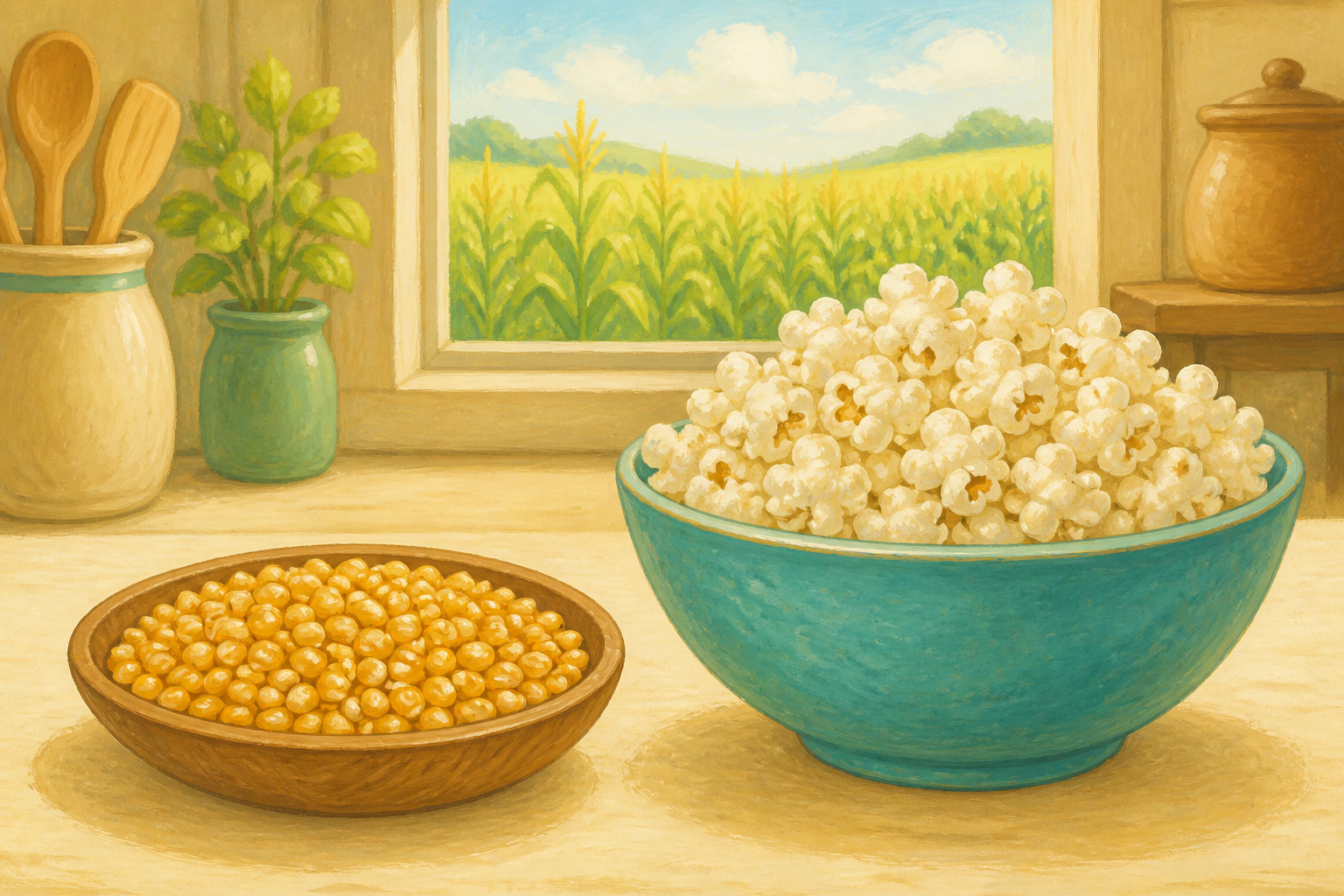
The farmer lets the ears dry as the corn plants turn brown. Then the farmer harvests the ears and lets them dry some more if they need it. The kernels become hard and dry on the outside, but a little water stays inside each one.
The farmer separates the dried kernels from the corn cob. Now the kernels are ready for a cook to turn into popcorn. The cook puts them in a pot with a little oil and covers it with a lid. The hot pot stays with the cook while you watch from a safe spot.
As the cook heats the pot, the water inside each kernel gets hot too. It turns into steam, water in the air that takes up more room. That steam pushes against the strong outer coat. For a little while, the coat holds it in.
Then, pop! The coat splits, and the soft, hot inside puffs out as the steam escapes. That fluffy inside quickly cools into the shape of a piece of popcorn. The cook turns off the heat when the popping slows and lets the popcorn cool.
Corn seed, corn sprout, corn plant, corn cob, dried kernels, popcorn. The sprout grows into a plant, the corn cob holds the kernels, and heat makes steam inside them. Corn becomes popcorn when that steam splits the coats and the insides puff out.
Now you know the long, sunny journey behind each little pop.
 Fenn
 1
 2
 3