How do we send messages to a spacecraft?
Think of calling out to a friend across a big park. Can you hear how your voice grows quieter the farther away they run? Soon your friend cannot hear you at all.
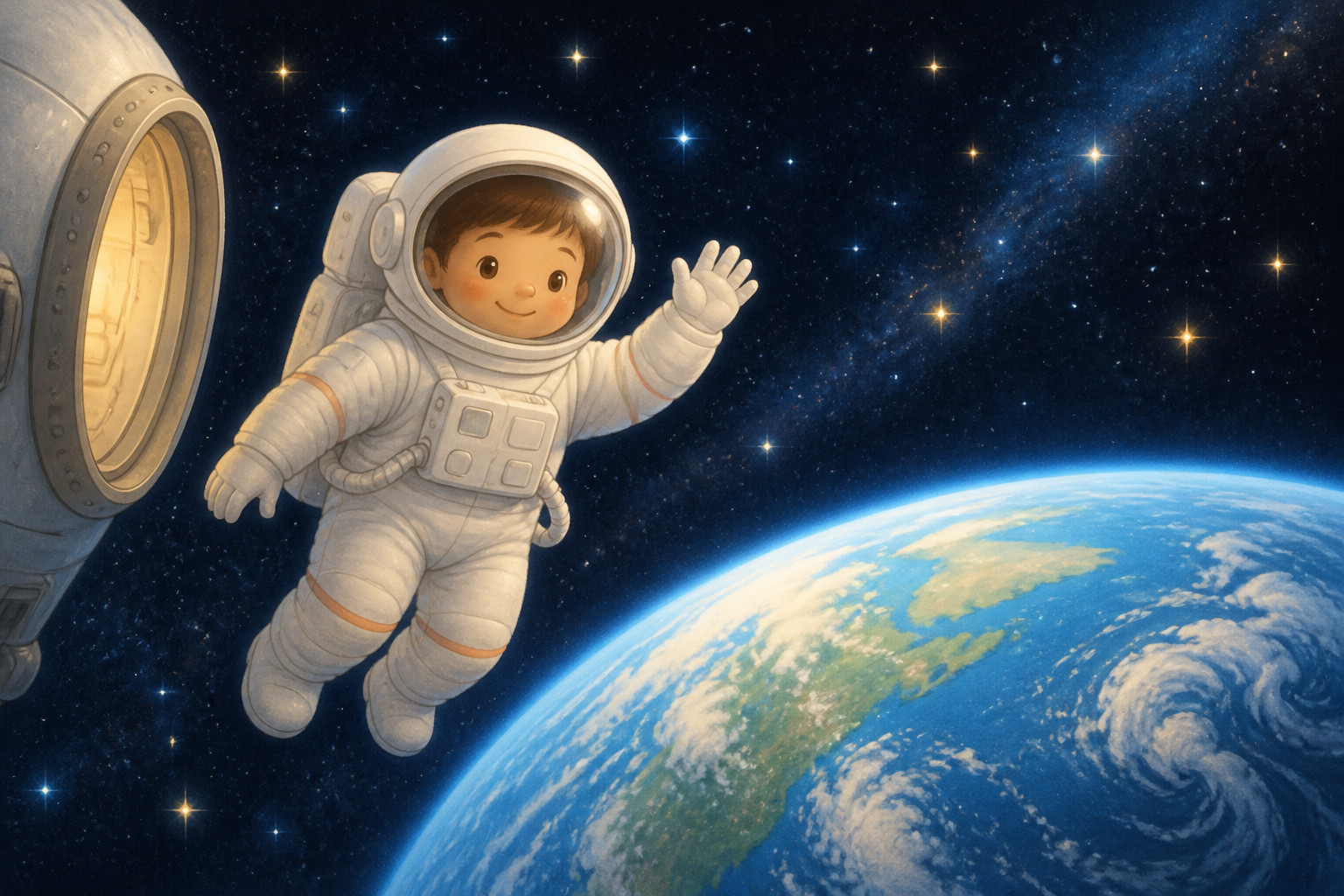
Now picture a spacecraft sailing far past the Moon, much farther than any shout could reach. People on Earth still tell it what to do. So how do we send messages to a spacecraft?
Every message starts with mission control, which means the team on Earth that looks after the spacecraft. These people type the message on their computers. It might say take a photo or turn a little to the left.
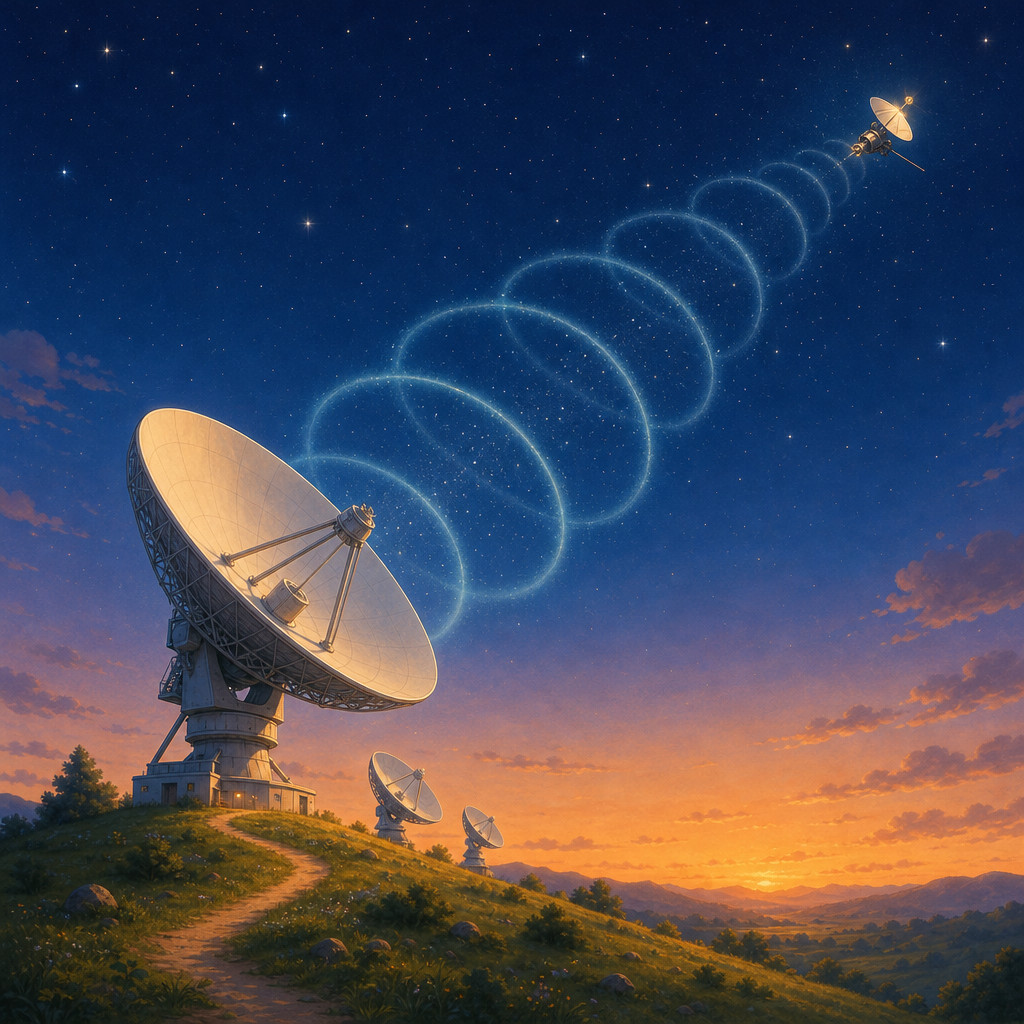
Next, the mission control team sends the message to a giant dish antenna, bigger than a house. The team turns the dish to face the exact spot in the sky where the spacecraft is. That way the message heads straight toward it.
From the dish, the message leaves as radio waves, which means invisible waves that carry messages without any wire. They are the same kind of waves that bring music to a car radio. Nobody can see them or hear them as they go.
Space has no air, so a shout could never travel there. Radio waves need no air at all. They glide easily through empty space, all the way out to the spacecraft.
On their long trip, the radio waves spread out, like ripples in a pond. By the time they reach the spacecraft, they are faint and weak. What do you think the spacecraft needs to catch such a faint message?
The spacecraft carries its own dish antenna, pointed back at Earth. Its curved shape gathers the faint radio waves into one spot. It works a bit like cupping your hands around your ear to hear a whisper.
Inside the spacecraft, a small computer reads the radio waves and turns them back into instructions it can follow. Now the message from mission control has arrived. The spacecraft knows exactly what to do next.
To send a message to a spacecraft, the team at mission control sends it from a giant dish as radio waves, and the waves fly through empty space to the spacecraft's own dish. There, a small computer turns the radio waves back into instructions.
Far past the Moon, the spacecraft's dish still faces Earth. Quietly, the spacecraft turns a little to the left, just as the team at mission control asked.