Why is a river stone smooth?
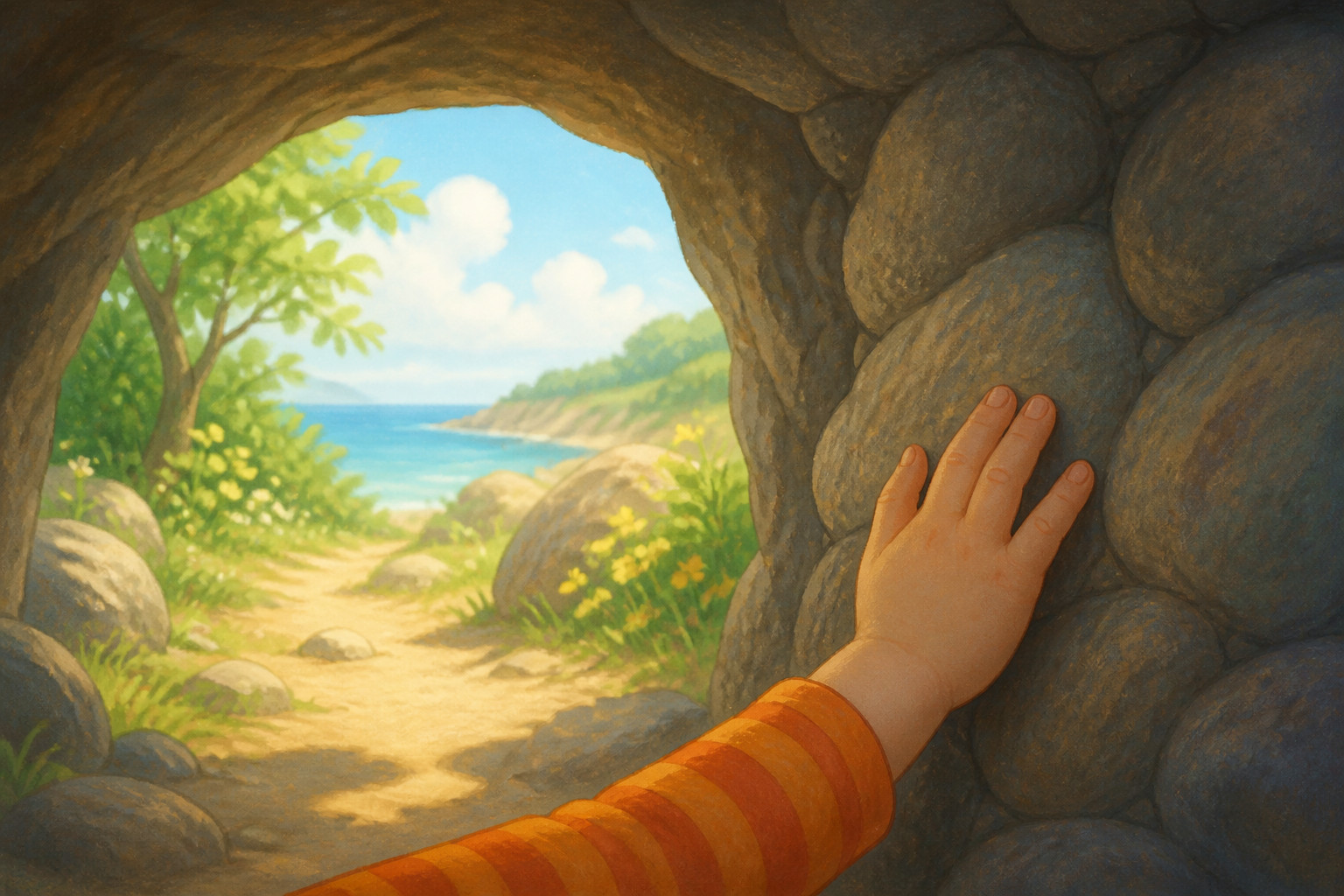
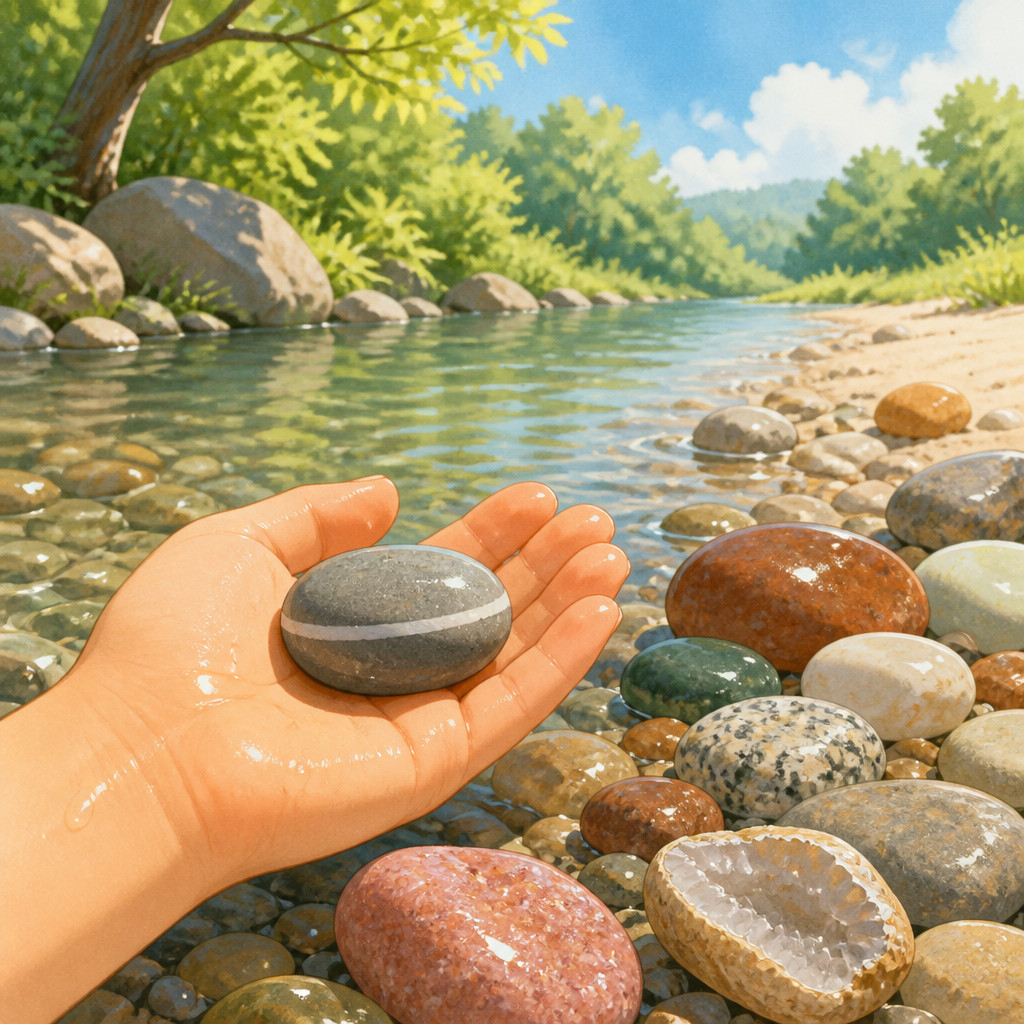
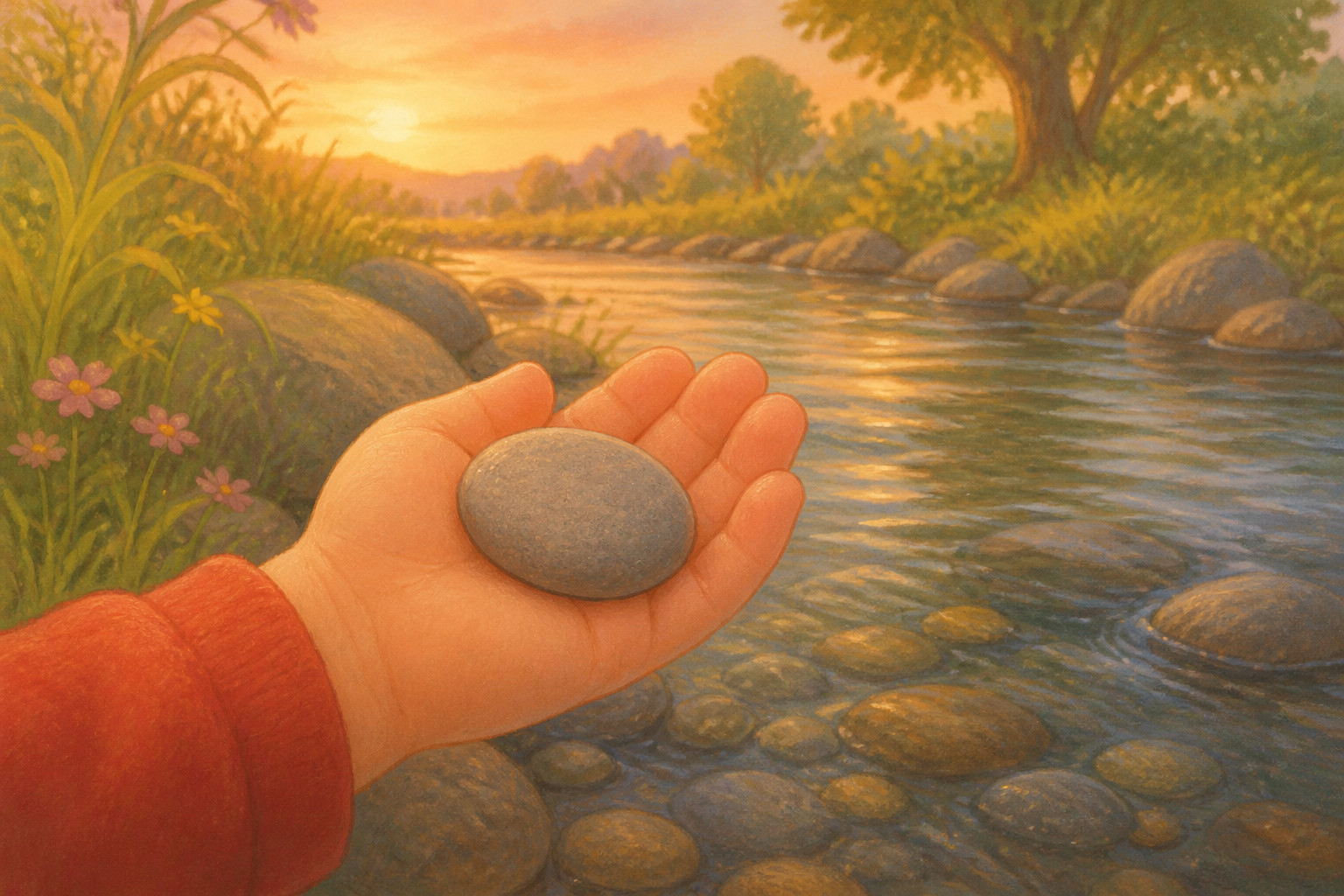
Have you ever picked up a stone by a river? Hold it in your hand and feel it. It is round and smooth, like a bar of soap.
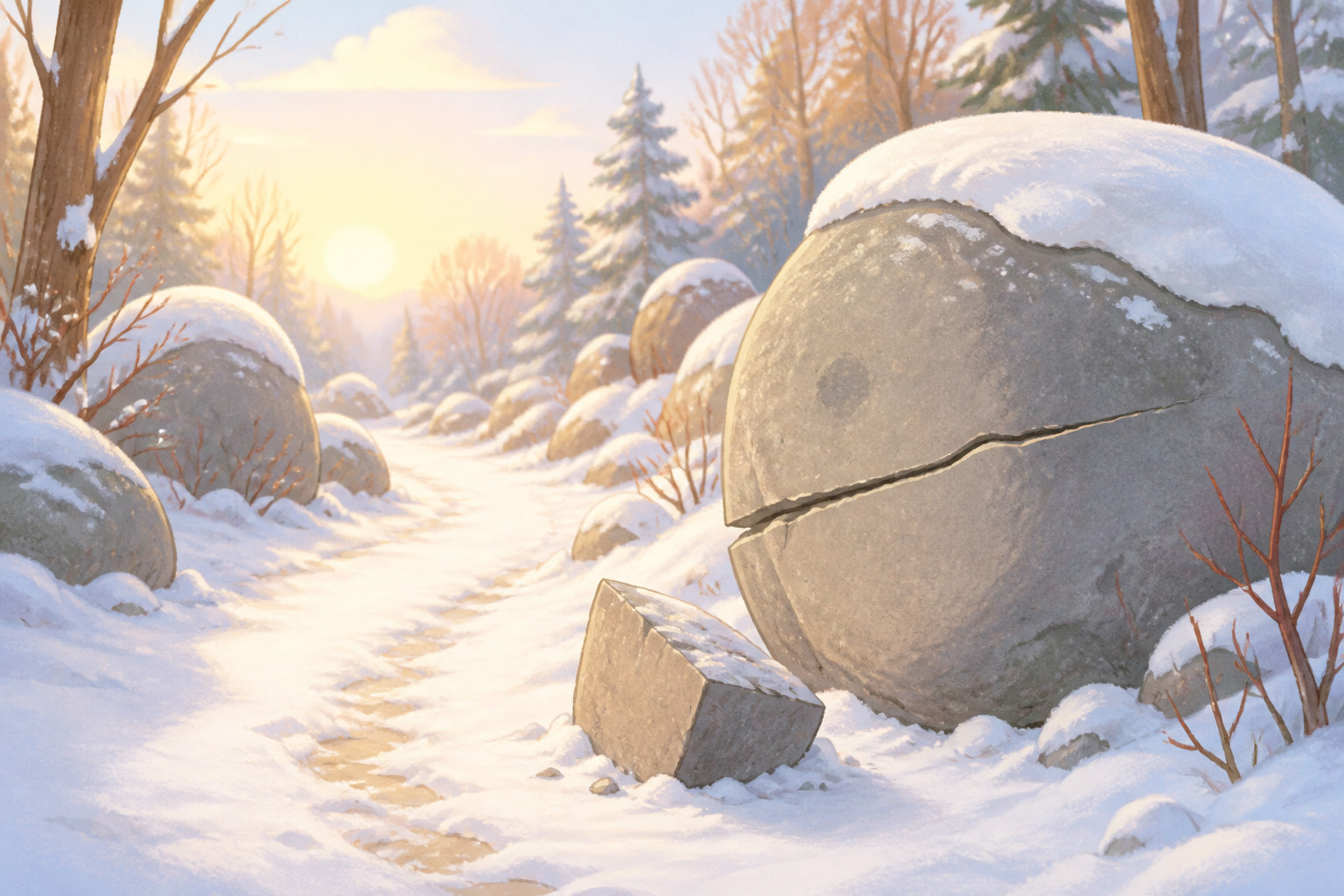
Stones on a mountain path have sharp, pointy edges. So why is a river stone so smooth? Let's find out together.
A stone that has just fallen into a river has sharp corners too. Then the river starts to move it. The river has a current, which means the strong push of its moving water.
The current pushes the stone along the bottom of the river. The water's push is too strong for the stone to stay still. So the stone rolls and tumbles, over and over.
As it tumbles, the stone bumps into other stones. Clack, clack! It scrapes across rough sand, too. What do you think happens to its sharp corners, bump after bump?
Each bump rubs off a tiny bit of stone. That bit is smaller than a grain of sand. We call this wearing away, which means rubbing off tiny bits, a little at a time.
The pointy corners stick out the most. They hit the other stones first, so they wear away first. Little by little, the stone grows rounder.
Wearing away is slow work. A river tumbles its stones for many, many years. The water keeps going, day and night.
At last, all the sharp corners are gone. The stone is round and smooth, just like the stones you find by a river.
The river's current tumbles a stone over and over. Bump after bump wears away its sharp corners, so the stone turns smooth.
Down in the river, the current keeps flowing. Its stones roll gently along the bottom, round and smooth.