Why does a harmless fly look like a wasp?
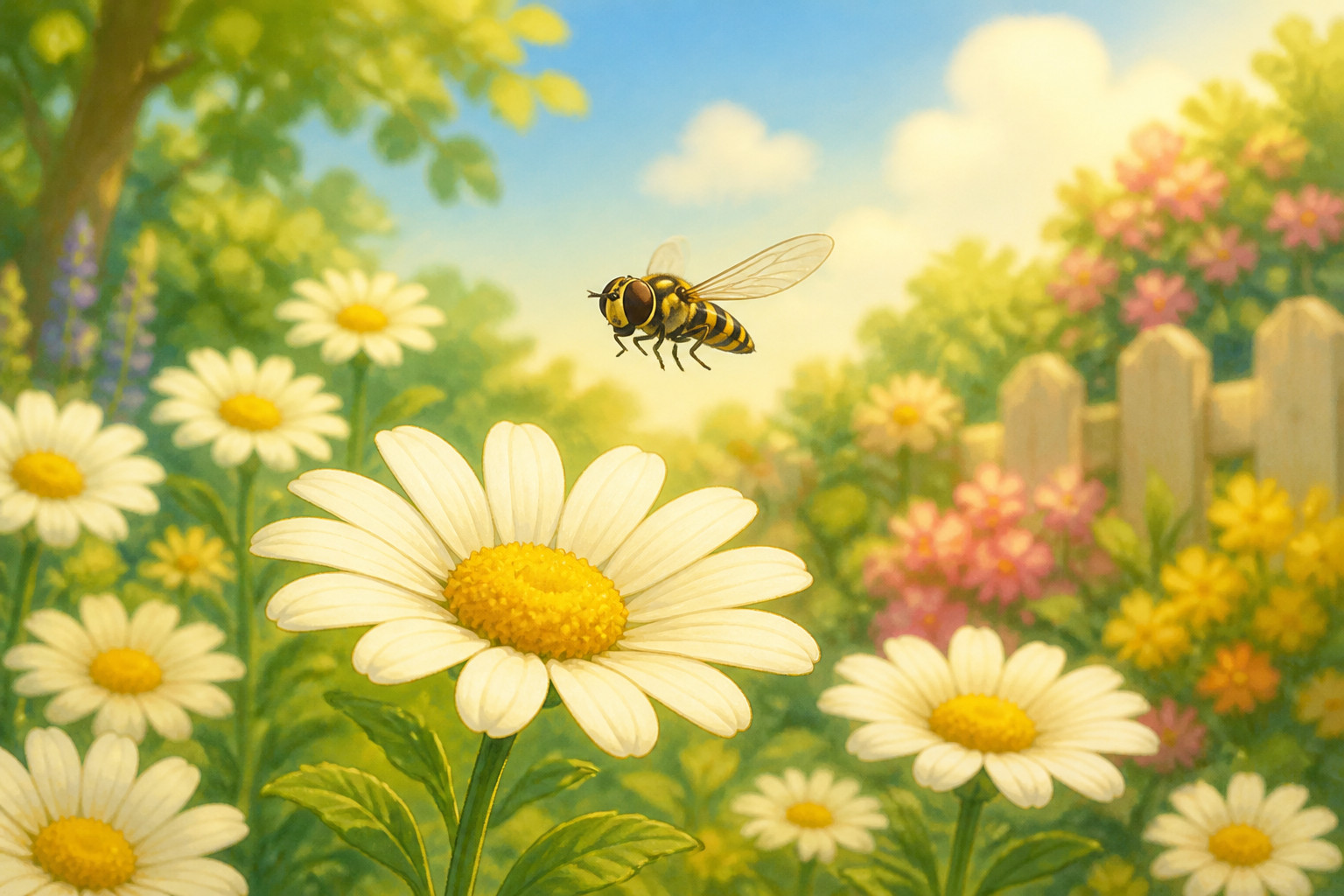
Picture a sunny summer garden full of flowers. A little insect with yellow and black stripes hangs still in the air, right above a daisy. Listen, and you can almost hear its soft, busy buzz. Lots of children step back, sure it is a wasp.
But this striped visitor is a fly called a hoverfly, and it has no stinger at all. It cannot hurt you one tiny bit. So why does a harmless fly look so much like a wasp?
A wasp carries a stinger at the end of its body, and a wasp sting really hurts. Its bright yellow and black stripes are warning colours, which means colours that tell hungry animals to stay away. Those stripes are easy to spot from far off, so nobody misses the message.
Now think about a young bird hunting for an insect snack. When it pecks a wasp, it gets a sharp sting on its beak. The bird remembers that hurt for a long time, and from then on it keeps away from warning colours.
Then along comes the hoverfly, buzzing past in its own yellow and black stripes. It looks almost exactly like the wasp the bird remembers. What do you think the bird will do?
The bird sees those warning colours and flies right on by, leaving the hoverfly alone. It cannot tell that this fly has no stinger at all. The stripes keep the hoverfly safe, even though it could never sting anyone.
When a harmless animal looks like a dangerous one, scientists call it mimicry, which means looking like another animal so that hunters stay away. The hoverfly does not choose its stripes or know about the trick. Its stripes simply grow on its body as it grows up.
Because birds leave them alone, striped hoverflies live long enough to lay eggs. Their young grow the very same stripes, so mimicry keeps working for every new hoverfly.
Warning colours and mimicry. Because wasps sting, birds learn to avoid their warning colours, so the hoverfly's mimicry of those stripes stops birds from eating it.
The next time a striped hoverfly hangs above a flower, you can smile and know its clever secret.