Why does a beam of light show up in a dusty room?
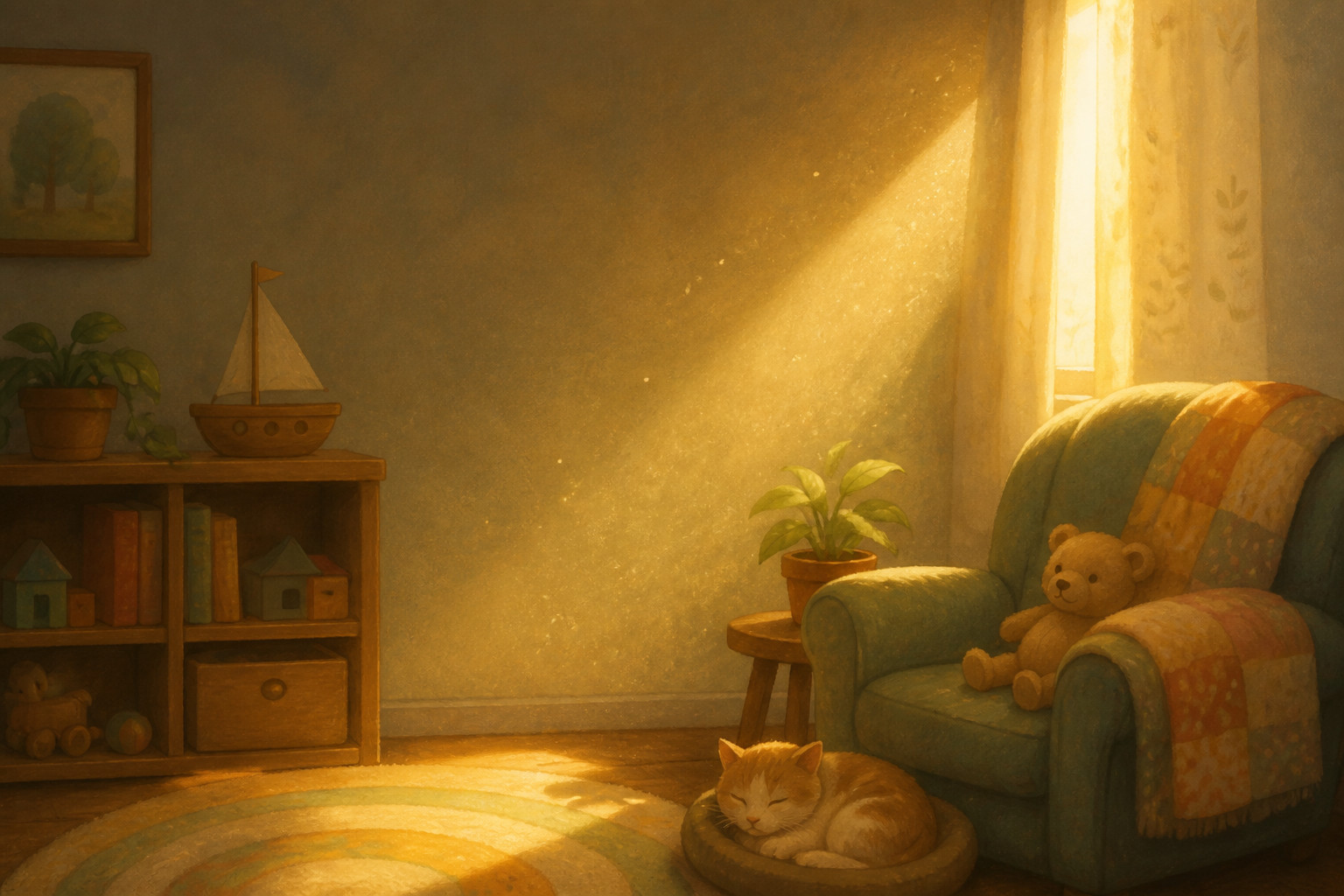
Sometimes sunshine makes a bright stripe across a quiet room, with tiny specks sparkling inside it. You might have seen one beside a curtain on a sunny afternoon. Why does a beam of light show up in a dusty room?
A beam is a narrow stream of light. Sunshine travels through a gap in the curtains and continues across the room. The curtains block much of the sunshine, but the gap lets this narrow beam through.
To see something, your eyes need light from it to reach them. When sunshine hits the floor, the floor sends some light toward your eyes. That is why you can see a bright patch there.
But when you look across a beam from the side, most of its light travels past you, not toward your eyes. In air with hardly any dust, you usually cannot see a bright stripe stretching across the room. The light still travels through that air.
Now comes dust: tiny bits of things such as cloth and soil. Even a tidy room has some dust floating in its air. Gentle air movements carry these tiny bits around, and some drift into the beam.
What do you think happens when light meets those floating bits of dust? The dust scatters the light, which means it sends the light in different directions. Some continues onward, and some heads off to the sides.
Some of that scattered light reaches your eyes. Now you can see bright specks along the beam, not just the patch on the floor. Lots of dust specks together reveal the path that the light takes through the room.
A darker part of the room behind the beam helps those specks stand out. Dust does not make its own light, like a lamp does. It scatters the sunshine that reaches it, so dust in the beam looks brighter than dust in the shade.
Here is the path again: beam, dust, scattered light, eyes. You see a beam in a dusty room because dust scatters some of its light toward your eyes.
Next time a sunbeam sparkles beside you, you will know how tiny bits of dust help you see the sunshine’s path.
 ✓
 ✓
 Fenn